MIT study links data center power to 650 premature US deaths
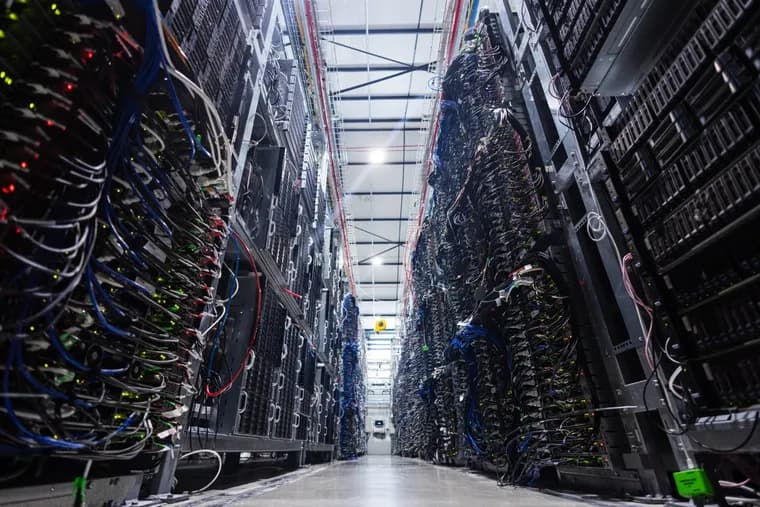
Researchers at the Massachusetts Institute of Technology (MIT) estimate that air pollution associated with the electricity demand of US data centers resulted in 650 premature deaths in 2023, Newsweek reports. The study appears in the journal Environmental Research Letters. Of the total, 513 deaths were associated with fine particulate matter, known as PM2.5, and another 137 with ozone, or smog. The researchers noted that this represented 5.3 percent of US electricity-related mortalities, while data centers accounted for 3.8 percent of the nation's electricity generation.
According to an accompanying MIT release, the team developed a modeling framework that tracks how data center demand moves through the interconnected national power grid, while accounting for the role of atmospheric conditions in forming air pollution across regions.
The harm did not simply follow the facilities. Virginia and Texas carried the largest data center loads, yet impacts were not proportionally concentrated there. Estimated PM2.5 impacts were highest across parts of the central US and Midwest, with "smaller but widespread" impacts in the eastern US. Mortality burdens were concentrated in densely populated parts of the Northeast, Mid-Atlantic and Midwest. Nebraska and Iowa had some of the highest estimated death rates per million people, and Kansas, South Dakota, Missouri and Arkansas also had elevated rates despite relatively little data center demand. The researchers attributed the mismatch to interconnected grids, differences between regional power plant fleets and atmospheric conditions that push pollution across state lines.
Senior author Noelle Selin, an MIT professor and director of its Center for Sustainability Science and Strategy, said people thinking about the harms of data centers usually focus on the neighbors, but the study indicates the air quality impacts are very widespread. In an email to Newsweek, she added that the numbers will obviously go up as demand keeps growing, especially for facilities connected to the grid, which will become more stressed. She also said many data centers are now building their own off-grid power, which the analysis of 2023 does not take into account. MIT graduate student Yuang (Albert) Chen said the fuels and technologies used for onsite power, and the plants that supply extra grid demand, will shape the size and location of future health impacts.
Newsweek also cites a separate, Harvard-led study of just over 400 hyperscale data centers. Under its central scenario, they used roughly 82 terawatt-hours (TWh) from May 2024 through April 2025, around 1.8 percent of total US electricity consumption. According to the statistics site Worldometer, that is more than countries including Denmark, Finland, Nigeria and Venezuela consumed in 2024.
Key facts
- MIT researchers estimate 650 premature US deaths in 2023 from air pollution tied to data center electricity demand: 513 linked to PM2.5 and 137 to ozone.
- That is 5.3 percent of US electricity-related mortalities, while data centers accounted for 3.8 percent of the nation's electricity generation.
- Virginia and Texas had the largest data center loads, but impacts were not proportionally concentrated there; Nebraska and Iowa had some of the highest estimated death rates per million.
- The estimate leaves out the off-grid power that many data centers are now building for themselves, according to senior author Noelle Selin.
- A separate Harvard-led study puts demand from just over 400 hyperscale data centers at roughly 82 TWh from May 2024 through April 2025 under its central scenario.
Why it matters
The buildout behind the AI boom and other digital services has already raised local concerns about electricity, water and noise. This study points to a harm that travels much further. Its modeling framework follows data center demand through the interconnected grid and accounts for how atmospheric conditions form air pollution in different regions. The result is an estimate of 650 premature deaths in 2023, equal to 5.3 percent of US electricity-related mortalities, a larger share than the 3.8 percent of electricity generation that data centers accounted for.
Who it affects
People far from any large cluster of data centers are part of the picture. PM2.5 impacts were estimated to be highest across parts of the central US and Midwest, with smaller but widespread effects in the East. Mortality burdens were concentrated in densely populated parts of the Northeast, Mid-Atlantic and Midwest. Nebraska and Iowa had some of the highest estimated death rates per million people, and Kansas, South Dakota, Missouri and Arkansas had elevated rates despite relatively little data center demand.
How to use it
The practical lesson is that distance to the nearest data center is a poor guide to exposure. Anyone weighing new capacity can look at where its power comes from. Chen put the emphasis on two choices: the fuels and technologies used for onsite power, and which power plants supply any additional demand from the grid. In Chen's words to Newsweek, those choices will shape both the size and location of future health impacts.
How solid is it
The work is published in Environmental Research Letters, and the death figures are modeled estimates for 2023. Newsweek's account draws on the study, an accompanying MIT release and emailed statements from Selin and Chen. It gives no uncertainty range or confidence interval for the death estimates. Newsweek also says its reporters and editors used Martyn, its AI assistant, to produce the story.
Risks and caveats
The estimate covers 2023 and does not include the off-grid power that data centers are now building for themselves. Selin said that generation will obviously affect air pollution and might increase impacts both near the facilities and relatively far from them. She also expects the numbers to rise as demand grows. The Harvard-led figure of 1.8 percent comes from separate research on hyperscale facilities, measures consumption over a different period and should not be set directly against MIT's 3.8 percent share of generation.
“But our study indicates that the air quality impacts of data centers are very widespread across a large region.”
— Noelle Selin, senior author and MIT professor