MIT Technology Review documents 1,000+ deaths at US border surveillance towers
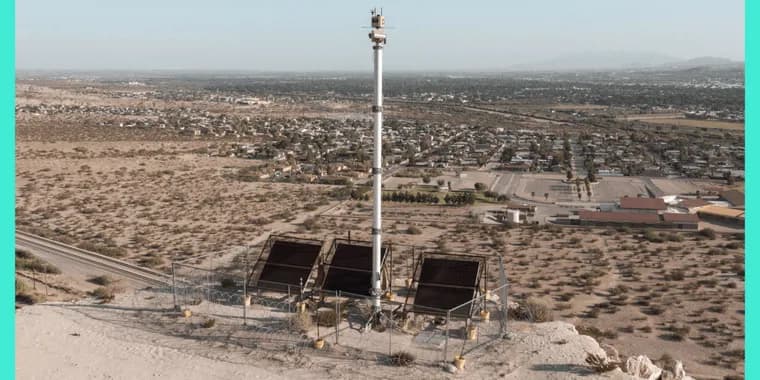
The US has spent billions of dollars over the past 25 years building a network of surveillance towers along its southern border, sold to the public as a tool that would help detect and apprehend border crossers and save lives. MIT Technology Review says its own investigation has documented over a thousand people who moved through areas watched by these towers without being reached or apprehended, and who ultimately died there. Some of those deaths happened even though the area was covered by newly installed, AI-powered towers designed to spot people automatically. MIT Technology Review frames the result as a humanitarian crisis that is more visible than previously known, and as a repeated failure of the tower system's basic security promise: detect a person in time to reach them alive. This entry is a subscriber-only video roundtable in which MIT Technology Review staff walk through that investigation rather than a new article. The speakers are Mat Honan, the publication's editor in chief, James O'Donnell, its senior AI reporter, and Eileen Guo, its senior features and investigations reporter. The page points to three earlier pieces from the same investigation for readers who want the full findings: one asking why billions in border surveillance spending still cannot catch people before they die, one describing how the team built the first comprehensive map of deaths along the border's tower-covered corridor, and one laying out four ways to address the failures the investigation found.
Key facts
- The US has spent billions of dollars over 25 years on a 'virtual wall' of border surveillance towers meant to detect and apprehend crossers and save lives.
- MIT Technology Review's investigation documented over a thousand people who died after moving through areas the towers covered, without being reached or apprehended.
- Some of the deaths occurred in areas covered by newly installed towers that use AI to spot people automatically.
- The item is a subscriber-only video roundtable, not a new article: editor in chief Mat Honan, senior AI reporter James O'Donnell and senior investigations reporter Eileen Guo discuss the investigation.
- The same investigation includes a separate map of border deaths and a piece proposing four ways to fix the towers' failures, both linked from the roundtable page.
Why it matters
The towers exist for one specific promise: spot a person in trouble in remote border terrain in time to send help, or to apprehend them, before they die there. MIT Technology Review's count of over a thousand deaths in tower-covered areas is a direct test of that promise, and the finding that some of those deaths happened under AI-powered towers built specifically to automate detection sharpens it: adding automation to the system did not close the gap between seeing a person and reaching them.
Who it affects
Most directly, the people crossing the border through the areas these towers cover, whose safety the system is supposed to improve. It also bears on the US border security program that built and operates the towers, and on anyone evaluating whether AI-powered detection systems deliver the safety outcomes they are funded and marketed to deliver.
How to use it
The roundtable itself is behind an MIT Technology Review subscription. Readers who want the underlying reporting rather than the discussion can follow the three related pieces the page links to: the investigation into why billions in spending has not stopped border deaths, the comprehensive map the team built of deaths in tower-covered areas, and a piece setting out four proposed fixes for the failures found.
How solid is it
The claims come from MIT Technology Review's own investigation, described here by the outlet in its own words ahead of a roundtable discussing it. The roundtable page itself gives no exact spending figure, no exact death count beyond 'over a thousand', no count or map of the towers, and no explanation of why the AI-powered towers failed to result in people being reached; those details, if they exist, sit in the three linked investigative articles rather than in this item.
Risks and caveats
Because this item is a promotional summary for a subscriber-only video rather than the investigation itself, several specifics that would normally anchor a claim like this, such as the total spend, the exact toll, the number of towers involved and the mechanism behind the AI towers' failures, are not stated here and should be checked against the linked reporting before being repeated as precise figures.
“Our findings reveal a humanitarian crisis more visible than previously known, and repeated failures of the virtual wall's basic security promise.”
— MIT Technology Review, on its border surveillance investigation