MIT Technology Review's Download covers 35 innovators, Taiwan hack, AI agents
MIT Technology Review's daily newsletter The Download, in its August 12, 2026 edition, leads with two feature items before moving into a news roundup, a quote of the day and a longer feature.
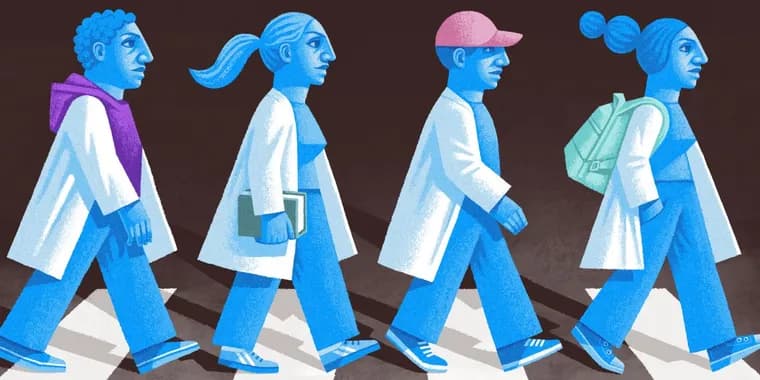
The first feature, bylined by Amy Nordrum, previews the outlet's 2026 Innovators Under 35 list. MIT Technology Review received 550 nominations this year and will reveal the 35 selected young scientists and engineers on September 8. The piece frames the annual list as both a way to signal which technical advances readers should expect in coming years and a way for the newsroom to track rising talent in the fields it covers.
The second feature, by reporter Eileen Guo, retraces how the phrase "censorship-industrial complex" moved from the fringes of the right-wing internet into the Trump administration. Guo says she first heard the term on April 15, 2025, when she was tipped that a small US State Department office monitoring and countering foreign disinformation from Russia, Iran and China was facing shutdown the following day. The office was accused of serving as a central hub in an alleged conspiracy among government agencies, academics, civil society groups and Big Tech platforms to suppress conservative and populist speech online under the banner of fighting disinformation. Guo broke the shutdown story on April 16, 2025, and the newsletter links to her fuller account of what the narrative means for internet policy.
A third item, by Jessica Hamzelou and also released as an MIT Technology Review Narrated podcast episode, covers Montana's expanded right-to-try law. As of the end of July 2026, any Montana biotech company with an experimental drug that has passed preliminary testing, in some cases on as few as ten healthy people, can pay $12,500 to apply to a newly established review board. Once approved, the company can set its own price and sell the drug through experimental treatment clinics, the first of which is expected to open around the end of the year. Unlike right-to-try laws elsewhere that are limited to people with terminal illness, Montana's version is open to anyone who gives informed consent and can pay, including people seeking treatment for rare diseases as well as those interested in longevity or preventive therapies.
The newsletter's ten-item must-read roundup, each summarized in a line or two and linked to outside outlets, covers: China-linked hackers using open-source AI agents to compromise Taiwan government websites in what is described as an "unprecedented" attack (Financial Times); Wall Street firms paying Trump Media $100,000 a month, with more than ten firms signed up, for faster access to market-moving Truth Social posts, even as Trump Media lost $238 million as its crypto holdings fell (CNN, BBC, CNBC); US Immigration and Customs Enforcement planning to spend up to $20 million on thousands of gloves that can deliver electric shocks via a switch into "electrical mode" (AP News, Guardian); Spotify moving to label AI-generated artists and stop recommending them, adding "AI personas" markers to profiles and track listings (Guardian, New York Times); social media disinformation contributing to a deadly surge of migrants attempting the crossing from Morocco to Spain (New York Times); Anthropic adding watermarks to Claude's AI-generated text and images, a capability Axios says could help guarantee votes are counted and kept anonymous; orexin drugs that mimic the brain's wakefulness signal gaining traction as treatments for sleep disorders, ADHD and addiction (Economist), even as psychedelics are underperforming in clinical trials (MIT Technology Review); violent cargo theft targeting AI hardware shipments after their escorts were attacked (Wired); a Chinese particle collider producing the strongest evidence yet for the glueball, a theorized particle made purely of force (Science); and a site called Research Gold, which markets itself as offering "100% human-written, never AI" research, being found to use AI-generated reviewers itself (404 Media).
The quote of the day comes from New York Times technology columnist Kevin Roose, speaking on the Pivot podcast, who predicts a coming "fourth wave" of AI-generated content, or "slop", in which the average AI output in a field surpasses the best human work in that field.
The newsletter closes with a longer "One More Thing" feature by Grace Huckins on the risks of giving AI agents real-world autonomy. The piece argues that any action that can be captured in text falls potentially within an AI agent's reach, which is what makes agents both useful and risky. Iason Gabriel, a senior staff research scientist at Google DeepMind focused on AI ethics, is quoted describing this as agents' "great paradox": the same capability that makes them useful, accomplishing a range of tasks, requires giving away control. Researchers cited in the piece warn that agents could misinterpret goals, leak sensitive information, fall victim to prompt-injection attacks, and exploit software vulnerabilities at scale, with no foolproof way to guarantee an agent acts as its developers intended.
Key facts
- MIT Technology Review received 550 nominations for its 2026 Innovators Under 35 list and will reveal the 35 honorees on September 8.
- Reporter Eileen Guo traces how the "censorship-industrial complex" narrative, which she first heard on April 15, 2025, pushed a State Department disinformation-monitoring office toward shutdown by the next day; she broke the story on April 16, 2025.
- Montana's right-to-try law lets biotech companies pay $12,500 to a new review board to sell experimental drugs, some tested on as few as 10 healthy people, to any adult who gives informed consent and can pay, with the first clinic expected to open around year end.
- The roundup includes China-linked hackers using open-source AI agents against Taiwan government sites, Wall Street firms paying Trump Media $100,000 a month for early access to Truth Social posts, and ICE planning to spend up to $20 million on electric-shock gloves.
- NYT columnist Kevin Roose predicts a "fourth wave" of AI slop in which the average AI output in a field will surpass the best human work in that field.
Why it matters
The edition strings together several threads that show where AI and technology are colliding with policy and society right now: a talent pipeline for AI and science research (Innovators Under 35), the politicization of US disinformation policy under a narrative that reframes government anti-disinformation work as censorship, an unusually permissive state drug law that turns any consenting adult into a potential subject for unproven treatments, and a warning about the risks of handing AI agents real autonomy. Together they sketch where regulatory, corporate and research pressure on AI is currently concentrated.
Who it affects
Young researchers among the 550 nominees waiting to learn if they made the Innovators Under 35 list; US State Department staff and disinformation researchers whose work is now framed as part of an alleged "censorship-industrial complex"; Montana residents and people traveling there who could buy access to unproven drugs; Taiwanese government agencies targeted in the AI-driven hack; Wall Street trading firms paying for early access to Trump's posts; ICE officers who would carry the new gloves; and developers and users of AI agents exposed to the autonomy risks Grace Huckins describes.
How to use it
The full Innovators Under 35 list is not out yet; it publishes September 8, with last year's list linked for comparison. The censorship-industrial complex and AI-agent pieces are each available as standalone MIT Technology Review articles linked from the newsletter. The Montana drug-law story is also available as an episode of the MIT Technology Review Narrated podcast on Spotify and Apple Podcasts. The ten must-read items link out to their original outlets, including the Financial Times, CNN, BBC, CNBC, AP News, the Guardian, the New York Times, Axios, the Economist, Wired, Science and 404 Media, some of which sit behind paywalls.
How solid is it
The two lead features and the "One More Thing" piece are original MIT Technology Review reporting, bylined to named staff reporters (Amy Nordrum, Eileen Guo, Jessica Hamzelou, Grace Huckins) drawing on the outlet's own investigation, including Guo's account of breaking the State Department story herself. The Montana feature is bylined to Jessica Hamzelou and doubles as a podcast script. The ten-item roundup is secondhand: each entry summarizes and links to reporting done by other named outlets rather than original Technology Review reporting. The quote of the day is attributed to Kevin Roose speaking on the Pivot podcast.
Risks and caveats
Several specifics are withheld by the digest itself rather than omitted from this summary: the 35 names on the Innovators Under 35 list are not yet public, the State Department office is not named and the piece does not confirm whether it was actually shut down (only that shutdown was threatened "the next day"), no biotech companies or drug names are given for the Montana story, the exact number of electric-shock gloves ICE plans to buy is not stated (only "thousands" within a $20 million budget), and no specific Taiwanese government websites or attack timeline are named for the hack. As a newsletter roundup, most of the must-read items are one or two sentences pointing to outside, sometimes paywalled, reporting rather than fully reported stories in their own right.
“I think the fourth wave of slop will be when there's no longer any meaningful quality hit in slop, when the average piece of slop is better than the best human in that field.”
— Kevin Roose, technology columnist at The New York Times, speaking on the Pivot podcast