Nikon disqualifies Small World in Motion winner over generative AI
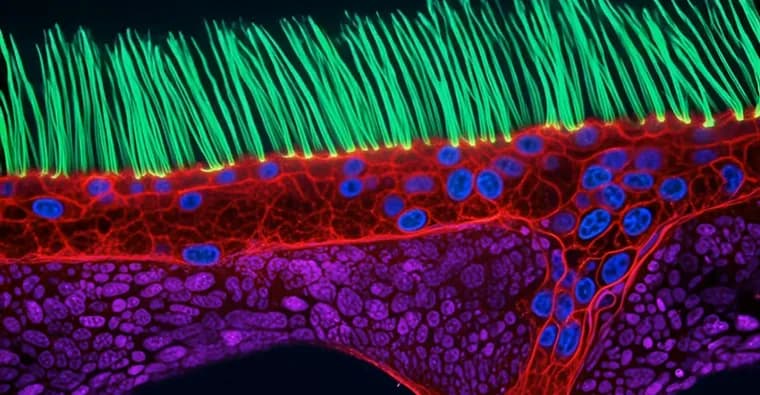
Nikon has disqualified the video that originally won first place in its Small World in Motion microscopy video contest. The company says the entry "did not comply with the competition rules regarding generative AI."
The original winner was Dr. Ning Xu. According to the BBC, the video claimed to show "tiny, hair-like structures called cilia moving in the airway of a child with the respiratory condition PCD." Nikon said last week that it was reviewing the video after skepticism online about its authenticity.
In a comment on LinkedIn, Dr. Xu admitted to using AI for the video. The comment reads: "An unsupervised neural-network method was subsequently used for AI-assisted post-processing to distinguish and visualize features in the reconstructed grayscale images from the super-resolution optical imaging."
Dr. Xu's video has now been disqualified and appears to have been removed from Nikon's website. The contest's updated rankings put a video from Nguyen Nam Nhat in first place.
Nikon says it plans to "revisit rules and evaluation procedures for future competition entries." In its statement on the contest, the company also said the decision to disqualify the video "should not be interpreted as a judgment of the entrant's professional reputation, scientific contributions, or intent."
Key facts
- Nikon disqualified the video that originally won first place in its Small World in Motion contest, saying it did not comply with the competition rules regarding generative AI.
- Dr. Ning Xu admitted in a LinkedIn comment that an unsupervised neural-network method was used for AI-assisted post-processing of reconstructed grayscale super-resolution images.
- The BBC reported that the winning video claimed to show cilia moving in the airway of a child with the respiratory condition PCD.
- A video from Nguyen Nam Nhat now holds first place in the contest's updated rankings.
- Nikon plans to revisit its rules and evaluation procedures for future entries, and says the disqualification is not a judgment of the entrant's reputation, scientific contributions, or intent.
Why it matters
Scientific imaging contests reward footage that looks striking and also claims to show something real. Here the first-place video was described as showing cilia moving in a child's airway, and it drew skepticism online as too good to be true. The case shows how hard it is for organisers to tell AI-assisted processing from a faithful image, and it has pushed Nikon to say it will revisit its competition rules and evaluation procedures.
Who it affects
Dr. Ning Xu, whose first-place video was disqualified, and Nguyen Nam Nhat, whose video now holds first place. It also affects future entrants to Nikon's competition, who will face revised rules and evaluation procedures, and Nikon itself, which has to rework how it vets entries.
How to use it
There is no tool or product here to adopt. The practical lesson is for anyone entering a contest with generative AI rules: read those rules closely and be ready to explain every processing step. The source does not say which specific rule was broken or what the rules regarding generative AI say.
How solid is it
The core facts come from The Verge's report, which relies on Nikon's statement and on Dr. Xu's own LinkedIn comment. The description of the original video comes from the BBC as relayed by The Verge. One detail is hedged in the source: the video appears to have been removed from Nikon's website. Dr. Xu is not quoted calling the method generative AI; that wording comes from Nikon.
Risks and caveats
The source does not say whether the underlying cilia imaging data is real or fabricated, so the story should not be read as a finding of fraud. Nikon itself says the disqualification is not a judgment of the entrant's professional reputation, scientific contributions, or intent. The source does not say whether Nikon has stated what the revised rules will be or when they will be published, and it gives no calendar dates for the contest, the win, or the disqualification.
“did not comply with the competition rules regarding generative AI.”
— Nikon, on the original first-place video, as reported by The Verge