OpenAI details Performance Factory, Codex workflows that fix ChatGPT slowdowns
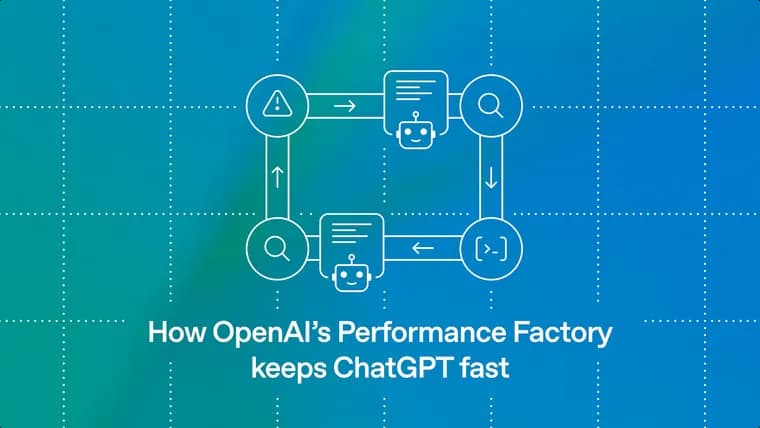
OpenAI has published a post explaining how it built the Performance Factory. The company describes it as a system of Codex-powered workflows that finds and fixes performance issues, with the stated aim of helping keep ChatGPT fast.
That one-sentence description is the substance available here. It names OpenAI as the builder, Codex as the engine behind the workflows, and ChatGPT as the product whose speed the system is meant to protect. The two jobs it assigns to the workflows are finding performance issues and fixing them.
The available text gives no figures: no latency, throughput, cost or speedup numbers. It does not say how the workflows work, which kinds of performance issues they target, or how much of the fixing is automated versus reviewed by humans. It also does not say whether the Performance Factory is available to outside users or is internal only, and it states no results or measured effect on ChatGPT speed.
Key facts
- OpenAI published a post on how it built the Performance Factory.
- The Performance Factory is described as a system of Codex-powered workflows that finds and fixes performance issues.
- The stated goal is to help keep ChatGPT fast.
- No figures are given: no latency, throughput, cost or speedup numbers.
Why it matters
OpenAI says it uses Codex-powered workflows to both find and fix performance issues in ChatGPT. That makes the Performance Factory an example of the company applying its own coding tool to the upkeep of its flagship product. The available text gives no results, so the size of the effect is not known.
Who it affects
The system is aimed at keeping ChatGPT fast, so ChatGPT users are the intended beneficiaries. The text does not say whether the Performance Factory is available to outside users or is internal only.
How to use it
Nothing in the available text tells a reader how to use or reproduce the Performance Factory. The text does not say whether the Performance Factory is available to outside users or is internal only. The full post is where any technical detail would be found.
How solid is it
This is a first-party description from OpenAI, and only its one-sentence summary is known. No results or measured effect on ChatGPT speed are stated, and no named authors or engineers and no quotes are available. The full article could not be fetched, so the claim rests on OpenAI's own summary.
Risks and caveats
The text does not say how the workflows work, which kinds of performance issues they target, or how much of the fixing is automated versus reviewed by humans. Without figures, the claim that the system keeps ChatGPT fast cannot be checked from what is available.