Replit CEO describes a 'self-driving company' run by agents
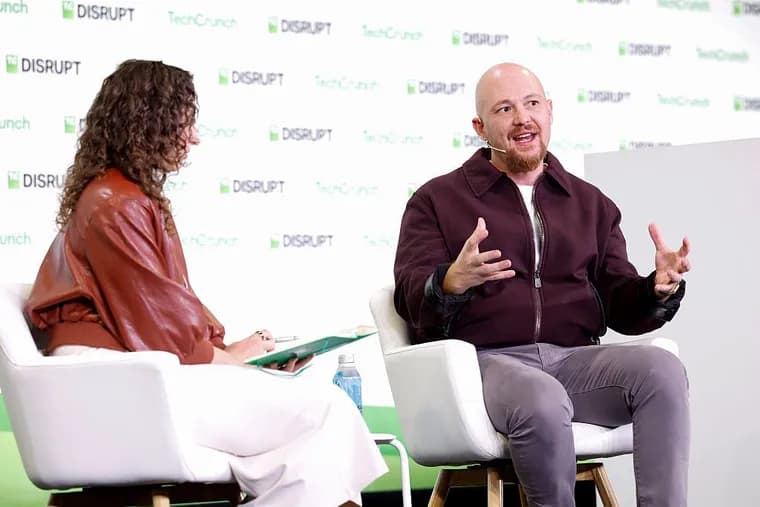
Replit CEO and co-founder Amjad Masad spoke at TechCrunch Disrupt in San Francisco on Thursday about what he has learned about the future of work. Replit sells AI coding tools, and businesses use them to build and launch their own software, so Masad says he has watched AI change workplaces firsthand.
His central idea is a "self-driving company". He was clear that the phrase has nothing to do with robotaxi makers. It describes a company where agents do much of the grunt work while people become more valued for their judgment and taste. Masad told the audience that all of their jobs, perhaps especially those of people in the room, changed over the past year, but that a big part of America and the world does not yet know the change is coming and will be surprised by it.
He said the Replit team had been reflecting on how AI changed their own workplace over the past year, particularly after AI agents became more reliable sometime earlier this year. In his words, the company "entirely changed how we operate", and it is "sort of self-improving", with a lot of the work driven by agents.
His worked example is Replit's support queue. When a support ticket comes in, an agent examines it first and does the initial triage by looking at GitHub issues, the codebase and Linear tickets. By the time the request reaches a person, that person already has the extra information needed to decide how best to proceed. If the support person then decides to submit a patch to fix the problem, deploying another agent is a single click. Masad summed it up as an entire loop where agents do most of the work, with human judgment in the middle, which he does not expect to go away anytime soon.
The result, as TechCrunch puts it, is that instead of taking jobs from people, agents are changing what people work on. Masad said Replit now spends a lot more time figuring out what to work on. Walking around the company, he sees more discussions, more whiteboarding, and more time spent on architecture and how to build things. He framed the self-driving company idea as an effort to discover what AI transformation actually means.
He added that when Replit talks with other businesses, the conversations focus on how AI can make people more productive and happier at work. The "happier" part, he said, is because agents make work less boring and more creative. He closed by saying there is a positive vision of the world that Silicon Valley is not really putting out, and that Replit hopes to put it out.
Key facts
- Replit CEO and co-founder Amjad Masad described a "self-driving company" at TechCrunch Disrupt in San Francisco, where agents do much of the grunt work and people are valued for judgment and taste.
- At Replit, incoming support tickets are first triaged by an agent that looks at GitHub issues, the codebase and Linear tickets before a person sees them.
- When the support person decides to submit a patch, deploying another agent is a single click; human judgment sits in the middle of the loop.
- Masad says agents are changing what people work on rather than taking jobs: more time on deciding what to build, more discussion, whiteboarding and architecture.
- He says the change in work happened over the past year, especially after agents became more reliable earlier this year, and that much of the world does not yet know it is coming.
Why it matters
This is a founder of an AI coding company describing, from inside his own firm, how agents have changed daily work. The claim is that the shift is less about replacing staff and more about moving people toward deciding what to work on, architecture and judgment. Masad also says the pace is ahead of public awareness: in his view a big part of America and the world does not yet know the change is coming.
Who it affects
Masad says the change already reached perhaps everyone in his audience, and that Replit's own staff now spend more time on discussion, whiteboarding and architecture. Support staff are the concrete example: they receive tickets that an agent has already researched. He also says the wider workforce has yet to feel it and will be surprised. In his conversations with other businesses, the focus is on making people more productive and happier at work.
How to use it
The talk is a description of a way of working, not a product launch, and it gives no setup details. The one concrete pattern is the support loop: an agent triages a ticket using GitHub issues, the codebase and Linear tickets, a person reviews the findings and decides, and a click deploys another agent to apply a patch. The article does not name which AI models or agent products Replit uses for triage and patching.
How solid is it
This is a conference talk reported by TechCrunch, and the account of how Replit works comes from Masad himself. The article gives no figures: no revenue, user or customer counts, no share of work done by agents, no productivity or headcount numbers. The article does not name any other company that has adopted the 'self-driving company' model. The statement that agents are changing work rather than taking jobs is the article's own wording, backed by Masad's anecdotes rather than data.
Risks and caveats
The article does not say whether Replit cut or hired staff because of agents, so the claim that agents change work rather than take jobs is untested here. No timescale is given for when the change will reach the wider workforce beyond Masad's statement that it is coming. The article does not say when exactly agents became more reliable beyond 'sometime earlier this year'. Masad is also the head of a company that sells AI coding tools, which is the context for his upbeat framing of AI at work.
“You have an entire loop where agents did most of the work, but crucially, there’s human judgment in the middle, and we don’t think that’s going away anytime soon. You need human judgment; you need taste.”
— Amjad Masad, Replit CEO and co-founder, at TechCrunch Disrupt