Snap adds AI, enterprise features to $2,200 Specs glasses
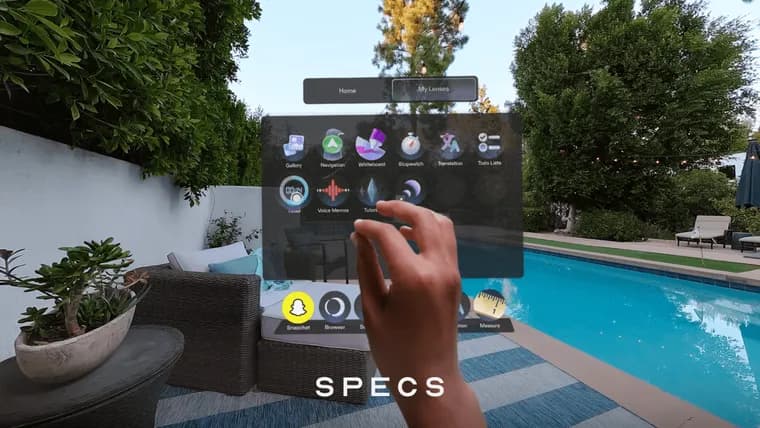
Snap held an event in Los Angeles this week to relaunch the case for its Specs smart glasses, which debuted earlier this year to widespread mockery, calls for CEO Evan Spiegel to resign, and a drop in Snap's stock price. At $2,200, Specs are bulky and expensive, and the article's own framing calls them out of reach for most casual buyers; this week's event was Snap's attempt to give the hardware a reason to exist beyond its price tag.
Spiegel and other Snap executives used the event to announce a string of new features. Specs can now connect to HBO Max and Spotify for entertainment. The centerpiece announcement was Specs Intelligence, described by Snap as an "anticipatory AI" system that pairs with the glasses as well as with iPhones and Macs. Snap says the system builds an understanding of a user's goals, priorities, relationships and routines from connected apps and tools, helping them focus on what matters now while making progress toward longer term goals. Spiegel called it an "AI native operating system with intelligence designed around your projects" that lets users "connect the dots across Lenses," Snap's term for its AR camera effects on phones and glasses alike. In practice, the system reads more like a standalone AI productivity app that happens to work with Specs rather than a feature that requires them.
Snap also launched Specs for Enterprise, a program to bring the glasses into corporate workflows, with partners including Amazon, Salesforce and Nvidia. The clearest use case shown was IT support: a demo video depicted a technician repairing hardware while wearing Specs, and Spiegel said Snap is building mobile device management, security controls and deployment tools for IT departments. A separate partnership with the NBA and WNBA produced an app that lets wearers practice basketball shots using the glasses' AR features, a use case the article's own framing questions given the bulk of the hardware.
For people who want to use Specs away from Wi-Fi, Snap unveiled a connectivity package sold separately: a charging case with built-in cellular access through a Verizon partnership, priced at $10 a month for Verizon customers and $20 a month for everyone else. Spiegel closed the event by framing Specs as a more human-centric alternative to AI taking jobs and virtual worlds replacing reality, saying computers "should make us more important, not less." Snap plans a Specs pop-up in Los Angeles in October, with the glasses shipping later this fall.
Key facts
- Specs debuted earlier this year to jeers, calls for Spiegel's resignation and a stock drop; this Los Angeles event was Snap's attempt to justify the $2,200 price.
- Specs Intelligence, a new "anticipatory AI" system, pairs with Specs as well as with iPhones and Macs to track a user's goals, priorities, relationships and routines.
- Specs for Enterprise brings the glasses into corporate IT workflows with partners including Amazon, Salesforce and Nvidia, demoed as a tool for IT technicians repairing hardware.
- A cellular connectivity case built with Verizon costs $10 a month for Verizon customers and $20 a month for everyone else.
- Snap will hold a Specs pop-up in Los Angeles in October ahead of the glasses shipping later this fall.
Why it matters
Specs launched earlier this year to jeers, calls for Spiegel to resign and a stock drop, mainly over its $2,200 price and bulky design. This event was Snap's second attempt to make the case for the hardware, not by cutting the price but by wrapping it in a broader set of AI, entertainment and enterprise features meant to give it a clearer purpose.
Who it affects
Would-be buyers of the glasses themselves; enterprise IT departments that could adopt Specs for Enterprise through partners including Amazon, Salesforce and Nvidia; Verizon and non-Verizon customers weighing the cellular add-on; and users of the new HBO Max, Spotify and NBA/WNBA basketball-training integrations.
How to use it
Specs Intelligence works across the glasses and on iPhones and Macs, so it does not require owning Specs to use. The optional cellular connectivity case costs $10 a month for Verizon customers and $20 a month for others. Snap is running a Specs pop-up in Los Angeles in October, with the glasses shipping later this fall.
How solid is it
The announcements come from Snap's own event and executive statements, including Spiegel's on-stage claims and a company description of Specs Intelligence. The reporting itself is skeptical throughout, noting that the enterprise use cases shown were vague, that the basketball-training app seems impractical while wearing the headset, and that Specs Intelligence in practice looks more like a phone app than a reason to buy the glasses.
Risks and caveats
The $2,200 price, the original source of the backlash, has not changed. No pricing was given for Specs Intelligence, Specs for Enterprise or the HBO Max and Spotify integrations themselves, only for the separate cellular case. Several of the new use cases, such as playing basketball in the headset, read as awkward fits for the hardware rather than answers to why it should exist.
“We're being told that AI will take our jobs, that virtual worlds will replace the real one. Well, no, thank you. We do not accept that future. Making people irrelevant is not progress, and computers should make us more important, not less.”
— Evan Spiegel, Snap CEO, at the Specs event