SpaceX builds in-house foundry to cast gas turbine blades for AI power
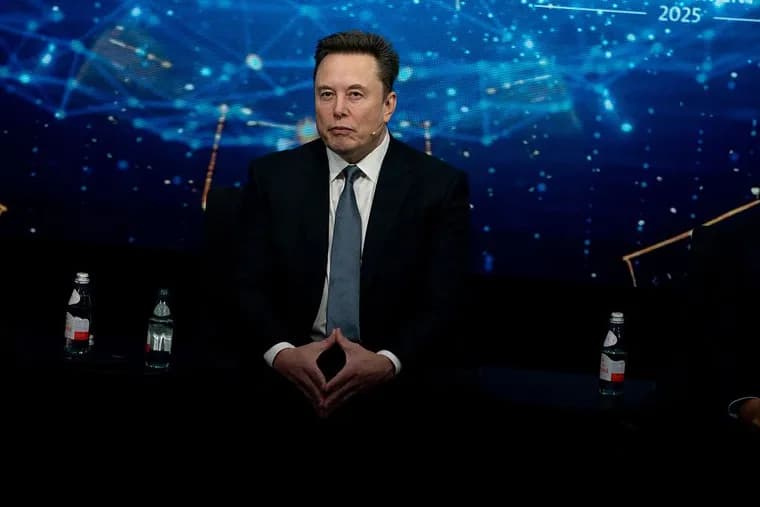
Elon Musk confirmed on Saturday that a secret foundry SpaceX has been building in Bastrop, Texas is meant to cast gas turbine blades and vanes in-house. The confirmation came hours after The Information published a report pointing to the same site, based on job listings that explicitly mention a "blades and vanes foundry" and on findings from Corey Trinetti, a due diligence specialist who writes detailed reviews of AI infrastructure sites in his newsletter; Trinetti had reported that SpaceX bought roughly 830 acres near its existing Starlink factory in Bastrop between March and June.
On X, Musk wrote: "SpaceX and Tesla are each building 100GW/year of solar production capacity as fast as possible, but natural gas will still be needed to supplement and bootstrap solar for several years. The limiting factor for nat gas turbine production is casting the blades & vanes. By doing in-house casting at SpaceX, we can accelerate nat gas turbines coming online by up to 18 months, which is a profound game-changer."
The move targets a bottleneck sitting beneath the AI industry's more visible GPU shortage. Nvidia's newest Blackwell chips still ship with lead times of several months, but a second constraint has emerged alongside chip supply: the physical power grid. The International Energy Agency projects global data center electricity use will roughly double by 2030, and turbine maker GE Vernova says it is essentially sold out of production capacity through 2030, largely because of AI infrastructure demand. That shortage is why building private gas-fired plants next to data centers, rather than waiting on the grid, has become a standard strategy for hyperscalers including Amazon, Google, Meta, OpenAI and Microsoft, all of which are now leaning on natural gas after years of prioritizing wind and solar.
The casting step is the specific choke point. According to The Information, the blades in a gas turbine's hottest section run at roughly 3,000 to 3,600 degrees Fahrenheit, about 800 degrees hotter than the melting point of the metal alloy they are made from; they survive only because of internal cooling channels, thermal-barrier coatings and the way each blade is cast, as a single unbroken crystal grown slowly inside a vacuum furnace, without the microscopic seams that let ordinary cast metal crack under stress. Only four companies worldwide have mastered that process at industrial scale, and all four are currently tapped out. If SpaceX pulls it off, a Musk-controlled entity would hold a manufacturing capability every other AI infrastructure builder now depends on that small group for, an edge a well-funded but non-manufacturing rival could not quickly copy.
Faster turbine deployment carries a cost the article lays out in detail. In Memphis, where SpaceXAI has run gas turbines to power its Colossus data centers since 2024, the NAACP has repeatedly accused the company of operating those turbines without the permits or pollution controls federal law requires, pointing to smog-forming compounds and hazardous chemicals like formaldehyde linked to asthma, respiratory disease and certain cancers; the site sits near neighborhoods that already face heavy industrial pollution, and University of Memphis researchers said their own, admittedly limited, analysis found air pollution grew "slightly worse" because of the data center. In Virginia's "Data Center Alley," a study commissioned by the Piedmont Environmental Council used the EPA's own COBRA health-impact model to assess a single facility's eight full-time gas turbines. It found their emissions could reach more than 2.5 million people across multiple counties, with the heaviest impact on already-marginalized communities, and estimated they cause 3.4 to 6.5 additional premature deaths a year, translating to $53 million to $99 million in annual health-related damages.
Key facts
- Musk confirmed a secret SpaceX foundry in Bastrop, Texas will cast gas turbine blades and vanes in-house, which he says can accelerate nat gas turbine deployment by up to 18 months.
- The confirmation followed a report from The Information citing job listings for a "blades and vanes foundry" and Corey Trinetti's finding that SpaceX bought roughly 830 acres near its Bastrop Starlink factory between March and June.
- Only four companies worldwide currently cast turbine blades, which run at 3,000 to 3,600 degrees Fahrenheit, at industrial scale, and all four are sold out; GE Vernova says its own capacity is essentially booked through 2030.
- Amazon, Google, Meta, OpenAI and Microsoft are all now building private gas-fired power plants next to data centers instead of waiting on the grid, as the IEA projects data center electricity use will roughly double by 2030.
- A Piedmont Environmental Council study using the EPA's COBRA model found one Virginia facility's eight gas turbines could expose more than 2.5 million people and cause 3.4 to 6.5 extra premature deaths a year, on top of NAACP permit complaints over SpaceXAI's Memphis turbines.
Why it matters
The AI buildout has run into a second bottleneck beyond GPUs: the power grid itself, and specifically the turbines needed to bring gas power online fast enough to meet data center demand. Casting the blades and vanes inside those turbines is the single hardest step in making them, and only four companies worldwide can do it at industrial scale, all of them already sold out for years. By bringing that casting in-house, SpaceX is trying to remove a supplier dependency that currently constrains every hyperscaler racing to power AI data centers, not just its own operations.
Who it affects
Every hyperscaler building private gas plants next to data centers, including Amazon, Google, Meta, OpenAI and Microsoft, competes for capacity from the same four turbine-blade casters that SpaceX is trying to bypass; a working in-house foundry would give SpaceX a manufacturing edge those rivals cannot quickly replicate. It also affects communities near existing SpaceXAI turbine sites: residents in Memphis, where SpaceXAI has run gas turbines since 2024 and the NAACP has repeatedly raised permit and pollution complaints, and in Virginia's "Data Center Alley," where a modeled study puts more than 2.5 million people within the exposure range of gas turbines serving a single facility.
How to use it
There is no product or price here; the practical takeaway is a timeline signal. If SpaceX's in-house casting works, Musk's claimed 18-month acceleration would move some of its natural gas turbine capacity, and by extension AI compute capacity, online faster than the industry's current supply chain allows. Anyone tracking AI infrastructure buildout should watch whether the Bastrop foundry ships working blades rather than treat the announcement itself as proof of new capacity.
How solid is it
The foundry's existence is confirmed directly by Musk on X, in response to a same-day report from The Information that had already identified the site from job listings and from Corey Trinetti's land-purchase research. The technical difficulty of the casting process, the four-company oligopoly, and the temperature figures come from The Information's reporting rather than from Musk. What is not yet demonstrated is that SpaceX can actually produce industrial-scale, single-crystal turbine blades without defects; the article is explicit that pulling this off is easier said than done even for specialists who already do it.
Risks and caveats
The article gives no cost, output capacity, or completion timeline for the Bastrop foundry itself beyond Musk's 18-month acceleration claim, and it includes no response from SpaceX, Tesla, or GE Vernova to the pollution findings or to the Piedmont Environmental Council study. It also does not name the four companies that currently dominate blade casting, or report any outcome, such as a lawsuit or regulatory ruling, from the NAACP's repeated accusations over the Memphis turbines. The core tension the story leaves open is that faster turbine deployment, which is the entire point of the in-house foundry, is also what drives the premature-death and health-cost estimates tied to existing gas turbine sites.
“The limiting factor for nat gas turbine production is casting the blades & vanes. By doing in-house casting at SpaceX, we can accelerate nat gas turbines coming online by up to 18 months, which is a profound game-changer.”
— Elon Musk, in a post on X