Tech leaders blame China for the US data center backlash
WIRED launched a new weekly column called Power Play, written by senior writer Molly Taft, to track data centers as a hot political issue heading into the midterms; the debut edition also promotes WIRED's first data center livestream on Thursday, September 10, with Taft, senior politics correspondent Hugo Lowell and senior business writer Max Zeff. Public opposition to data centers has hardened: as many as 75 percent of Americans now say they would oppose one being built in their area, up from 42 percent last year. Politicians who once championed the buildout, including Texas governor Greg Abbott and Pennsylvania governor Josh Shapiro, are now talking tougher on the issue as the midterms approach, even as President Donald Trump keeps pushing for more data center construction.
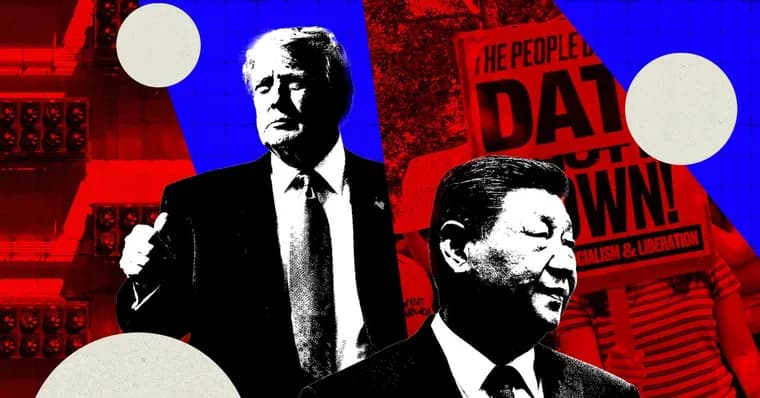
Against that backdrop, some Republicans and prominent tech leaders have doubled down on a different explanation: that China is behind the backlash. In late August, X said it had identified 200 accounts linked to China spreading anti-data center talking points, a finding Axios covered under the headline "China is secretly fueling America's data center rage" and that data center-friendly politicians and right-wing figures then amplified on X itself. Trump joined in on Truth Social, writing "China could not be happier with this anti Data Center movement" and "let Data Reign!" just days after the X report. The China-blame narrative is not new: in the spring, several reports from right-wing policy shops pointed to the Chinese Communist Party as a source of anti-data center sentiment, and in June OpenAI banned a cluster of accounts it said were linked to the Chinese government and "testing narratives against AI infrastructure."
The article argues the evidence for that framing is thin. OpenAI's own June report acknowledged that the accounts it flagged were simply exploiting discontent about data centers that already existed rather than manufacturing it. Taft notes X's later purge may overlap with the accounts OpenAI flagged, since both use similar hashtags and images and several link to the same obscure local news article, though this connection is speculation rather than confirmed. The scale also cuts against the alarm: X's 200 anti-data-center accounts were part of a bot farm of 200,000 accounts total, making them a small fraction of the wider network. Tyler Williams, vice president of intelligence at Graphika, a firm that tracks data center sentiment online, told Taft this week that there is still very little evidence of significant foreign intervention and that most opposition remains homegrown, which matches what Graphika said in June. Unnamed China experts Taft spoke with earlier this year said the most-cited Washington report alleging foreign influence leans heavily on insinuation and assumption rather than hard evidence.
Blogger Andy Masley, whose pro-data-center writing is popular with tech boosters on X and whose blog is largely funded by a grant from effective-altruist philanthropy Coefficient Giving, is skeptical of the China explanation despite his own sympathies for the industry. "As soon as I start talking China, they get quiet," he told Taft, adding: "It seems like a very convenient belief. I have my own biases as a Democrat, but I sometimes look at these [tech] guys and think, 'Oh, they had to meme themselves into being more right-wing a few years ago. They think right-wing people like it when you talk about China.'" Masley has publicly asked for any insider evidence of Chinese intervention and says he has not received anything solid.
WIRED's senior business editor and China specialist Louise Matsakis told Taft the episode reflects a basic misunderstanding of what real Chinese influence campaigns look like, and framed it as part of a broader pattern of scapegoating: "It is endlessly fascinating to me how China becomes a scapegoat," she said. "Americans often find it easier to put the blame on a nebulous other, rather than to actually look at themselves." Taft also points out the narrative sits awkwardly alongside Trump administration complaints that Chinese firms are stealing American AI advances, since it is unclear why Beijing would want to slow down the US infrastructure its own AI models are said to depend on.
The same newsletter edition links to related coverage: colleague Paresh Dave's reporting on Meta's push to build a robot workforce inside data centers; a dispute in Arkansas where utility Entergy sought a restraining order against the Arkansas Democrat-Gazette over its reporting on Entergy's data center deal with Google; a Financial Times piece on AI-linked unemployment among college graduates in Texas; and a Washington Post report on a wave of new state-level data center legislation heading into the 2026-2027 legislative year.
Key facts
- 75 percent of Americans now say they would oppose a data center being built in their area, up from 42 percent last year.
- In late August, X said it had found 200 China-linked accounts pushing anti-data center content, part of a wider bot farm of 200,000 accounts X identified overall.
- OpenAI's own June report on the accounts it banned said they were exploiting existing discontent about data centers, not manufacturing it.
- Graphika's Tyler Williams said there is still very little evidence of significant foreign intervention and that most opposition is homegrown.
- Blogger Andy Masley, who is otherwise sympathetic to the data center industry, said tech boosters go quiet when pressed for evidence of Chinese involvement, calling the narrative "a very convenient belief."
Why it matters
As public opposition to data centers hardens ahead of the midterms, some tech leaders and Republican politicians are reframing genuine local and political resistance as a foreign influence operation. That framing lets them avoid engaging with the actual drivers of the backlash, described in the piece as environmental worries, an oligarch-friendly political system and general wariness of AI, and it has already shaped news coverage and a presidential Truth Social post.
Who it affects
American voters weighing local data center projects; politicians like Greg Abbott and Josh Shapiro navigating the issue before the midterms; the data center industry and its advocates; OpenAI and X, both of which have made public claims about China-linked accounts; and readers trying to judge how much of the anti-data-center sentiment online is authentic versus coordinated.
How to use it
The piece is the first installment of a new WIRED newsletter, Power Play, running weekly on Sundays from senior writer Molly Taft, with a companion livestream on data centers on Thursday, September 10 featuring Taft, Hugo Lowell and Max Zeff; WIRED says it will take reader questions from the comments in future editions. The same edition links out to further reporting worth following: Paresh Dave on Meta's robot workforce in data centers, an Arkansas dispute over a utility's data center deal with Google, a Financial Times piece on AI and graduate unemployment in Texas, and a Washington Post roundup of new state data center legislation.
How solid is it
The case against the China narrative rests on several specific, attributed points rather than the author's assertion alone: OpenAI's own report undercuts the government-linked framing by describing the accounts as exploiting existing discontent; Graphika's Tyler Williams says there is still little evidence of foreign intervention; and unnamed China experts describe the most-cited Washington report on the topic as heavy on insinuation and light on hard evidence. The claimed overlap between OpenAI's flagged accounts and X's later purge, based on shared hashtags, images and a linked local news article, is presented by the author as a possibility, not a confirmed connection.
Risks and caveats
This is an opinion and analysis newsletter column, not a straight news report, and its skepticism of the China narrative rests substantially on characterizations from sources such as Graphika and unnamed China experts rather than on data the piece itself publishes. The article does not resolve whether any foreign influence exists at all, only that the evidence offered so far for a China-driven backlash is weak. It also does not name the right-wing policy shops behind the spring reports, identify the shared local news article, or say whether Entergy's restraining-order attempt against the Arkansas Democrat-Gazette succeeded.
“It is endlessly fascinating to me how China becomes a scapegoat. Americans often find it easier to put the blame on a nebulous other, rather than to actually look at themselves.”
— Louise Matsakis, WIRED senior business editor