TechCrunch: consumer AI economics stay poor despite Meta Muse, OpenAI Dots and Instinct
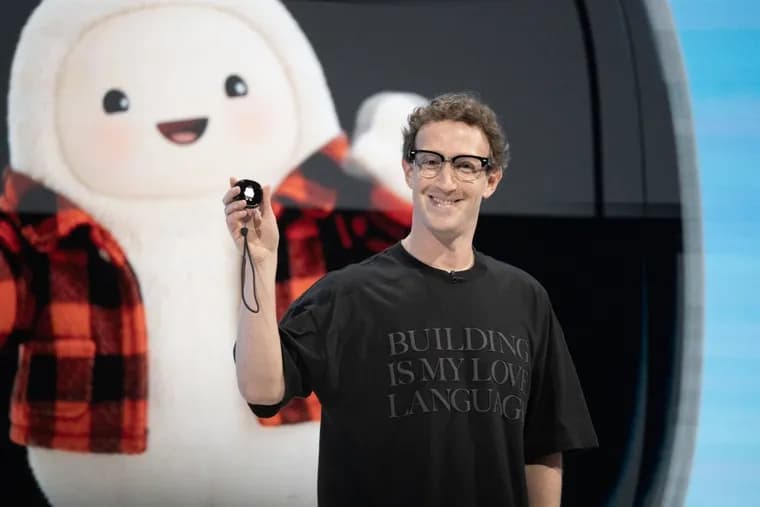
A TechCrunch analysis published on 30 September 2026 opens with the case for a consumer AI comeback. Meta's personal assistant Muse and its plush-like mascot Jolly has been a surprise hit. OpenAI's Dots, released the day before the piece ran, appears to be chasing the same cartoony personal-assistant idea. And the up-and-coming Instinct assistant reached a $10 billion valuation on the strength of agentic errand-running: booking travel, making restaurant reservations and cancelling subscriptions. The bull case, the article says, is that agentic AI has become reliable enough for everyday tasks and people are getting real value from it, which to an investor looks like the ChatGPT launch in 2022.
The article's counterargument is that frontier labs have become gunshy about consumer AI, and not because the technology is weak. Even hugely popular tech products are hitting a ceiling on what consumers will pay, and it is not clear that better models lead to a more profitable consumer business. The result, the author argues, is an industry-wide shift toward the Anthropic model of enterprise contracts and vertical-by-vertical expansion. If Muse and Instinct are bucking that trend, the article says, it is because they are less concerned with monetization, but the underlying economics are not improving and anyone entering the business will have to deal with them eventually.
The evidence starts with Andreessen Horowitz's semiannual State of Markets report, which took its figures from a PNC research report from this summer. Two charts track the slowly growing share of consumers paying for AI and the slowly growing amount they pay. As of May, 2.2% of consumers were paying for AI, at an average spend of $31 a month. Andreessen puts a positive spin on this, saying "it’s still so early when it comes to mature AI adoption and utilization." The article notes that growth in both charts looks linear, and that even as models improve hugely, the number of paying customers and their spend barely move. The jump from GPT-5.2 to Astra, for instance, is barely visible on the chart.
The per-consumer numbers are less striking but still far below break-even. Taking Netflix, at 325 million subscribers, as the standard for a market-saturated online service, $34 per customer only gets to $11 billion in annual revenue, less than a third of OpenAI's operating costs.
Other data points are similar. Bank of America found in March that roughly 3% of U.S. consumers paid for AI, up 40% from the previous year. A Menlo survey from September is slightly sunnier: a quarter of adults use AI daily and half of those users pay for it.
The article says the real problem is cost rather than revenue. AI is an unusually expensive technology to operate, particularly compared with lightweight predecessors like social networking or cloud computing, and even hundreds of millions of paying customers do not guarantee break-even.
OpenAI, the piece says, seems to have adapted well. Its widely reported pivot to enterprise has been largely successful, with enterprise bookings reportedly doubling since July, and even the Dots launch had a strong enterprise angle, showing how the new agent could help software engineers and agency creatives. The article describes the playbook as selling popular but cheap consumer services to businesses at a markup.
For Muse and Instinct the picture is less clear. Muse has the juggernaut of Meta's personalized ad targeting behind it, which gives it more monetization options and more time before the question becomes urgent; Meta is already exploring the enterprise angle. Instinct plans to take a cut of purchases made through the agent, which might raise the ceiling, and presumably it can avoid the cost of training a frontier model. Even so, the article concludes, the economics of consumer AI put a hard cap on how large the company can plausibly grow without enterprise revenue.
Key facts
- As of May, 2.2% of consumers paid for AI at an average of $31 a month, per a16z's State of Markets report, which drew on a PNC research report.
- Bank of America found roughly 3% of U.S. consumers paid for AI in March, up 40% from the previous year; a September Menlo survey found a quarter of adults use AI daily and half of those users pay.
- At Netflix's 325 million subscribers and $34 per customer, revenue would be $11 billion a year, less than a third of OpenAI's operating costs.
- The article argues the core problem is the cost of running AI, and that labs are shifting to enterprise contracts, with OpenAI's enterprise bookings reportedly doubling since July.
- Meta's Muse and Instinct (valued at $10 billion) are consumer-first; the article says they are less concerned with monetization, and that Meta is already exploring an enterprise angle.
Why it matters
The piece challenges the idea that a wave of popular consumer assistants means consumer AI is now a good business. Its argument is that adoption and spending grow slowly and in a near-linear way, even when model quality jumps, and that AI costs far more to run than social networking or cloud computing. That would explain why the major labs, in the article's words, have already learned to lean on enterprise revenue.
Who it affects
Frontier labs and their investors, first of all: OpenAI is described as having pivoted to enterprise, and the article sees the wider industry following the Anthropic model. Meta (Muse and Jolly) and Instinct are the consumer-first players whose monetization is now in question. Anyone valuing consumer AI startups is also affected, since Instinct reached a $10 billion valuation on errand-running agents.
How to use it
There is nothing to install or buy; this is an argument rather than a product. The useful part is the set of yardsticks it assembles: 2.2% of consumers paying as of May at an average of $31 a month (a16z, from PNC), roughly 3% of U.S. consumers in March (Bank of America), and the Netflix-scale test of 325 million subscribers at $34 each giving $11 billion a year. A reader can apply the same test to any consumer AI pitch.
How solid is it
The article is an analysis with a clear thesis, not original reporting. Its adoption figures come from named third parties: Andreessen Horowitz's State of Markets report (drawing on a PNC report), Bank of America and a Menlo survey. The article calls the Bank of America figures similar to the PNC-based ones and the Menlo survey slightly sunnier. Claims about OpenAI are hedged in the source: enterprise bookings are 'reportedly' doubling, and the pivot is 'widely reported'. The source does not quote any executive of Meta, OpenAI or Instinct.
Risks and caveats
The thesis rests on the author's reading of the a16z charts and on a hypothetical, not on company financials. The source gives both $31 a month (average spend) and $34 per customer without explaining the difference, and does not say whether $34 is monthly or annual. It gives no figure for OpenAI's operating costs, only that $11 billion is less than a third of them. The remarks on Instinct are hedged: its revenue-share plan 'might' raise the ceiling and it will 'presumably' avoid frontier-model training costs. a16z itself reads the data as a sign that it is still early for mature adoption.
“it’s still so early when it comes to mature AI adoption and utilization.”
— Andreessen Horowitz, as quoted by TechCrunch