Timnit Gebru says AI existential-risk talk is marketing and regulatory capture
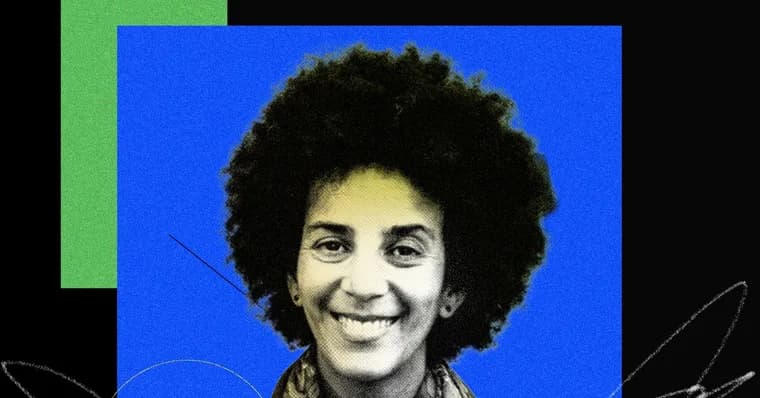
Wired published a Q&A with AI researcher Timnit Gebru, conducted by Lauren Goode and edited for length and clarity. Gebru rose to public attention after a dispute with Google over a paper she coauthored, which argued that large language models basically parroted their training data and risked perpetuating biased viewpoints. The dispute ended with her leaving the company; she then founded an institute that investigates harms perpetuated by technology. Her book, Deep Unlearning: The Rise of AI and the Radicalization of a Tech Idealist, is expected to ship early next year. The introduction adds that some members of the existential-risk community, including an Anthropic cofounder, have alleged that her earlier stochastic-parrots research is no longer relevant and that AI can "think" or reason. It also notes that her views on the cult-like aspects of the effective altruism community have aligned her with some right-wing entities who also criticise those groups.
The interview starts from a recent event: a young AI researcher at Anthropic stepped down a few weeks earlier, and in his resignation post on X said many people inside the company feel AI poses a major existential risk. Gebru says the existential-risk narrative is not only a distraction but harmful. She points to its history: by her account Elon Musk and Peter Thiel have been saying AI is an existential risk since 2013, and "it is exactly the same rhetoric every three years."
Her central argument is about money and independence. She says the Future of Life Institute was founded by Max Tegmark, whom she describes as a physicist at MIT now, and Jaan Tallinn, a billionaire who led Anthropic's Series A funding (Goode adds that he was a Skype cofounder). Gebru says Tallinn also funds METR, an auditor whose report about OpenAI's so-called rogue agents hacking Hugging Face went viral. In her telling, the same billionaires who founded and funded Anthropic, and who stand to benefit from its IPO more than anybody else, also founded and funded the institutions warning about existential risk and the third parties now cited as if they were independent.
She says the message works on three audiences. To investors it says: you want to get your hands on these super powerful machines. To governments it says: you don't want your adversaries to get them. To regulators it says that whatever regulation they are considering should be about these fictional super powerful things, while pollution, data centers and copyright lawsuits look like small potatoes. She adds that executives say AI could cause an existential risk and also that it could stop climate change, bring world peace and eradicate poverty. She says the framing also lets companies abdicate responsibility, and that it presents AI as exempt from current law, when existing laws already apply. She credits former FTC commissioner Lina Khan with the point that there is no exception to current laws for AI companies.
Goode raised the recent UN General Assembly week, where Gebru says she was on a side panel and not admitted to the General Assembly or Security Council. Goode says Sam Altman and Dario Amodei both spoke about the need for global cooperation on existential risks; Amodei reportedly said, "If managed poorly, I even believe AI could be a risk to humanity as a whole," and Altman said, "We could lose control of the future to AI." Asked whether this is regulatory capture, Gebru answered: "Absolutely, it's part of regulatory capture." She says the pattern is old: in 2023 Altman also called for world cooperation, then, after the EU AI Act regulated, threatened to pull out of the EU. Her claim is that when regulation holds the companies liable for real things they do, they threaten to leave or lobby hard to water it down. The talk of superintelligence, she says, is also marketing, and it makes people afraid of anyone else building such systems, including open-weight models from China. She says she is not following Chinese regulation closely, but that Chinese regulators are talking about deepfakes, not existential risk. In her book, she says, the pattern is "the same movie on repeat with different heroes."
On language, Goode asks about terms such as P(doom) and "rogue" agents; Gebru has argued before that saying agents went rogue removes culpability from the engineers who built them. She says she regrets using the phrase "autonomous weapons" in an earlier conversation. Her issue is not with the term, which she calls a legal term (even land mines count legally), but with the existential-risk camp co-opting it to mean a superhuman machine acting on its own.
Asked what governance she would propose, Gebru says she is not a legal scholar and relays five measures she attributes to former FTC commissioner Lina Khan. The text shows the first two: enforcing the law on deceptive marketing practices, and transparency and documentation, meaning companies should be able to say where all their training data came from. She says they will fight tooth and nail against even documenting data. She also names labor exploitation of data workers, which she says the companies do not want to talk about, noting that hundreds of millions of people around the world are painstakingly labeling data, even pretending to be chatbots. Goode then cites a 404 Media report that the new Meta Muse chatbot, for some use cases, has a person on the other end responding; the available text of the interview ends there.
Key facts
- Timnit Gebru calls the AI existential-risk narrative not just a distraction but harmful, and says Elon Musk and Peter Thiel have pushed it since 2013 with the same rhetoric "every three years".
- She says the same billionaires who founded and funded Anthropic, and stand to gain from its IPO, also fund the institutions warning about existential risk and the third-party auditors now widely cited, including Jaan Tallinn's funding of the Future of Life Institute and METR.
- Asked whether Sam Altman's and Dario Amodei's UN remarks on global cooperation are regulatory capture, she answered: "Absolutely, it's part of regulatory capture."
- She says that when regulation holds AI companies liable they threaten to pull out or lobby to water it down, citing Altman's threat to leave the EU after the EU AI Act.
- Her proposed governance steps, which she attributes to former FTC commissioner Lina Khan, include enforcing deceptive-marketing law, documenting training data, and addressing labor exploitation of data workers.
Why it matters
The argument over AI has become a fight over narratives as much as technology. Gebru's case is that talk of humanity-ending machines serves commercial and political ends: it markets the products as unprecedented, pushes governments to see AI as a race, and steers regulators toward fictional threats instead of pollution, data centers, copyright suits and deceptive marketing. The interview also carries a counter-charge against her: some in the existential-risk community, including an Anthropic cofounder, say her earlier stochastic-parrots work no longer applies to today's AI. The text available here does not reach her full answer to that critique.
Who it affects
Regulators and lawmakers deciding which AI harms to target, and the AI companies and their backers named in the interview (Anthropic, OpenAI, Jaan Tallinn, the Future of Life Institute, METR). It also affects anyone who reads safety reports or audits and needs to know who funds them, plus the data workers Gebru says label data for the industry in their hundreds of millions.
How to use it
Treat it as a lens for reading AI-risk announcements: ask who is speaking, who funds the group or auditor, and what regulation the message steers toward or away from. Gebru's own short list of governance measures, which she attributes to Lina Khan, is a practical starting point: apply existing deceptive-marketing law, require transparency and documentation of training data, and address labor exploitation of data workers. Her book Deep Unlearning is expected to ship early next year.
How solid is it
This is an interview, so most of the substance is Gebru's own opinion and characterisation. The funding links involving Tallinn, METR and Anthropic are her statements; the piece includes no evidence beyond them and no response from Tallinn, METR, Anthropic or OpenAI. She says herself that she is not a legal scholar and is not following Chinese regulation closely, and the hundreds-of-millions figure for data labelers is a rough, unsourced number. The Altman and Amodei remarks are read out by the interviewer, with Amodei's marked "reportedly". The text is edited for length and clarity, and the available version ends partway through, so later answers are not covered here.
Risks and caveats
The piece presents one side of a live dispute, and the Anthropic researcher who resigned and the Anthropic cofounder who criticised Gebru's research are not named. Gebru's claim that warnings and funding come from the same people is a claim about motives, and the interview does not show that the risk warnings are insincere or wrong. Her list of Lina Khan's five measures is only partly visible, so it should not be treated as complete. Details such as the OpenAI rogue-agents report and the Meta Muse remark are given only in passing or cut off.
“I would even go farther than that and say that it’s dangerous. It’s not just a distraction, but it’s harmful.”
— Timnit Gebru, in a Wired interview with Lauren Goode