Texas funneled $30M in car insurance fees into Flock cameras
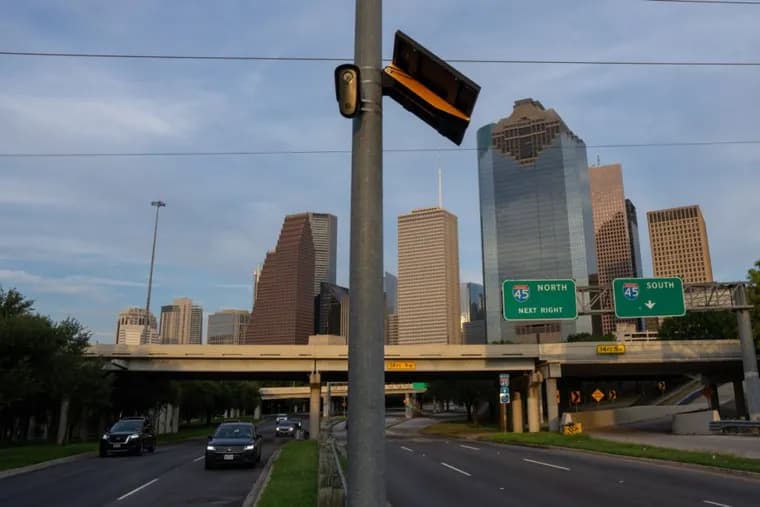
In 2023 the Texas Legislature unanimously passed a bill, named for Harris County Deputy Darren Almendarez, who was shot to death after interrupting catalytic converter thieves in a grocery store parking lot, that added $1 to every driver's annual car insurance premium to fight a wave of catalytic converter theft. The legislation never mentioned license plate readers. But a Texas Tribune investigation, built on the state Motor Vehicle Crime Prevention Authority's own meeting records plus documents, agendas and discussions from 101 separate city councils and county commissions, found the agency has since turned at least $30 million of that fee into at least 3,200 Flock surveillance cameras placed along highways and streets from El Paso to the Louisiana border.
The authority, whose board is mostly appointed by Governor Greg Abbott, has awarded at least 95 grants to help local police buy and maintain about 2,000 of those Flock cameras. A further $15.9 million has gone to the Texas Department of Public Safety (DPS) for almost 1,200 more, and in early August the authority approved another $3 million so DPS can install 583 additional cameras along Texas tollways over the coming year. Individual grants ranged from $7,000 for two cameras in Bellmead, near Waco, to almost $1.7 million for 201 cameras in Dallas; some local networks, including 165 cameras in Laredo and 150 in El Paso, were entirely paid for by the grants. Because 124 of the authority's grants lack clear public documentation of what they bought, the Tribune says the true number of state-funded cameras is likely higher still. Overall, the $1-a-year fee has raised an estimated $81 million since 2023, of which $50.8 million has gone into 234 broader grants covering things like officers, crime analysts, prosecuting attorneys, drones and other surveillance devices.
Authority chair Miguel Rodriguez, who is also the Laredo police chief, told an August 2023 meeting he hoped fee proceeds could eventually 'cover the entire state' with cameras, framing them as a tool against transnational criminal organizations. The process was not improvised: anticipating the new revenue in 2023, the authority polled law enforcement on how to spend it, and automatic license plate readers came back as by far the top choice, ahead of overtime pay for investigators or additional training. Rodriguez says the cameras are especially suited to catalytic converter theft, which he calls a 'mobile, high-volume, low-witness crime' where the vehicle itself is often the only lead; without them, he says, departments were left working from partial descriptions taken off grainy surveillance footage.
After the Tribune made repeated requests for comment about its findings, Abbott's office said on Friday evening that the governor was pausing all state funding for local grants used for Flock cameras. Spokesperson Andrew Mahaleris said that where cities do get funding for the cameras, most of it comes from the federal government, and that Texas agencies are now clarifying that their own funds cannot be used for Flock cameras. That same week, a Lufkin officer was indicted on August 24 on 100 counts of misusing official information, a case Abbott himself called a concerning development in a Friday radio interview.
Several legislators tied to the 2023 fee increase say they had no idea it would end up funding AI license plate readers. State Sen. Carol Alvarado and Rep. Jeff Leach, described as the bill's author and House sponsor, said surveillance cameras were never discussed while the bill was being considered. Alvarado said, 'I did not have that in mind when we passed the bill'; she said she had pictured the money going toward 'more boots on the ground, hiring more officers to tackle the crime or some type of undercover work,' not cameras, though she does not plan to file legislation changing the grant rules. Rep. Brian Harrison, who voted for the bill and has filed bills in both 2023 and 2025 requiring a warrant before police can access license plate reader data, said: 'In a million years, I never could have even contemplated that this would be used to fund what is effectively warrantless surveillance. Otherwise, I can't imagine it would have gotten unanimous support. I sure as hell wouldn't have voted for it if I knew some bureaucrat was going to redirect the money to Flock cameras.' Rep. Mitch Little said, 'The sheer volume of information captured is not something that is entertained, in my view, by the Fourth Amendment.'
Flock, described as the country's most widely used license plate reader, uses artificial intelligence to build a 'vehicle fingerprint' for every car it photographs: plate, make, model, color and identifying details such as dents or bumper stickers, stored in a database that law enforcement anywhere in the country can search without a warrant. Flock itself does not disclose how many cameras it has deployed, but Texas is estimated to have the second-most in the country after California; nationally, Flock says about 7,000 agencies use a combined 120,000 of its cameras and other products. The crowdsourced watchdog DeFlock has independently mapped about 13,000 Flock cameras in Texas, up sharply from the roughly 7,500 a company spokesperson cited to the authority's board in December 2023; by DeFlock's count, the insurance fee has now paid for one in four of the state's Flock cameras. DPS separately holds its own $28.5 million Flock contract outside the authority's grants, and departments that join Flock's national lookup network can search each other's data from anywhere in the country.
Police departments describe real operational gains. License plate reader data was searched 62,000 times in 2025, clearing about 1,660 catalytic converter theft cases, according to an authority report. Pasadena Sgt. Douglas Buckert said the cameras 'changed the game' for such investigations: 'The number of leads we've gotten since our department has deployed Flock cameras is outrageous. I could have six more investigators and not get it all done.' Dallas Sgt. Bryan Roden said an authority grant let his department grow its own network from 100 to 300 cameras, helping bust a million-dollar tire theft ring, solve a hit and run, and, working with the Department of Homeland Security, track down a fugitive wanted for cocaine manufacturing by building a 'pattern of life assessment' from the cameras he regularly passed. In Temple, crime analyst Mike Treehern said the cameras, 84% of them state-funded, helped decrease the number of stolen vehicles in his city. In Cibolo, a city of 36,000 north of San Antonio, an authority grant grew the local Flock network from 11 to 52 cameras; Lt. John Wells said Cibolo only started looking into cameras after noticing neighboring Seguin, Guadalupe County and the New Braunfels Police Department already pursuing them through the authority. Flock spokesperson Trevor Chandler said cross-agency data sharing was 'one of the most effective ways' the company has helped find missing people, citing more than 10,000 found last year.
A growing coalition of Texans opposes the buildout. Kenneth Feagins, an organizer with the grassroots group DFW DeFlock, said he sees an 'alarming trend' of officers improperly accessing a network capable of mapping where people live, shop, worship and work: 'There's a lot of malicious things that can be done with this data, and those things are no longer hypothetical.' Hannah Foust, founder of DeFlock Carrollton, said the grant program has shifted the effort's focus from stopping car thieves toward a much broader surveillance program. The concern is not abstract: beyond the Lufkin officer's 100-count indictment, officers in Baytown, Harris County, Fort Bend County, Temple and Pasadena have also been arrested, disciplined or investigated, and the Tribune reports other recently revealed misuse nationally includes officers using Flock data to stalk ex-partners and co-workers. The Motor Vehicle Crime Prevention Authority itself was created by the Legislature in 1991 to fight car theft and is run by a DPS official alongside six board members Abbott appoints, two each from law enforcement, the insurance industry and consumer advocates; its grants are funded by fees on Texans' auto insurance bills that started at $1, rose to $2 in 2011 and $4 in 2019, mostly funding police task forces, before the 2023 law added another $1 earmarked specifically for catalytic converter theft.
Key facts
- Texas's Motor Vehicle Crime Prevention Authority has funneled at least $30 million from a $1 car insurance fee, originally passed to fight catalytic converter theft, into at least 3,200 Flock license plate cameras statewide, a Texas Tribune investigation found.
- The spending breaks down into at least 95 grants covering about 2,000 cameras, a separate $15.9 million helping the Texas Department of Public Safety add almost 1,200 more, and a fresh $3 million approved in early August for 583 additional DPS cameras along Texas tollways.
- State Sen. Carol Alvarado and Rep. Jeff Leach, described as the bill's author and House sponsor, along with Rep. Brian Harrison, who voted for it, all say license plate readers were never discussed before the 2023 fee increase passed unanimously; Harrison said he would not have voted for it had he known.
- After the Tribune sought comment on its findings, Governor Greg Abbott's office said it is pausing all state funding for local Flock grants; that same week, a Lufkin officer was indicted on 100 counts of misusing official information, a case Abbott himself called concerning.
- Crowdsourced watchdog DeFlock counts about 13,000 Flock cameras in Texas, meaning the insurance fee has funded one in four of them, up sharply from about 7,500 cameras in December 2023.
Why it matters
A fee that Texas lawmakers passed unanimously to fight catalytic converter theft has become one of the biggest funding streams behind a fast-growing, AI-powered vehicle surveillance network, without the legislature ever voting on that specific use. The bill named for a slain sheriff's deputy said nothing about license plate readers, yet a little-known agency turned it into thousands of cameras that store every passing vehicle's plate, make, model, color and identifying marks in a nationwide, warrant-free searchable database. That the story forced Governor Greg Abbott's own office to announce a funding pause, and that Republicans and Democrats alike say they were kept in the dark about how the money would be used, signals this is not a fringe privacy complaint but a bipartisan credibility problem for how Texas funds and oversees mass surveillance.
Who it affects
Every driver who pays Texas car insurance is funding the buildout, whether they know it or not, and every driver whose plate passes a Flock camera has a 'vehicle fingerprint' logged in a database that law enforcement anywhere in the country can search without a warrant. State legislators who backed the fee, including Alvarado, Leach and Harrison, now find their votes tied to a use they say they never approved. More than 100 city councils and county commissions, and the police departments they fund, from Laredo to Dallas to small cities like Cibolo and Bellmead, depend on these grants for equipment they say they could not otherwise afford. Flock, the company, gains a larger footprint among the roughly 7,000 agencies nationwide already using its 120,000 cameras and other products. And privacy groups such as DeFlock and DFW DeFlock, alongside officers already indicted or disciplined for misusing the system, sit on opposite sides of the exact accountability gap this reporting exposes.
How to use it
There is no product to buy here, but there are concrete ways to act on the reporting. DeFlock's crowdsourced map lets any Texan check how many Flock cameras operate near them, the same kind of tracking the Tribune combined with the authority's own meeting minutes and local government records. Residents or reporters in any of the roughly 100 Texas cities and counties named in the piece can pull their own council or commission's Flock-related grant discussions to see what was purchased and disclosed locally, since the state agency itself does not publish that breakdown. Anyone concerned about warrantless access can follow Rep. Brian Harrison's bills, filed in 2023 and again in 2025, which would require police to get a warrant before searching license plate reader data, as a legislative lever separate from the governor's funding pause.
How solid is it
This is original Texas Tribune reporting, built by cross-referencing the vehicle authority's own meeting records against documents, agendas and discussions from 101 separate city councils and county commissions, a labor-intensive method needed precisely because the state agency itself does not detail how much of its grant money went to Flock cameras. Named, on-the-record sources, including the authority's chair, a governor's spokesperson, sitting state legislators and multiple police officials, are quoted directly, and the dollar and camera figures are tied to identifiable grants rather than estimates. The gaps are disclosed rather than hidden: 124 grants lack clear public documentation of what they bought, so the Tribune's own $30 million and 3,200-camera figures are explicitly framed as floors, not totals, and the true scale is likely larger.
Risks and caveats
Nearly every headline figure here is a stated minimum: 'at least $30 million,' 'at least 3,200 cameras,' 'at least 95 grants,' because 124 grants were not documented well enough for the Tribune to verify what they funded. Statewide totals for Flock cameras are themselves estimates: Flock does not disclose its own deployment numbers, and the roughly 13,000 figure comes from a volunteer-run crowdsourcing project, DeFlock, not an official count. Abbott's announced pause is a spokesperson's statement about local grants, not legislation, and it does not appear to touch DPS's own separate $28.5 million Flock contract or the federal grants Abbott's office says already fund much of the network; Alvarado, despite her surprise, said she does not plan to file a bill changing how the fee can be spent. Meanwhile the harms cited are not hypothetical: a Lufkin officer faces 100 counts of misusing official information, and officers in Baytown, Harris County, Fort Bend County, Temple and Pasadena have also been arrested, disciplined or investigated over misuse of the same camera network this funding has built.
“In a million years, I never could have even contemplated that this would be used to fund what is effectively warrantless surveillance. Otherwise, I can't imagine it would have gotten unanimous support. I sure as hell wouldn't have voted for it if I knew some bureaucrat was going to redirect the money to Flock cameras.”
— Rep. Brian Harrison, R-Midlothian