Trump signs space policy targeting 1,000 launches a year by 2030
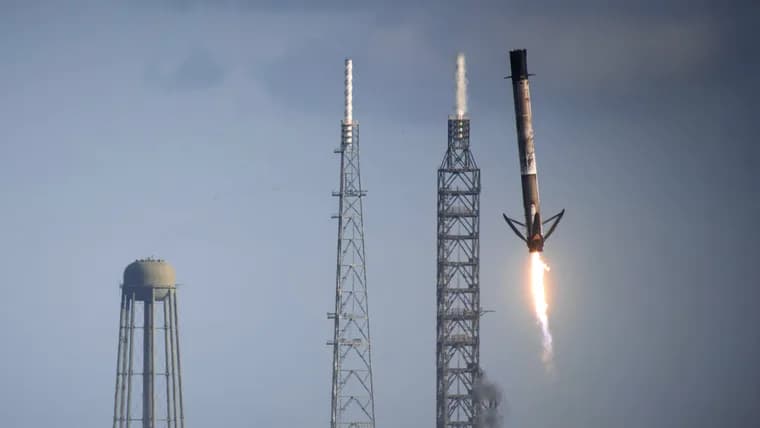
President Donald Trump signed a new national space transportation policy on Thursday that replaces a 2013 policy signed by former President Barack Obama. Both policies emphasize supporting the commercial space industry and assured access to space, but the launch sector has grown enormously since 2013: there were 176 orbital launch attempts from US soil last year, nearly 10 times the 2013 total. SpaceX led with 165 orbital Falcon 9 launches plus five suborbital Starship test flights. The new policy states that by 2030 the country's space transportation ranges must grow to support more than 1,000 launches and reentries a year, and that the policies set out in the memorandum will secure US superiority in space. It calls on the Pentagon and NASA to prioritize and coordinate infrastructure investments at federally owned launch and reentry ranges: Cape Canaveral Space Force Station and Kennedy Space Center in Florida, Vandenberg Space Force Base in California, and Wallops Flight Facility in Virginia. Only the Florida and California sites currently handle heavy-lift launches. The policy also calls for more efficient range scheduling that balances commercial and government missions, and directs the military and NASA to regularly publish range schedules for transparent resource allocation, since most launch schedules today are not public until a few days or weeks ahead. The projected surge in demand is attributed to commercial and military needs for communications services, overhead surveillance, space-based targeting, and orbital data centers.
Key facts
- The policy targets more than 1,000 launches and reentries per year by 2030, replacing a 2013 policy signed by Barack Obama
- US orbital launch attempts hit 176 last year, nearly 10 times the 2013 figure, with SpaceX responsible for 165 Falcon 9 launches plus five Starship suborbital tests
- The Pentagon and NASA are directed to prioritize infrastructure investment at four federal ranges: Cape Canaveral, Kennedy Space Center, Vandenberg, and Wallops
- Only the Florida and California ranges are currently equipped for heavy-lift launches
- The policy requires regular publication of range schedules, which today are typically made public only days or weeks in advance
Why it matters
US launch activity has grown nearly tenfold since 2013, when the policy this one replaces was signed, and the government is now formalizing a target of over 1,000 launches and reentries a year by 2030. That is a statement that current federal range infrastructure and scheduling practices, built for a much smaller cadence, need to scale, and it puts the Pentagon and NASA on the hook to coordinate that build-out rather than let it happen ad hoc.
Who it affects
Commercial launch providers, SpaceX foremost among them given its 165 Falcon 9 launches and five Starship suborbital tests last year, stand to benefit from expanded range capacity and more predictable scheduling. The Pentagon and NASA are directly tasked with the infrastructure coordination. The four federal spaceports named, Cape Canaveral Space Force Station, Kennedy Space Center, Vandenberg Space Force Base, and Wallops Flight Facility, are where that investment is meant to land, though only the Florida and California sites can currently handle heavy-lift vehicles.
How to use it
For companies planning launches, the practical change to watch is the shift toward regularly published range schedules, since today's schedules typically surface only a few days or weeks ahead, which complicates long-range mission planning. Anyone tracking federal space infrastructure spending should watch for how the Pentagon and NASA translate the coordination mandate into actual capacity at the four named ranges, particularly whether Wallops gains heavy-lift capability alongside Florida and California.
How solid is it
This is reporting on a signed presidential memorandum, a concrete policy document quoted directly in the source, not a proposal or a leak. The launch and SpaceX figures cited are stated as facts about the prior year. The source does not give a calendar date for the signing beyond "Thursday," and the source's own framing that the policy calls for developing more spaceports maps onto expanded investment at the four existing federal ranges it names, not a specific new site.
Risks and caveats
No dollar figures or budget amounts are given for the infrastructure investments the Pentagon and NASA are told to prioritize, no named officials are quoted, and no timeline is provided for when the new scheduling criteria or the regular publication of range schedules will actually take effect. The 1,000-launches-a-year figure is a 2030 target set out in the policy, not a current achievement or a guaranteed outcome.
“By 2030, our space transportation ranges must grow to support more than 1,000 launches and reentries every year. The policies set forth in this memorandum will secure America's continued superiority in space.”
— the national space transportation policy