US Department of Energy funds $1.9B grid push to free up 23GW for datacenters
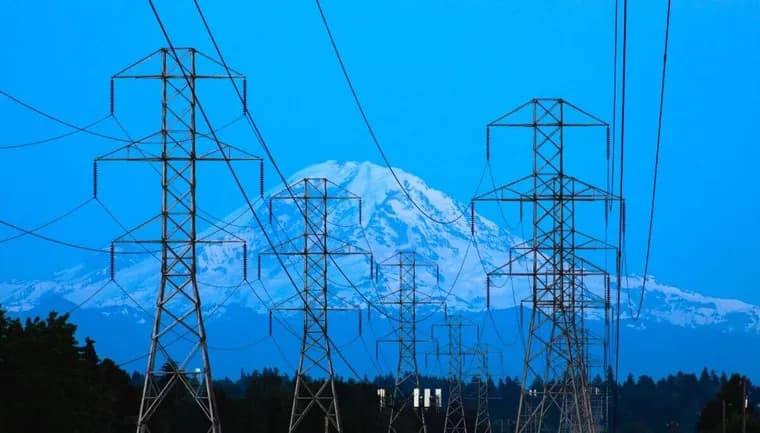
The US Department of Energy announced this week that it will fund $5.25 billion in grid improvements, made up of $1.9 billion in federal money and $3.35 billion in cost-share funding from participants, expected to unlock an additional 23 gigawatts of grid capacity. The money covers 31 specific projects spread across 26 states under the department's SPARK initiative (Speed to Power through Accelerated Reconductoring and other Key Advanced Transmission Technology Upgrades), funded through the existing Grid Resilience and Innovation Partnerships (GRIP) program. Rather than building new power plants, the projects focus on getting more capacity out of the grid that already exists: reconductoring or rebuilding more than 1,500 miles of transmission lines and deploying grid-enhancing technologies, such as sensors, power flow control devices and analytical tools, across 21,000 miles of American grid infrastructure. Some participants in wildfire-prone areas will also work on improving grid resilience and mitigating fire risk. US Secretary of Energy Chris Wright said the investments "will get more out of the infrastructure we already have, move more electricity across the grid, and help deliver affordable, reliable, and secure power that will fuel American prosperity for decades to come." The agency claims the program will improve reliability and lower electricity costs for roughly 100 million Americans. The push comes as datacenter power demand from the AI boom collides with a grid that cannot keep pace: earlier this month, financial services firm Moody's warned that the speed of datacenter construction outstrips how fast the grid can add capacity, and it estimates US datacenter electricity consumption will reach 426 TWh by 2030, nearly double the 2025 figure. That gap has already pushed operators toward alternative energy sources including small modular reactors, geothermal generation and recommissioned aging nuclear plants, while chipmakers such as Nvidia are pushing for smarter, more connected datacenters that can hand capacity back to the grid when it is needed elsewhere.
Key facts
- The DoE is funding $5.25 billion in grid upgrades: $1.9 billion federal plus $3.35 billion in cost-share money, across 31 projects in 26 states.
- The projects are expected to unlock 23 gigawatts of additional grid capacity without building new power generation.
- Work includes reconductoring or rebuilding over 1,500 miles of transmission lines and deploying grid-enhancing technologies across 21,000 miles of grid infrastructure.
- The DoE claims roughly 100 million Americans will see improved reliability and lower electricity costs.
- Moody's estimates US datacenter electricity consumption will hit 426 TWh by 2030, nearly double 2025 levels, and warns grid capacity additions are not keeping pace with datacenter construction.
Why it matters
AI datacenter growth is running into a hard physical limit: the grid's ability to deliver power. This program is the federal government's attempt to squeeze more capacity out of existing infrastructure rather than waiting years for new generation to come online, directly targeting the power constraints that datacenter operators are hitting as they scale up for AI workloads.
Who it affects
Datacenter operators racing to expand AI capacity are the direct beneficiaries, since the unlocked capacity is aimed at power constraints they face. The DoE also says roughly 100 million Americans more broadly should see improved grid reliability and lower electricity costs, and utilities and grid operators in the 26 affected states will carry out the 31 funded projects.
How to use it
There is no product here to adopt; this is federal infrastructure funding under the DoE's SPARK initiative, financed through the existing GRIP program. Datacenter operators and utilities in the 26 named states are the ones positioned to draw on the $3.35 billion in cost-share funding alongside the $1.9 billion in federal money.
How solid is it
The figures come directly from the Department of Energy's own announcement and a statement from Secretary Chris Wright, and the datacenter demand context is backed by a separate warning from Moody's. The source does not specify which states or projects are among the 26 and 31, nor a completion timeline for the work.
Risks and caveats
The article itself cautions that the program should help address datacenter operators' power constraints but may not be enough, since Moody's says the pace of datacenter construction outstrips how fast the grid can add capacity. The dollar figures involved in complementary efforts like small modular reactors, geothermal generation and recommissioned nuclear plants are not broken out.
“These investments will get more out of the infrastructure we already have, move more electricity across the grid, and help deliver affordable, reliable, and secure power that will fuel American prosperity for decades to come”
— Chris Wright, US Secretary of Energy