USAID lawyers urged secrecy on tech platform work, site says
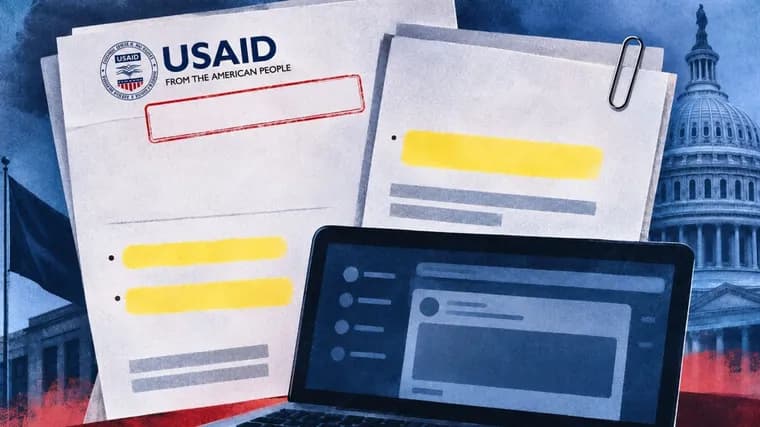
A page titled "The USAID Files" on reclaimthenet.org reports that in November 2026 USAID, a US government agency, published a large number of its internal emails, briefings and planning papers about its work with tech platforms.
The publisher's central claim is that while the agency was working with the tech giants, its lawyers were advising staff on how to make sure the cooperation remained secret. It quotes one of those lawyers from a July 8, 2024 briefing: "Keep it out of the Washington Post." Another piece of advice it cites was to "only write things that pass the Washington Post Test."
The publisher adds its own verdict. It calls it bad enough that a US government agency was involved in shaping what people around the world could say and see on the largest social platforms, and worse that the agency's main concern was to hide its activities from the public. It says it has indexed the documents, highlighted the more interesting parts, added transcripts and captions to the videos and made everything searchable.
One of those videos is "The Other Epidemic: Disinformation, Webinar Session 1", marked for USAID staff only. Cheyenne Evans opens it and introduces the moderator, a senior advisor for media and internet freedom at USAID who is labelled on screen as Joshua Machleder. The presenter describes the session as covering the very basics of disinformation and launching a disinformation primer with practical advice on programming against it.
The talk opens with "Jenna Abrams", an influential pro-Trump Twitter account during the 2016 campaign with 70,000 followers, quoted by over 40 US journalists and retweeted by Republican politicians and celebrities. According to the presenter, the persona did not exist and was created by a team of Russians in St. Petersburg. The presenter argues that "fake news" is not a useful term, because authoritarian politicians use it to dismiss inconvenient information, and defines disinformation as the deliberate use of false information to mislead people.
Three ways of spreading it follow. Bots are computer-run accounts that can be bought cheaply to inflate likes and retweets; the presenter found one service at roughly a dollar for 50, and cites estimates that only 63% of Donald Trump's Twitter followers were real people. Algorithm manipulation exploits the tendency of emotional content to go viral: the presenter says social media algorithms would probably favor an image of an angry Charlottesville mob over a cute cat, and cites a 2018 MIT study on how far false information travels. Professional trolls, the third method, are real people who harass targets and make others unwilling to join political discussions online.
Key facts
- reclaimthenet.org says USAID published a large number of internal emails, briefings and planning papers on its tech platform work in November 2026.
- The publisher quotes one USAID lawyer from a July 8, 2024 briefing: "Keep it out of the Washington Post."
- Another piece of advice cited on the page was to "only write things that pass the Washington Post Test."
- The site says it indexed the documents, highlighted parts of interest, transcribed and captioned the videos and made everything searchable.
- A staff-only USAID webinar in the collection teaches disinformation basics: bots, algorithm manipulation and professional trolls.
Why it matters
The allegation has two layers. One is that a US government agency worked with tech giants in ways the publisher describes as shaping what people around the world could say and see on the largest social platforms. The other, which the site considers worse, is that the agency's lawyers were advising staff on keeping that cooperation secret. The page presents the material as the agency's own emails, briefings and planning papers, so the claims can in principle be checked against the documents.
Who it affects
The story concerns USAID, its staff and its lawyers, along with the tech platforms the agency worked with. By the publisher's account, it also touches people around the world who post and read on the largest social platforms. The webinar speaks to a narrower audience: it was marked for USAID staff only, and its presenter points to practical advice on programming against disinformation, especially in what the session calls the DRG space. Elections are the focus of that talk.
How to use it
The collection at reclaimthenet.org/usaid-files gathers the documents in one place and makes them searchable, with the publisher's highlights. Videos come with transcripts and captions, speakers are named from their on-screen video tiles, and clicking a time plays the recording from that point. Anyone weighing the headline claim should find the July 8, 2024 briefing and read the two Washington Post remarks in their surrounding context before relying on them.
How solid is it
The documents are described as released by USAID itself, but the framing and the highlights come from reclaimthenet.org, which states its own opinion alongside the facts. The lawyers who gave the advice are not named in the text seen. In the portion of the page reviewed for this account, there is no specific example of USAID ordering or requesting the removal of any post or account, and the statement about shaping what people could say and see is the publisher's assessment. The webinar excerpt is introductory material and does not itself describe platform cooperation or secrecy. Its moderator's name also appears two ways: Joshua Machleder on the speaker label, Josh McAleter in the transcribed introduction.
Risks and caveats
Two short quotations carry much of the secrecy claim, and short lines pulled from a briefing can read differently in full. The portion of the page reviewed for this account gives no response from USAID, the tech platforms or the lawyers. Nor does that portion say why or under what legal procedure the material was released. The webinar's figures, including the follower estimates for Trump (63% real, with 30 to 50% of following accounts said to be fake), are the presenter's citations of estimates and should be treated as such.
“Keep it out of the Washington Post”
— One of USAID's lawyers, unnamed, in a July 8, 2024 briefing, as quoted by reclaimthenet.org