Wall Street loses roughly $2.5 trillion as Nasdaq falls 5.52% on AI buildout fears
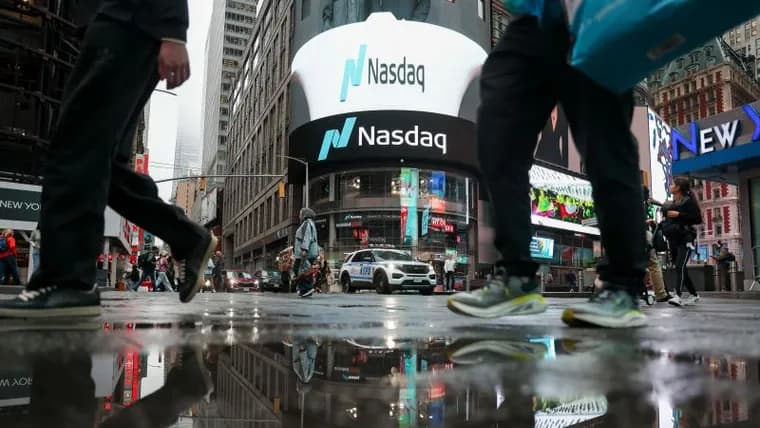
Global markets tumbled after a Wall Street rout wiped out roughly $2.5 trillion in market value on Thursday, CNN reports. The stated trigger was fear that Democrats' midterm gains could put the brakes on the AI buildout. On Friday, South Korea's Kospi plunged almost 9% at the open, which set off a 20-minute trading halt on the exchange.
The Nasdaq slumped 5.52% on Thursday and closed in correction, more than 10% below its record high of October 6. It was the Nasdaq's worst day since April 2025, when President Donald Trump unveiled sweeping global tariffs. The S&P 500 and the Dow also had their worst day since April 2025. The Nasdaq 100, a smaller index of major tech companies, sank 6.36%, its worst day since March 2020 and the onset of the Covid-19 pandemic. All 11 sectors in the S&P 500 closed lower.
The drop reversed Wednesday's rally after the midterms, when the Dow rose 1,569 points and the Nasdaq gained 1.44%. On Thursday the Dow closed 1,833 points lower, erasing all of those gains. Beneath the surface on Wednesday, shares of semiconductor makers and companies tied to the AI data center buildout were already falling, and that selling intensified on Thursday.
CNN calls the Democratic victory in the Texas governor's race key to the sell-off. Texas has played a crucial role in accelerating AI, with Google, Meta, Oracle and OpenAI making massive data center investments there. Governor-elect Gina Hinojosa campaigned on a temporary data center moratorium and on eliminating certain tax incentives for businesses building data centers in the state. Investors are weighing what Democratic wins in states like Texas, which are hubs for planned data centers, mean for the "picks and shovels" of the AI boom.
The individual moves were large. Nvidia sank 9.3%, erasing its gains for the year. A closely watched index of chipmakers dropped 12.3%, its worst day in roughly six-and-a-half years. Tesla and SpaceX fell 11% and 9%. The neoclouds CoreWeave and Nebius, which rent out compute power for the AI boom, plunged roughly 10% and 15%. CoreWeave is down 76% since a peak in June 2025, shortly after it went public, and Nebius is down 58% since a peak in June this year. Qualcomm fell 9.5% after it missed estimates on Wednesday and said higher memory chip costs are hurting sales, similar to Intel's guidance last week. CNN says investors are also punishing companies that miss any earnings or forecasts.
The VIX, Wall Street's fear gauge, surged roughly 70%, its biggest one-day jump in almost two years, and hit its highest level in seven months. Bonds benefited: the 10-year Treasury yield fell to 4.84%, its lowest level in two months.
Investors have largely struggled to judge whether reining in the AI buildout creates opportunities or problems. On Wednesday, Amazon, Meta and Google (the hyperscalers) surged on momentum that new restrictions would free up cash otherwise spent on data centers and raise profitability. By Thursday, CNN writes, investors soured on those trades, likely fearing restrictions would be a net negative. The breakneck pace of construction has also raised questions about whether companies are overbuilding, potentially committing to more computing capacity than demand will justify.
Two market voices are quoted. Ed Yardeni, president of Yardeni Research, sees a possible silver lining: "We want a slowdown in the AI buildout. It was too frenzied and speculative," he told CNN, adding that it is better to let air come out of the AI bubble than let it burst. Keith Lerner, chief investment officer at Truist Advisory Services, saw the week's volatile moves as more of a knee-jerk reaction than a real indication of how stocks, particularly tech, could fare under Democratic control of Congress. He said that at a certain point the bargain could start to look increasingly attractive and draw buyers, and that "the risk-reward is improving for longer-term investors."
By Thursday's close the Nasdaq and S&P 500 were down roughly 12% and 6% from their October 6 peaks, and the Dow roughly 5% from its August 5 peak. CNN notes the Nasdaq's year has been a rollercoaster: a correction in March, record highs in early June, a near-correction in late July, new records in September and October, and then correction again on Thursday. It expects more of that with Anthropic's upcoming IPO and OpenAI's expected IPO next year.
Key facts
- A Wall Street rout on Thursday wiped out roughly $2.5 trillion in market value; the Nasdaq fell 5.52% and closed in correction, more than 10% below its October 6 record.
- Nvidia sank 9.3%, erasing its 2026 gains; a chipmaker index dropped 12.3%, its worst day in roughly six-and-a-half years; CoreWeave and Nebius fell roughly 10% and 15%.
- CNN ties the sell-off to fears that Democratic midterm gains, notably the Texas governor's win by Gina Hinojosa, who campaigned on a temporary data center moratorium, could slow the AI data center buildout.
- The VIX surged roughly 70%, all 11 S&P 500 sectors closed lower, and South Korea's Kospi fell almost 9% at Friday's open, triggering a 20-minute trading halt.
- Ed Yardeni welcomes a slowdown in the AI buildout; Keith Lerner calls the moves more of a knee-jerk reaction and says risk-reward is improving for longer-term investors.
Why it matters
The scale is the story: roughly $2.5 trillion in value gone in a day, the Nasdaq's worst session since April 2025 and the Nasdaq 100's worst since March 2020. The cause CNN gives is political rather than technical. Markets had priced in a fast AI data center buildout, and a Democratic win in Texas, a hub for planned data centers, made that look less certain. Hinojosa campaigned on a temporary moratorium and on cutting certain tax incentives for data center builders. The reaction also shows how much of the market now rests on AI infrastructure: chipmakers, neoclouds and hyperscalers all moved sharply within two days.
Who it affects
Chip and AI infrastructure stocks took the worst of it: Nvidia (down 9.3%), the chipmaker index (down 12.3%), Qualcomm (down 9.5%), CoreWeave and Nebius (roughly 10% and 15%). Tesla and SpaceX fell 11% and 9%. Companies investing in Texas data centers, named as Google, Meta, Oracle and OpenAI, sit at the center of the policy worry. Investors in broad indexes were hit too, since all 11 S&P 500 sectors closed lower. Abroad, South Korea's Kospi dropped almost 9% at the open on Friday. Bondholders gained, as the 10-year Treasury yield fell to 4.84%, its lowest in two months.
How to use it
This is market reporting, not a how-to, and nothing in it is investment advice. The two views CNN gives point in different directions. Lerner argues the tech sector is by far underperforming the S&P 500 and that the bargain could look increasingly attractive to investors at a certain point. Yardeni argues a pullback is healthier than a burst. A reader tracking the AI buildout can watch the items CNN flags: how Democratic control of Congress and state policies like Texas's treat data centers, and the Anthropic IPO and the expected OpenAI IPO next year.
How solid is it
The figures come from a CNN market report and are specific: index moves, share moves, the VIX jump and the Kospi halt. The $2.5 trillion figure is stated as "roughly". The link to Texas is CNN's own reading of why investors sold, not a statement from the companies or from Hinojosa. CNN's account of why hyperscalers reversed between Wednesday and Thursday is hedged with "likely". Lerner's "knee-jerk reaction" view is CNN's paraphrase; only his line about risk-reward is a direct quote. The report says Qualcomm's earnings miss and memory chip costs also weighed on stocks.
Risks and caveats
The article does not say what legislation or restrictions Democrats will actually pass; only Hinojosa's campaign positions in Texas are described. It does not claim the Texas result was the sole cause, since Qualcomm's miss and higher memory chip costs are cited too. Lerner cautions that the week's moves may not reflect how tech fares under Democratic control of Congress. CNN also raises the question of overbuilding in data center construction, and expects more volatility ahead, with Anthropic's upcoming IPO and OpenAI's expected IPO next year.
“We want a slowdown in the AI buildout. It was too frenzied and speculative.”
— Ed Yardeni, president of Yardeni Research, to CNN