Zuckerberg's 6,500-word AI manifesto rings hollow, WIRED says
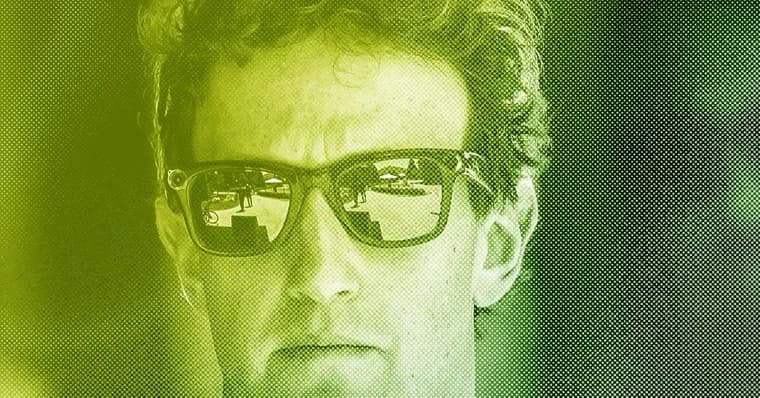
On Monday, Meta CEO Mark Zuckerberg published a roughly 6,500-word essay on AI titled "The Future Is for Everyone," an expansion of a Wall Street Journal op-ed he had already written. On WIRED's Uncanny Valley podcast, hosts Brian Barrett, the site's executive editor, and Leah Feiger, its director of politics and science, spend the episode's opening segment picking the essay apart, joined by written comments from co-host Zoë Schiffer, who was not on the call that day. The episode's own framing states the verdict plainly: despite the length, the essay "ultimately rings hollow." Barrett places it in a crowded genre: Sam Altman and Dario Amodei have each put out AI manifestos of their own, and in his words, "everyone's got a manifesto these days."
As Barrett summarizes it, the essay's core argument is that concentrating AI power in a few institutions is dangerous, and that broad access to AI models is what diffuses that power. It names no companies directly, but Barrett says it "clearly" takes jabs at OpenAI and Anthropic, which he describes as favoring tighter control over their private models. He reads one line from the essay directly: "Historically hoping that an absolute power will benevolently provide for humanity if sufficiently enlightened has not led to safe or positive outcomes." Feiger is skeptical of the whole framing. She calls it "a pretty Philosophy 101 way to say I just wasn't invited to play at the sandbox with the big kids," and ties it to Meta's own scramble to stay relevant in the AI race, including layoffs that hit "so many people" on its AI team just a few months earlier.
Barrett expands on that scramble. Meta spent a long stretch fully committed to open source, open-weight models, a way to undercut competitors profiting more directly from closed models such as OpenAI and Anthropic. That strategy was not working, so Meta instead spent billions of dollars on a hiring spree to build a "superintelligence lab," which Barrett says has not produced anything that has caught up to the bigger labs. In his reading, Zuckerberg's manifesto now argues, in effect, that the race itself is the problem and that everyone should share their models instead. Feiger ties that pivot to something concrete: the same Monday, Meta separately announced a new open-weight system called Muse Glimmer, which lets users download and alter the model as they wish.
Schiffer's written comments, read into the show, start by questioning why Zuckerberg felt the need to write 6,500 words on his AI vision at all. He told reporter Alex Heath it is because Meta is about to start releasing "super-smart" models and wants the world to understand his philosophy first. Schiffer's own theory is different: AI is broadly unpopular right now, and she thinks Meta sees a chance to shift that mood and to position itself as better than rivals that "everyone currently seems to hate." Her central objection is that the essay does not take AI seriously enough. It leans on the example of an AI agent generating personalized recipes so that Zuckerberg and his daughter can bake together, a scenario she says glosses over how powerful and dangerous these tools actually are. Barrett agrees, calling the essay's tone breezy for ignoring the downsides playing out in what he calls "the summer of rogue AI agents," including an unspecified incident involving one of Meta's own agents that he says shows how unpredictable these systems can get.
Feiger widens the frame to politics. The Trump White House's AI czar for its first year, David Sacks, took the position that "we're not regulating," she says. The administration now has what she calls a "slightly toothless, but still there" policy responding to national security and hacking threats. Her point is that nobody can credibly treat AI as harmless anymore, or as something that will simply solve childcare and teach people to cook. Barrett adds a pointed reminder of his own: this reassurance is coming from a company that a court had, not even a week earlier, ordered to pay $567 million for failing to do enough to protect kids' mental health online. The segment closes on a lighter note. WIRED ran Zuckerberg's essay through Pangram, an AI-detection tool the hosts say they trust "for the most part," and it came back human-written, prompting Barrett's line that AI is apparently good enough for recipes with his daughter, but not good enough to write the manifesto itself.
Key facts
- On Monday, Zuckerberg published a roughly 6,500-word AI essay titled "The Future Is for Everyone" (an expansion of a Wall Street Journal op-ed he had written); its core argument, per WIRED's Brian Barrett, is that concentrating AI power in a few institutions is dangerous and broad access is needed to diffuse it.
- The essay names no companies, but Barrett says it "clearly" jabs at OpenAI and Anthropic for favoring tighter control over their models; Leah Feiger ties the essay to Meta's own struggles, including layoffs that hit "so many people" on its AI team a few months earlier.
- Meta spent billions of dollars on a hiring spree to build a "superintelligence lab" that, per Barrett, has not produced anything catching up to bigger AI labs; the same Monday, Meta separately announced a new open-weight model, Muse Glimmer, that users can download and alter.
- Zoë Schiffer criticizes the essay's example of an AI agent generating personalized recipes for Zuckerberg to bake with his daughter, arguing it fails to reckon with how dangerous and powerful these tools are, especially during what Barrett calls "the summer of rogue AI agents," including an incident involving one of Meta's own.
- WIRED ran the essay through the AI-detection tool Pangram and it came back human-written; the hosts also note that a court recently ordered Meta to pay $567 million over failing to protect kids' mental health online.
Why it matters
Tech-CEO AI manifestos are their own genre now: Sam Altman and Dario Amodei have each written one, and Zuckerberg's is his contribution, an expansion of a Wall Street Journal op-ed he had already published. What makes it worth a full podcast segment, per the hosts, is less the essay's stated argument, that concentrated AI power is dangerous and broad access is the fix, than what it reveals about Meta's position: a company that spent years betting on open-weight models to undercut closed competitors, pivoted to a multibillion-dollar "superintelligence lab" hiring spree that has not caught up to rivals, and separately laid off much of its AI team. Zoë Schiffer's read is that timing matters too: AI is broadly unpopular right now, and she thinks Meta is using the essay to try to shift that mood and position itself as the more trustworthy option before it starts releasing "super-smart" models of its own. Brian Barrett adds that the reassurance lands especially hollow coming from a company a court had just ordered to pay $567 million for failing to protect kids' mental health online.
Who it affects
Zuckerberg is the essay's author, and his credibility is what the hosts spend the segment weighing. OpenAI and Anthropic are not named in the essay itself, but Barrett reads it as aimed squarely at them, as labs he says favor tighter control over their private models. Reporter Alex Heath is the person Zuckerberg told directly why he wrote it: Meta is about to start releasing "super-smart" models, and he wants the world to understand his philosophy before that happens. Meta's own AI team is part of the story too: the group that survived a round of layoffs "a few months" before this discussion is one part of Meta's broader AI push, which also includes the superintelligence lab and the newly announced Muse Glimmer model.
How to use it
There is no product here to try, but the episode points to two things a reader can go look at directly. The essay itself, "The Future Is for Everyone," is public, an expansion of the Wall Street Journal op-ed Zuckerberg had already written, so anyone can read his own framing rather than rely on the hosts' summary of it. The other concrete piece is Muse Glimmer, a new open-weight system Meta separately announced the same Monday that lets users download and alter the model as they wish. Feiger mentions it right after Barrett describes Meta's pivot to arguing "maybe open is better," and calls the overall shift "a lot of pivoting."
How solid is it
This is opinion journalism, not a data-driven study: three WIRED staffers sharing a read of a single essay, and their sharpest claims, that it "jabs at OpenAI and Anthropic" or amounts to marketing, are their interpretation of a text that names no companies at all. Where the segment does ground itself, it grounds itself well: Barrett reads a full line from the essay verbatim rather than paraphrasing it, and the hosts ran an independent check by putting the essay through Pangram, an AI-detection tool they say they trust "for the most part," which returned a human-written result. Other lines that appear in quotation marks during the discussion, like Feiger's "Whoa, whoa, whoa, let's rein in OpenAI and Anthropic," are the hosts imitating what they take Zuckerberg's tone to be, not quotes from the essay itself.
Risks and caveats
Several figures in the discussion are approximate by the hosts' own account: "billions of dollars" for the superintelligence lab's hiring spree, "so many people" for the AI-team layoffs, and no date more precise than "Monday" for either the essay or the Muse Glimmer announcement. The rogue-agent incident Barrett cites as involving "one of Meta's" agents is not described in any further detail. And the framing that carries the whole segment, that the essay is marketing meant to reassure the public while saying little of substance, is the hosts' critical judgment, delivered as opinion on a podcast whose hosts themselves joke that they cover it in less time than it would take to read.
“Historically hoping that an absolute power will benevolently provide for humanity if sufficiently enlightened has not led to safe or positive outcomes.”
— Mark Zuckerberg, in "The Future Is for Everyone," read aloud by WIRED's Brian Barrett