AI agents now steer SETI's Allen Telescope Array on Nvidia Holoscan
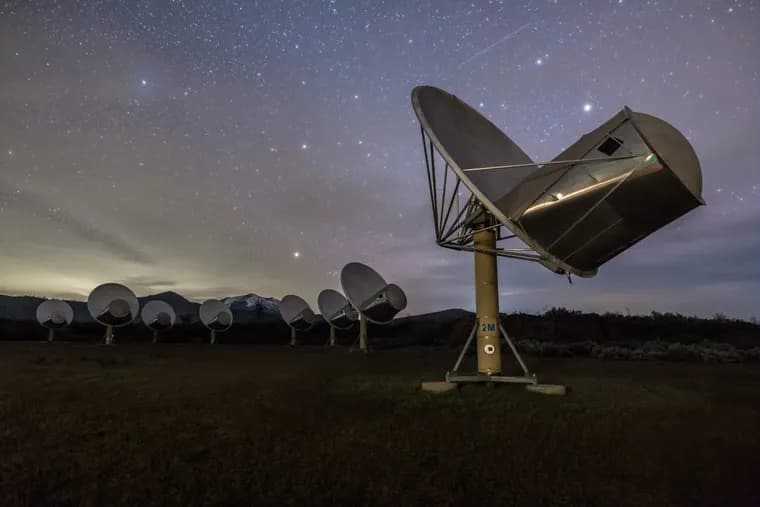
The search for extraterrestrial intelligence is getting help from AI. At the Allen Telescope Array in Northern California, AI agents can now steer the telescope and analyze incoming radio signals on the fly. Researchers still type in their commands for now.
The system runs on Nvidia's Holoscan platform, which the SETI Institute and Breakthrough Listen use to process telescope data in real time. Nvidia says the hardware can handle up to 2.4 terabits per second. According to the team, work that used to take weeks can now be finished in hours.
One early result: the team says it detected a pulsar in the Crab Nebula in real time using AI, and describes this as a first. Pulsars are fast-spinning stellar remnants that send out regular signals, which makes them good test cases for signal detection.
Looking ahead, the team wants to test open-source options that can run locally on the edge, with an eye toward future sensors on the far side of the Moon.
The article ends on a note of restraint. Whether the AI agents will actually find anything is anyone's guess. Researchers have been searching for signals from extraterrestrial intelligence since the first SETI experiment in 1960, and no one has found any yet.
Key facts
- AI agents can now steer the Allen Telescope Array in Northern California and analyze incoming radio signals on the fly; researchers still type in their commands.
- The system runs on Nvidia's Holoscan platform, used by the SETI Institute and Breakthrough Listen to process telescope data in real time; Nvidia says the hardware handles up to 2.4 terabits per second.
- According to the team, work that used to take weeks can now wrap up in hours.
- The team says it detected a pulsar in the Crab Nebula in real time using AI, a first.
- No signal from extraterrestrial intelligence has been found since the first SETI experiment in 1960, and whether the agents will change that is unknown.
Why it matters
SETI has searched for signals from extraterrestrial intelligence since the first experiment in 1960 without a find. Here the change is in the workflow: AI agents steer the Allen Telescope Array and analyze signals as they arrive, rather than leaving analysis for later. The team says tasks that took weeks now finish in hours. The planned tests of open-source options that run locally on the edge, with future sensors on the far side of the Moon in mind, point to where the team wants to take the approach.
Who it affects
The direct users are the researchers at the SETI Institute and Breakthrough Listen, who use Nvidia's Holoscan platform to process telescope data in real time. Nvidia is the maker of that platform. Radio astronomers working on signal detection are the natural audience for the pulsar result, since pulsars serve as test cases for detection methods.
How to use it
This is not a product readers can pick up. It is a research deployment at one telescope, and researchers still enter their commands by typing. The source gives no price, licence or access terms. The team's next step is to test open-source options that can run locally on the edge.
How solid is it
The core description comes from a secondary outlet, The Decoder, and the key results are the team's own statements. The weeks-to-hours speedup is reported as 'according to the team', and the source does not say how many weeks became how many hours, nor which task this refers to. The Crab Nebula pulsar detection is also the team's claim, with no independent verification given, and the source does not say who on the team made it. The 2.4 terabits per second figure is Nvidia's claim about the hardware, not a measured throughput at the telescope.
Risks and caveats
No date is given for when the agents were deployed, and the source does not say which AI models or agents are used or name the open-source models to be tested. No researchers are named and no one is quoted directly. No timescale is given for the lunar far-side sensor plans. Most of all, nothing has been found: whether the agents will detect extraterrestrial signals is, in the article's words, anyone's guess.