AirTag tracking reveals Amazon destroys rare books for AI training
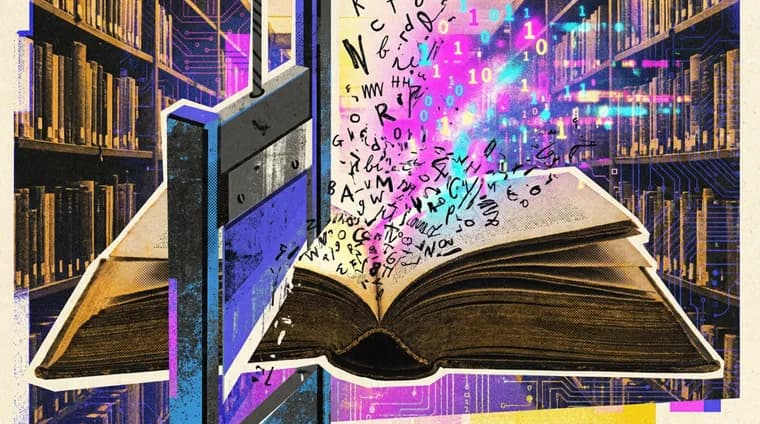
An investigation by 404 Media placed an AirTag inside a shipment of rare books and tracked it across the country. The shipment ended up at an Amazon warehouse in Las Vegas, home to a team called VGT3 whose logo features a Tyrannosaurus rex holding a book. Workers there say they cut off book spines to speed up scanning, destroying the copies in the process. Amazon uses the scanned data to train its Nova models. A company spokesperson said Amazon buys books through commercial channels to improve its products.
Booksellers suspect AI companies are trying to systematically scan every book by ISBN number. Printed texts are especially valuable for this because they often don't exist online and predate 2022, meaning they're free of AI-generated content.
Amazon isn't alone. Anthropic ran a similar operation. A lawsuit brought by book authors revealed Anthropic's "Project Panama," under which the company bought books on marketplaces, cut off their spines, and digitized them. The judge in that case ruled the scanning qualified as fair use and didn't violate copyright, partly because the printed originals were destroyed and therefore not copied and resold.
Both companies are turning sometimes rare books into private training material. The practice is controversial because it destroys originals that may be irreplaceable, pulling knowledge off public shelves and locking it inside the closed AI models of a single corporation.
Key facts
- 404 Media tracked an AirTag placed inside a shipment of rare books to an Amazon warehouse team called VGT3 in Las Vegas.
- VGT3 workers cut off book spines to speed up scanning, destroying the copies; Amazon uses the scanned data to train its Nova models.
- Anthropic ran a similar program, "Project Panama," revealed by a lawsuit from book authors, buying books on marketplaces and cutting their spines to digitize them.
- A judge ruled Anthropic's scanning was fair use and didn't violate copyright, partly because the destroyed originals were never copied and resold.
- Booksellers suspect AI companies are trying to scan every book by ISBN, since printed texts predating 2022 are free of AI-generated content and often unavailable online.
Why it matters
The story shows how two of the largest AI companies are sourcing training data: buying physical books through ordinary commercial channels, then destroying them during scanning. A court has already found that this specific pattern, destroying the original after digitizing it, counts as fair use rather than infringement, because the destroyed copy is never resold. That ruling gives Amazon and Anthropic a legal basis for the practice, and booksellers' suspicion that companies are working through books systematically by ISBN suggests it goes beyond these two cases.
Who it affects
Booksellers and dealers in rare or out-of-print books, who may be selling stock into bulk purchases without knowing the books will be destroyed. Book authors, who brought the lawsuit against Anthropic and whose printed work is being copied under a legal exception. Amazon and Anthropic, whose Nova and other models are trained partly on this data. Anyone who cares about preserving physical books that predate the internet and mass AI-generated text, since those copies are described as especially valuable and, once destroyed, irreplaceable.
How to use it
For booksellers and collectors, the practical takeaway is caution around bulk buyers: a large, unusual purchase request, especially one that seems to target books systematically by ISBN, may be sourcing for AI training rather than resale. There is no product or service here to use directly; the piece is a warning about where physical book stock can end up.
How solid is it
The central claim rests on a physical tracking method, an AirTag placed in an actual shipment and followed to a named Amazon facility and team, which is a concrete, checkable form of evidence rather than an anonymous tip. Amazon's spokesperson confirmed the company buys books through commercial channels, and the Anthropic lawsuit and the judge's fair-use ruling are matters of public record. What the source does not supply is nearly as notable: no date for the investigation or its publication, no count of how many books either company has bought or destroyed, and no name for the spokesperson, the judge, the court, or the lawsuit itself.
Risks and caveats
The source gives no figures for the scale of either company's book-buying, so the size of the practice is unknown. The booksellers' suspicion that AI companies are scanning every book by ISBN is described as a suspicion, not a confirmed fact. The judge, the Amazon spokesperson, the court, and the lawsuit are all unnamed in the source, which limits independent verification. The underlying risk the piece describes, permanent loss of physical books that may have no digital copy elsewhere, does not depend on the missing details and stands regardless.