Asian governments react to Jensen Huang's exit from Nvidia
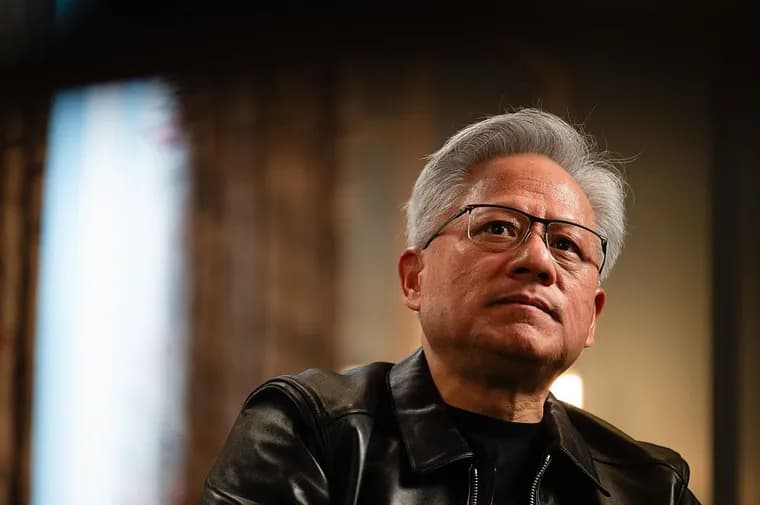
TechCrunch rounds up how governments across Asia have responded to Jensen Huang's departure from Nvidia. Some moved to confirm chip supply commitments, others said they are watching the effect on local projects, and one is dealing with an investigation that was already under way.
The background, as the article states it: on Sunday, November 8, Nvidia's board launched an independent investigation after reports that Huang was targeted by a Chinese spy operation. Huang admitted to an affair with Alice Huang, described in the lead as a former executive at Singapore-based chip company Megaspeed. The article notes that Nvidia's influence reaches well beyond the United States, with close ties to companies worldwide, particularly in Asia.
China: the foreign ministry rejected allegations on November 10 that a Chinese businesswoman linked to Huang was a spy, calling them groundless and a smear against Beijing. On Friday a spokesperson repeated China's opposition to export controls that disrupt global supply chains and said the ministry was not aware of reports linking restricted Nvidia chips to a Shanghai data center associated with Alice Huang. According to Reuters, Huang's exit has also raised uncertainty over more than $3 billion in Chinese AI computing projects that rely on Nvidia's restricted processors. Many of those chips are subject to U.S. export controls, which makes them hard for Chinese companies to obtain.
Singapore: per the Ministry of Home Affairs, authorities seized the passport of Alice Huang, described here as former CEO of Singapore-based cloud computing company Megaspeed, in June 2025. The seizure was part of an investigation into possible false declarations about server purchases. The ministry said police took the passport to keep her available for questioning because she was not based in Singapore. The investigation examined whether servers shipped from Singapore to Malaysia were later sent on to other countries without proper declaration. In February 2026, police found insufficient evidence that she had committed offenses related to the suspected false declarations. Authorities did say she had knowingly given inaccurate information about her role at Megaspeed. She was issued a warning and barred from re-entering Singapore, and her passport was returned that month. Singapore also said it received limited assistance from U.S. authorities despite repeated requests for information about U.S. server maker Supermicro. The ministry said its investigation into Megaspeed and six other individuals remains ongoing; it did not identify the six or specify their alleged roles.
South Korea: the country has close ties to Nvidia, with Samsung Electronics and SK Hynix supplying memory chips used in its AI processors. After Huang's exit, the Science Ministry said Nvidia had reaffirmed its plan to supply 260,000 advanced GPUs to the country and to continue joint AI projects. Separately, according to a local media report, the government's AI strategy council held an emergency meeting on Friday to assess the possible impact on the country's AI industry.
Taiwan: Economy Minister Kung Ming-shin said, according to local media, that Huang's departure was unlikely to significantly change the growth of the global AI industry. Taipei's city government said Nvidia's planned overseas headquarters in the city remained on track despite the leadership change. It said the company has met its contractual obligations so far and that officials would keep supporting the project.
Japan: as reported by Reuters, the Industry Ministry said the government would closely monitor Nvidia following Huang's resignation, calling it an important player in Japan's AI semiconductor industry. Deputy chief cabinet secretary Masanao Ozaki said it was too early to assess the impact on the global AI industry, and stressed Japan's commitment to ensuring a stable supply of semiconductors.
Key facts
- South Korea's Science Ministry says Nvidia reaffirmed its plan to supply 260,000 advanced GPUs and continue joint AI projects; the government AI strategy council met in emergency session on Friday, per a local media report.
- Taipei's city government says Nvidia's planned overseas headquarters there remains on track, and Taiwan's Economy Minister Kung Ming-shin sees little change to global AI growth, according to local media.
- Japan's Industry Ministry says it will closely monitor Nvidia, while deputy chief cabinet secretary Masanao Ozaki says it is too early to assess the impact and stresses stable chip supply.
- China's foreign ministry calls the spy allegations groundless; Reuters reports uncertainty over more than $3 billion in Chinese AI computing projects reliant on Nvidia's restricted processors.
- Singapore says its investigation into Megaspeed and six other individuals remains ongoing; Alice Huang was warned and barred from re-entering after police found insufficient evidence of offenses in February 2026.
Why it matters
The article's framing is that Nvidia's reach goes far beyond the United States, with close ties to companies worldwide and especially in Asia. Governments there reacted quickly and in different ways: South Korea and Taipei publicly pointed to commitments that still stand, Japan said it would watch the company, and China and Singapore dealt with the spy allegations and the Megaspeed case. The mix shows how much of Asia's AI industry is tied to a single supplier.
Who it affects
Chinese companies running AI computing projects on Nvidia's restricted processors face uncertainty, with Reuters putting the figure at more than $3 billion. South Korea's government and its chipmakers Samsung Electronics and SK Hynix, which supply memory chips used in Nvidia's AI processors, are close partners. Taipei's city government is hosting Nvidia's planned overseas headquarters. Japan's AI semiconductor industry counts Nvidia as an important player, according to the Industry Ministry. In Singapore, Megaspeed, Alice Huang and six unnamed individuals are part of the ongoing investigation.
How to use it
This is a roundup, not a product, so the practical use is as a checklist of official positions. For supply: South Korea cites a reaffirmed 260,000-GPU plan and Japan stresses stable semiconductor supply. For projects: Taipei says the headquarters is on schedule and has met its contractual obligations. For exposure to export-controlled chips: watch the Chinese projects flagged by Reuters and Singapore's continuing probe.
How solid is it
The piece is a TechCrunch survey that leans on ministry statements, Reuters and local media reports, and each claim is attributed to its source. It contains no direct quotes from officials. The Singapore details come from the Ministry of Home Affairs. The article describes Alice Huang inconsistently: a former executive at a chip company in the lead, former CEO of a cloud computing company in the Singapore section. The source does not state why Huang left Nvidia or the exact date of his departure.
Risks and caveats
Much of this is still unsettled. The spy allegations are reported as allegations, and China rejects them. The article gives no result from Nvidia's independent investigation. China said only that it was not aware of reports linking restricted Nvidia chips to a Shanghai data center associated with Alice Huang, so that link is unconfirmed here. The six individuals in Singapore's investigation are not identified. The article gives no timescale for the Taipei headquarters. The $3 billion uncertainty is Reuters' assessment as cited, not a measured loss.