Anthropic's $81.3B IPO pays off for early backers Notable, GIC and Baillie Gifford
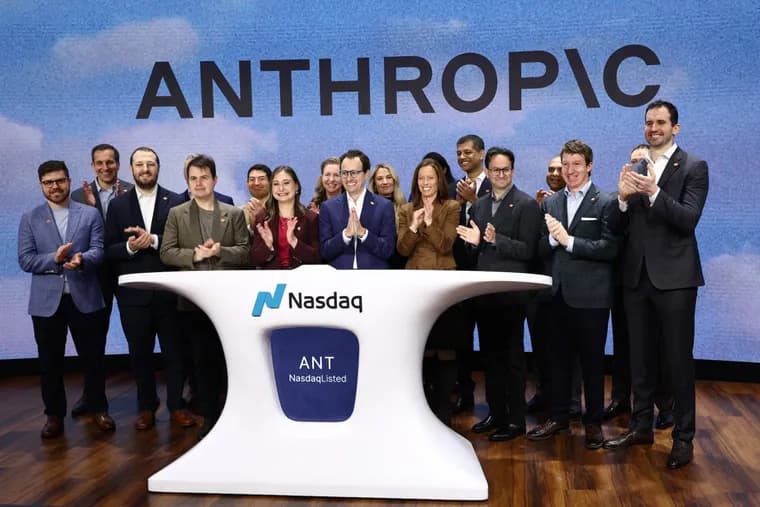
TechCrunch reports that Anthropic raised $81.3 billion in what it calls the largest IPO in history. The IPO was on Wednesday, and the company reached a fully diluted valuation of about $1.5 trillion before its shares began trading the next day. The article then walks through three investors who bet on the company earlier and now sit on large paper gains.
Notable Capital, a predominantly early-stage venture firm formerly known as GGV Capital before its 2024 split from its China operations, put roughly 10% of the U.S. portion of its $1 billion-plus fund into Anthropic's Series E. Many of its limited partners were perplexed. Anthropic still trailed OpenAI, and DeepSeek had released its R1 model just weeks earlier, threatening to overtake closed-source competitors. At $61.5 billion, Anthropic's valuation was by far the highest the firm had invested at in its 25-year history. A team that included managing partners Hans Tung and Glenn Solomon and principal Dan Cahana crunched the numbers and found that developers were increasingly favoring Claude over ChatGPT, using Claude 70% of the time, a reversal from the previous year. Tung, a co-founder of the firm, said: "We just knew that for AI, the developer is at the center because they're the early adopters." Having worked through U.S.-China relations firsthand, Notable was also convinced that "mission-critical" work would always require U.S.-based, closed-source models, Tung said. Less than two years later, the LPs are no longer questioning the bet, and the article puts Notable's paper return at roughly 15 times.
Singaporean sovereign wealth fund GIC had researched Anthropic throughout 2024 but made no investment until Chris Emanuel, head of its tech investments, met Anthropic CFO Krishna Rao at an Italian restaurant in San Francisco, Che Fico, in early 2025. Rao showed Emanuel that model improvements were driving rising enterprise adoption. GIC then made its first investment in the Series F, announced in September 2025 at a $183 billion valuation. Emanuel told TechCrunch: "Claude Code was just released then. It was very early, but even then, we could see signs that it was really popular with developers." GIC later led the Series G alongside Coatue at a $380 billion valuation and returned as one of the co-leads of the pre-IPO round at $965 billion. Across the three rounds it invested more than $4.5 billion, and it holds a stake equal to about 1% of the company after the IPO, according to a person familiar with GIC's financials.
Lilian Li, who leads U.S. growth investments at Baillie Gifford, said her team began studying Anthropic and talking to its people nearly two years before first investing in the Series F. The firm invested once it was clear the company was "executing consistently" on its vision while generating strong revenue and "compelling gross margins." After that first investment, Li said, Anthropic kept delivering, expanding into industries such as legal services and life sciences and into broader applications like Cowork and cybersecurity. "It's actually quite incredible how consistent they have been with how quickly everything's been changing," she added. Baillie Gifford invested a total of $1.5 billion across three funding rounds. The article says the bet has produced substantial paper gains for the firm and for dozens of other backers who came in at valuations that once seemed astronomical.
Key facts
- Anthropic raised $81.3 billion in an IPO that TechCrunch calls the largest in history, reaching a fully diluted valuation of about $1.5 trillion before trading began the next day.
- Notable Capital put roughly 10% of the U.S. portion of its $1 billion-plus fund into the Series E at $61.5 billion, its highest valuation in 25 years, and now shows a paper return of roughly 15 times.
- GIC invested more than $4.5 billion over three rounds (Series F at $183 billion, Series G at $380 billion, pre-IPO at $965 billion) and holds about 1% of Anthropic after the IPO, per a person familiar with its financials.
- Baillie Gifford invested a total of $1.5 billion across three rounds after studying Anthropic for nearly two years before the Series F.
- The three investors cite similar signals: developer adoption of Claude, rising enterprise adoption, strong revenue, and what Li called compelling gross margins.
Why it matters
The article frames Anthropic's IPO as the largest in history, with $81.3 billion raised at a fully diluted valuation of about $1.5 trillion. It also shows how fast the valuation moved for backers: from $61.5 billion at the Series E, to $183 billion at the Series F, $380 billion at the Series G and $965 billion in the pre-IPO round. Notable's LPs doubted the Series E bet when Anthropic trailed OpenAI and DeepSeek's R1 had just landed. The article says those doubts are gone.
Who it affects
Mainly the investors named: Notable Capital and its limited partners, the Singaporean sovereign wealth fund GIC, and Baillie Gifford. The article says dozens of other backers also hold paper gains, and that even traditional late-stage investors, who rarely see venture-scale multiples, are set for a big win. It does not say who those other backers are.
How to use it
The piece is a record of what these investors say they looked at, not a how-to. The signals they name are developers preferring Claude over ChatGPT, enterprise adoption rising with model improvements, early popularity of Claude Code, consistent execution, strong revenue and compelling gross margins, and expansion into legal services, life sciences, Cowork and cybersecurity. Readers tracking AI companies can use the list as a checklist of what drew these backers.
How solid is it
This is a single TechCrunch feature built on interviews with Tung, Emanuel and Li, plus Rao's role in GIC's story as the article describes it. The IPO figures and the roughly 15 times paper return are the article's own statements. GIC's roughly 1% stake comes from an unnamed person familiar with GIC's financials. The source does not say where the 70% developer-usage figure came from or how it was measured. The IPO share price, exchange and ticker are not given.
Risks and caveats
The gains described are paper returns, not realized ones. The article does not give the dollar amount Notable invested, Notable's absolute stake, or Baillie Gifford's stake percentage and gain. Series G and pre-IPO round dates and amounts raised are not given, only valuations. The investors speaking are the ones who profit from the story, and the piece is retrospective, so it shows their reasoning after the outcome is known.
“We just knew that for AI, the developer is at the center because they're the early adopters”
— Hans Tung, co-founder of Notable Capital, to TechCrunch