Toyota, Nissan and Honda agree to standardize some car parts to cut costs
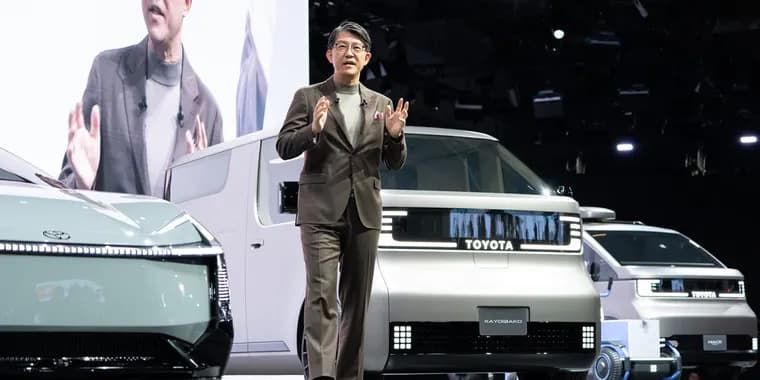
Japan's three largest automakers, Toyota, Nissan and Honda, have agreed to begin standardizing some vehicle parts to reduce production costs. The story comes from Automotive News and is relayed by Car and Driver. Koji Sato, chairman of the Japan Automobile Manufacturers Association (JAMA) and also vice chairman of Toyota, announced the decision at a news conference in Tokyo this week.
The effort starts with three areas: unified quality criteria for steel, consistent protocols for plastics and resins, and a universal color-coding scheme for wiring harnesses. In the long term, JAMA plans to move on to more components that cover the entire car.
The report gives two reasons for the choice. These are parts that consumers generally do not notice, so standardizing them should not affect any brand's individual identity. And all three areas account for significant production costs for the automakers, which means they can have an immediate impact.
The first discussions are set to include Japan's domestic automotive parts suppliers. International suppliers will be brought in over time. The first standardization efforts are set to go into place next year, according to the Automotive News report.
The push comes as Japan's seven automakers (Toyota, Nissan, Honda, Mazda, Subaru, Mitsubishi and Suzuki) work to fend off an increasingly competitive field of Chinese automakers. The automakers are said to hope they can channel the money saved by standardizing into new innovations.
Sato described the motive as a shared sense of urgency: "We all share this strong sense of crisis, creating a momentum for change. Based upon our sense of a crisis, we decided to choose these three areas."
Key facts
- Toyota, Nissan and Honda, Japan's three largest automakers, agreed to begin standardizing some vehicle parts to lower production costs, per Automotive News.
- The first three areas are steel quality criteria, plastics and resins protocols, and a universal color-coding scheme for wiring harnesses.
- JAMA chairman Koji Sato, also Toyota's vice chairman, announced it at a Tokyo news conference; JAMA plans to extend standardization to more components covering the entire car.
- Talks start with Japan's domestic suppliers, with international suppliers to join in time; the first efforts are set to go into place next year.
- The move comes as Japan's seven automakers try to fend off increasingly competitive Chinese rivals.
Why it matters
Three of Japan's biggest carmakers are agreeing to share common specifications for parts that buyers do not see. The stated backdrop is competition from Chinese automakers, and Sato framed the decision as a response to a shared sense of crisis. The report says the three areas were picked because they carry significant production costs and can have an immediate impact, and because they should not touch any brand's identity. The longer-term plan is to extend this to more components across the whole car.
Who it affects
Directly, Toyota, Nissan and Honda, and JAMA, which Sato chairs. Parts suppliers are next in line: Japan's domestic suppliers are in the first discussions, and international suppliers are to be brought in later. Consumers are mentioned only in that they generally do not notice these parts.
How to use it
There is nothing to adopt here; this is an industry agreement, not a product. For readers following the auto sector, the points to watch are the start of the first standardization efforts next year, which suppliers join the talks, and whether JAMA moves on to the additional components it plans to cover.
How solid is it
The account rests on a report by Automotive News, retold by Car and Driver. It includes a named announcer, Sato, speaking at a news conference in Tokyo, and two direct quotes from him. The details of the three starting areas and the timing (next year) are attributed to the Automotive News report. The line that the automakers hope to channel savings into new innovations is attributed only to what they are "said to" hope.
Risks and caveats
No savings figure, cost target or percentage is given. No exact date for the announcement is given, only "this week" and "next year". Nissan and Honda executives are not quoted; only Sato speaks. The source does not say how standardization will be enforced and gives no legal or antitrust detail. It names seven Japanese automakers in describing the Chinese competition, but Mazda, Subaru, Mitsubishi and Suzuki are not stated to be part of the initial agreement. The extension to the entire car is a plan, not a commitment with a timeline.
“We all share this strong sense of crisis, creating a momentum for change”
— Koji Sato, JAMA chairman and Toyota vice chairman