Nvidia drops H200 sales in China as calls for Huang's return grow
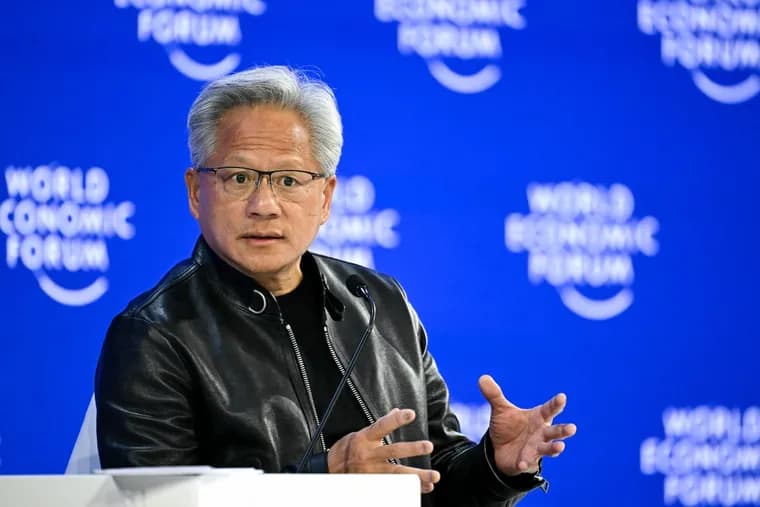
TechCrunch published an edited excerpt of a recent episode of its Equity podcast, in which Kirsten Korosec, Tim De Chant and Anthony Ha discuss Nvidia's week. The company reported soaring revenue and insisted it has no plans for former CEO Jensen Huang to return. At the same time, tech executives were loudly calling for exactly that. Korosec called it "the tale of two Nvidias this week". On one side, the current executives were telling investors, in her paraphrase, "Hey, we've got this." On the other, she said, Elon Musk and others were pushing to bring Huang back and circulating a petition, and Huang himself was saying he is prepared to come back. TechCrunch adds in a parenthetical that the falling stock price suggests Wall Street is not reassured.
The China news. Korosec said Nvidia will no longer sell its H200 chips in China, and that this came directly from interim CEO Colette Kress. She noted it coincides with the Trump administration talking about closing off remote access to chips, tightening restrictions so the chips cannot reach China. Remote access, as she described it, meant data centers set up just outside China, in countries like Malaysia, with companies inside China using the chips remotely. She says that route has now also been shut down. In her words, a lot is happening on the China front that is much bigger than Nvidia, but Nvidia came out publicly and said, in effect, "Nope, we're shutting this part down." She will be curious to see whether that changes, maybe in the first half of 2027.
De Chant said he would love to be a fly on the wall in the Trump administration's discussions. Export controls were much more stringent at the end of the first Trump administration and through the Biden administration, when Nvidia's ability to export chips to China was heavily restricted. He thinks something changed in the last couple of years that opened up Nvidia's ability to sell there.
Ha said he was surprised to learn, while preparing for the episode, that critics of Nvidia's China stance estimate 20% of its business comes from China. That share would not show up directly in Nvidia's financials, he explained, because it is not direct sales to Chinese companies. The critics' argument is that many chips sold to companies in Malaysia, elsewhere in East Asia or Southeast Asia end up used by companies in China. If Nvidia is serious about the change, he said, it could be a significant blow to its bottom line, though he called the situation very much in flux. Korosec countered that Nvidia's bottom line is doing fine: in her words its guidance was incredible, it beat expectations and it has a long pipeline.
The Huang question. Korosec said the earnings call and the social media noise ran in parallel, with several tech conferences that week, including Dealbook Summit, where very high-profile people commented on Huang, and Huang commented himself. She said the last line Kress spoke on the earnings call was the "we've got this" message, and that the drama is not over. Ha said people who want Huang back would argue that the latest quarter is the last under him, so nobody knows how Nvidia will do without him. He noted Nvidia's public stance is now "No, that's not happening," whereas a week and a half earlier it was "We stand behind Jensen. We have every confidence in his leadership." Pressure could change that again. He does not think a return is necessarily likely, but a denial now does not mean it will never happen. Korosec agreed: "Sure, never say never."
De Chant suggested that how steadfast Nvidia has been, and how quickly it shot down the petitions, may mean more is going on behind the scenes than outsiders know, something to watch in the coming weeks. Korosec thinks the board wants to be in control and does not want to be forced into a decision because someone like Musk says it must happen. She considers a Huang return pretty unlikely, partly because of the investigation into how much was known, and by whom, about chips allegedly sold secretly to China; the full picture of that is not yet known. De Chant is sure the board is looking at what happened at OpenAI and does not want to repeat it. Ha guessed, while saying he is not an expert, that because Nvidia is a public company it would be much harder for Huang to return and toss out board members.
Key facts
- Korosec says Nvidia will no longer sell H200 chips in China, a decision she says came directly from interim CEO Colette Kress.
- She says the remote-access route, where Chinese companies used chips in data centers in countries like Malaysia, has also been shut down, while the Trump administration talks about closing it off.
- Critics of Nvidia's China stance estimate 20% of its business comes from China, mostly via indirect sales; Ha stresses this is an estimate and would not appear directly in Nvidia's financials.
- Nvidia reported soaring revenue and says it has no plans for former CEO Jensen Huang to return, even as Elon Musk and others circulate a petition for it.
- The hosts doubt a Huang return is likely, pointing to the board wanting control, an investigation into chips allegedly sold secretly to China, and Nvidia's public-company status.
Why it matters
Two stories collide at Nvidia in the same week. The first is a commercial and political one: the company says it is giving up H200 sales in China just as the Trump administration talks about shutting the remote-access loophole. Korosec says the China situation is much bigger than Nvidia. The second is a governance one: the board is publicly refusing to bring back Huang under pressure from prominent tech figures, and Ha notes that Nvidia's stance on Huang flipped from open support a week and a half earlier to flat denial of a return.
Who it affects
Nvidia and its investors, since the stock is falling despite strong results. Chinese companies that reached the chips remotely through data centers in places like Malaysia. Data center operators outside China whose customers used that remote route. Nvidia's board and its interim CEO Colette Kress, who face public pressure from Musk and others over Huang.
How to use it
This is a discussion, not a guide, so there is nothing to apply directly. For anyone tracking the story, the speakers name what to watch: whether Nvidia's denial of a Huang return holds in the coming weeks (De Chant), whether the China position changes, maybe in the first half of 2027 (Korosec), and how the investigation into chips allegedly sold secretly to China develops.
How solid is it
The piece is an edited excerpt of a podcast conversation, so most claims are the hosts' own statements and views. The H200 decision is relayed by Korosec; no direct Kress quote on it is given. "Hey, we've got this" and "Nope, we're shutting this part down" are the speakers' paraphrases, not verified statements by Nvidia. The 20% China figure is an estimate by critics of Nvidia's stance, relayed by Ha, not a number Nvidia reported. The source gives no revenue, profit or guidance figures, only descriptions such as soaring revenue and incredible guidance.
Risks and caveats
Much of this is speculation. De Chant's behind-the-scenes theory, Korosec's read of the board and Ha's guess about a public company's board are opinions, and Ha says he is not an expert. The source does not say when or why Huang stopped being CEO, does not describe the petition beyond Musk and others circulating it, and does not say who leads the investigation into chips allegedly sold secretly to China or what it has found. It also does not say which Trump administration rules on remote access were adopted or when, only that the administration is talking about closing it off.
“the tale of two Nvidias this week”
— Kirsten Korosec, TechCrunch Equity podcast