Apple plans about a half dozen AI-native devices, Gurman says
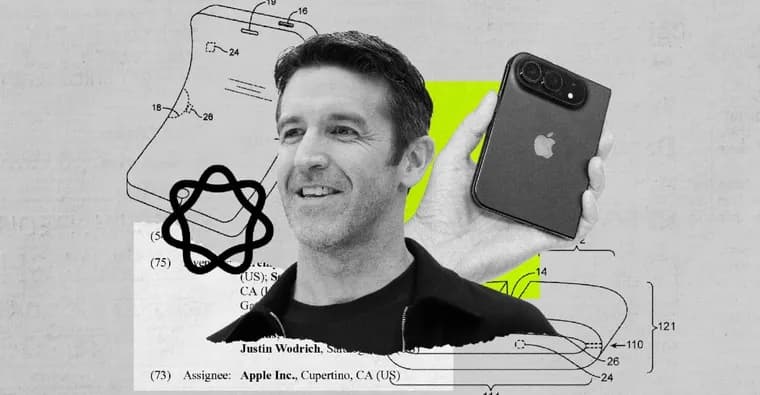
Bloomberg's chief Apple correspondent Mark Gurman joined The Verge's Decoder podcast to discuss Apple's September 2026 iPhone hardware event, the first major product launch by new CEO John Ternus since he took over from former CEO Tim Cook less than two weeks prior. The same event marked the debut of the iPhone Duo, Apple's first foldable smartphone.
Gurman said the event itself felt largely interchangeable with a Tim Cook keynote, but that Ternus opened with a clear point of view on AI, centered on what Apple called an "intelligent personal hub." He contrasted the two executives' styles: Cook, he said, tends toward collaborative, communal decision-making and will press colleagues with more questions rather than rule on an idea himself, while Ternus will make a call and hold an opinion, whether or not others agree with it.
Both Gurman and his interviewer pushed back on the "intelligent personal hub" framing, comparing it to Steve Jobs' 1998 pitch of the iMac as a "digital hub." Gurman argued that the AI capabilities Apple is showing off mostly run in the cloud rather than on the iPhone itself, pointing to Meta's Muse, launched the same week, which gives users 8GB of cloud storage and 8GB of cloud RAM and can do things Gurman said AI on the iPhone cannot currently match. He noted that Apple's major September 2026 launch introduced no single notable new AI feature: the first roughly 15 minutes of the keynote largely re-narrated what Apple had already introduced under Apple Intelligence in the two years since its WWDC 2024 debut. Gurman's read is that Apple is telling the best story it can with the AI capability it currently has, while it works toward a dedicated AI device.
Looking ahead, Gurman said Apple has about a half dozen AI-native devices coming in the next year and a half or so. The first, he said, will be a smart home hub in the spirit of an Amazon Echo Show but built Apple's way: a square screen, an entirely new operating system built around Siri AI, and features like intercom, video conferencing and proactive intelligence. He described it as recognizing who is speaking and who has walked up to it, using AI-based Face ID, and surfacing content personal to that person. Gurman also said Apple is working on a home security system and on a second version of the smart hub attached to a robotic arm that can move around a desk, a category he called popular in Asia and China right now. He said AirPods with cameras are coming too, alongside other wearables he did not detail.
On smart glasses specifically, Gurman said he still believes Apple will introduce and ship them in 2027, and predicted that within 365 days people will be wearing them, with video footage of it captured at the Steve Jobs Theater, or else something will have gone badly wrong either for the wearer or for Apple. The interview also touched on how Ternus closed his keynote by echoing an Apple tradition, saying, "There's one more thing, and it's the iPhone Duo," before unveiling the foldable phone.
Key facts
- Ternus' first major product event as Apple CEO came less than two weeks after he succeeded Tim Cook, and included the debut of the iPhone Duo, Apple's first foldable smartphone.
- Gurman says Apple has about a half dozen AI-native devices coming in the next year and a half, starting with a smart home hub resembling an Amazon Echo Show with a square screen and a new Siri AI-based operating system.
- Gurman compares Apple's 'intelligent personal hub' pitch to Steve Jobs' 1998 'digital hub' framing of the iMac and says he doesn't buy it, arguing current AI mostly runs in the cloud, citing Meta's Muse and its 8GB of cloud storage and RAM launched the same week.
- Gurman still expects Apple's smart glasses to ship in 2027, and says AirPods with cameras and a robotic-arm version of the smart hub are also in the works.
- Apple's September 2026 event introduced no single notable new AI feature, largely re-narrating the Apple Intelligence story from the two years since its WWDC 2024 launch.
Why it matters
This is the clearest public read so far on where Apple's AI strategy goes under its new CEO. Gurman, whose reporting on Apple has a strong track record (he says he reported virtually every detail of this event ahead of time), frames Ternus as more decisive than Cook but constrained by the same reality: Apple's on-device AI still lags what rivals are shipping in the cloud, and its current pitch leans on reusing a two-year-old narrative rather than a new AI feature.
Who it affects
Apple customers and industry watchers trying to gauge what Apple ships next, investors weighing whether Apple's AI story matches its rivals', and anyone deciding whether to wait for Apple's coming AI-native hardware rather than a competitor's cloud-based product like Meta's Muse.
How to use it
Treat Gurman's specific devices and timelines, the smart home hub, a robotic-arm version of it, a home security system, AirPods with cameras and smart glasses, as a reporter's forecast for the next year and a half, not an Apple announcement; nothing here carries a price, spec or confirmed release date.
How solid is it
The account of the iPhone event, Ternus' succession and the iPhone Duo's debut comes from Gurman describing what he witnessed and reported in real time. The forward-looking device roadmap, including the half-dozen figure, the 2027 glasses timeline and the 365-day prediction, is explicitly Gurman's own forecast and opinion, delivered with high confidence but not sourced to an Apple announcement.
Risks and caveats
No specifications, price or release date are given for the iPhone Duo. The smart home hub's launch is placed only as 'later this year' with no exact date, and the glasses and other wearables carry no firm dates beyond Gurman's estimates. The interview gives no detail on why Tim Cook's tenure as CEO ended.
“There's one more thing, and it's the iPhone Duo.”
— John Ternus, Apple CEO