Apollo, the first LLM for Ancient Greek, aims to fill gaps in torn papyrus
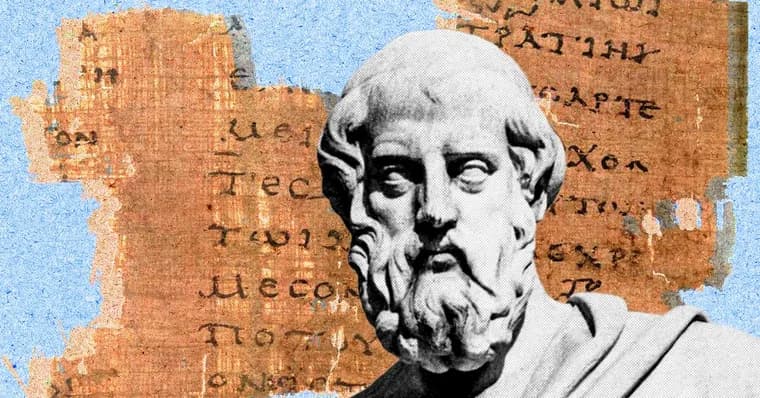
On Wednesday the Austrian Academy of Science is releasing Apollo, described as the world's first advanced large language model for Ancient Greek, built in partnership with French AI lab Mistral and technology services firm Sail Reply. Apollo is trained on roughly 600 million historical Greek words drawn from manuscripts, papyri and inscriptions, and it will be freely available to academics through a chatbot interface. The target problem is restoration work on the hundreds of thousands of Ancient Greek papyrus fragments held in academic libraries worldwide, many so damaged that scholars must fill in missing words or phrases by hand. Ancient Greek writing has no gaps between words, so a scholar first has to identify the word divisions, date the document, weigh its socio-political context, and consult reference material to propose plausible fill-ins. Apollo is built to propose the most statistically likely words or passages for torn sections, drawing on training data specific to a text's style: when it sees Homer it supplements Homeric Greek, and when it sees an inscription in Doric dialect it uses Doric dialect, according to Anna Dolganov, a historian and papyrologist at the Austrian Academy of Science. Dimitris Vlitas, a partner at Sail Reply, said unlocking this kind of restoration at scale was unthinkable a year ago. Stephen Colvin, a professor of classics and historical linguistics at University College London, noted that very few people in the world are skilled enough at Greek history to do this reconstruction manually. Armand D'Angour, a professor of classical languages and literature at the University of Oxford, home to the world's largest ancient papyrus collection, said having a machine suggest three candidate words for a gap would speed up his work considerably. Colvin cautioned that most unrestored papyri are mundane documents, such as personal letters, marital contracts and civil service papers, so Apollo is unlikely to yield newly discovered plays or reshape the broad understanding of antiquity. D'Angour framed the value differently, as incremental: each restored fragment adds a small piece to the historical record. Vlitas said that if Apollo succeeds, the same approach could be applied to other ancient languages, such as Latin or Egyptian, or to any academic field built on distilling and indexing a large text corpus. To guard against a language model, which works in probabilities, introducing errors into the historical record, Apollo is designed to offer scholars a selection of word options to choose from rather than a single authoritative answer. As Dolganov put it, human competence has to remain in the loop, because becoming fully reliant on AI transcriptions and interpretations is where problems would start.
Key facts
- Apollo, billed as the first advanced large language model for Ancient Greek, launches Wednesday from the Austrian Academy of Science with Mistral and Sail Reply
- It is trained on about 600 million historical Greek words from manuscripts, papyri and inscriptions and will be free for academics via a chatbot
- It proposes the statistically likeliest words or passages to fill gaps in torn papyrus, adapting to a text's dialect or author
- Apollo offers scholars a set of candidate words rather than one answer, to keep human judgment in the loop and limit the risk of polluting the historical record
- Researchers expect incremental gains, filling in mundane documents like letters and contracts, not new literary discoveries
Why it matters
Restoring a torn Ancient Greek document today takes a rare kind of expert: someone who can spot word divisions in a script with no spaces, date the fragment, and weigh its historical context before guessing at the missing text. Apollo automates the pattern-matching part of that task by drawing on 600 million words of training data spanning manuscripts, papyri and inscriptions, and it adapts its guesses to the source's style, whether that is Homeric verse or a Doric inscription. That does not replace the scholar's judgment, but it removes a large amount of the manual grunt work standing between a damaged fragment and a readable text.
Who it affects
Classicists, papyrologists and historians working with the hundreds of thousands of Ancient Greek fragments held in academic libraries, including the University of Oxford, home to the world's largest ancient papyrus collection, stand to benefit most directly. Academics who currently spend their time on reconstruction rather than interpretation could redirect effort toward analyzing what the restored documents mean, once Apollo handles more of the fill-in-the-blank work.
How to use it
Apollo will be freely available to academics through a chatbot interface starting Wednesday. The piece does not specify a broader public release, a technical architecture beyond the training corpus, or which platforms will host the interface.
How solid is it
The claims here rest on statements from the people who built and will use Apollo: Sail Reply's Dimitris Vlitas, papyrologist Anna Dolganov of the Austrian Academy of Science, and outside academics Stephen Colvin (UCL) and Armand D'Angour (Oxford), rather than on published benchmark results. Colvin and D'Angour both frame their expectations modestly, as incremental help with mundane documents rather than a source of dramatic new discoveries, which reads as a credible, hype-checked assessment from people who would actually use the tool.
Risks and caveats
A language model works in probabilities, and applying that to historical texts risks introducing plausible-sounding but wrong words into the record if used uncritically. Apollo's designers address this by having it surface multiple candidate words for a scholar to choose between rather than a single output, and Dolganov stresses that human competence has to stay central. Colvin's warning that most gains will be mundane, not literary treasure, is a useful check against overselling the tool's near-term impact.
“The crucial point is that human competence needs to remain.”
— Anna Dolganov, historian and papyrologist, Austrian Academy of Science