Joby flies a Cessna 3,200 miles with no hands on controls as FAA rolls out AI tool SMART
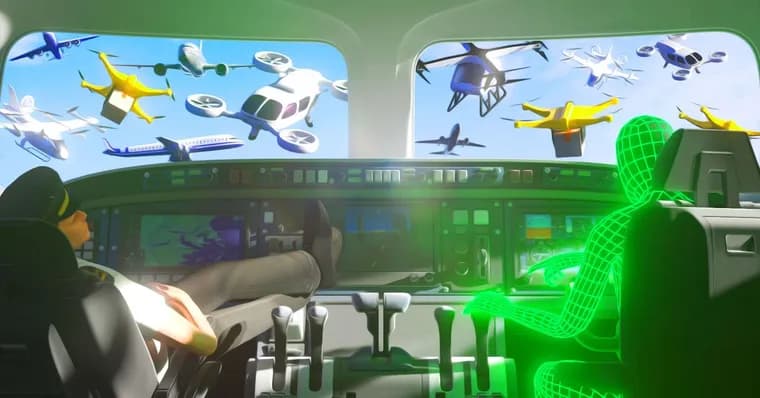
Wired opens with a nervous joke. On September 27, US transportation secretary Sean Duffy posted a video on X with the words "GAME CHANGER," introducing SMART, a new AI-infused air traffic management tool that he said would save passengers time and cut delays. Almost three weeks later, the FAA issued a national groundstop on Friday the 13th that threw airline schedules into chaos. The administration quickly said there was no evidence of a cyberattack and no sign that SMART had anything to do with the communications failure behind the decision to suspend flights. Asked that Friday night whether he could definitively rule out AI failure, Homeland Security secretary Markwayne Mullin could only say, "There’s nothing certain right now."
SMART, the article says, is only the tip of an AI aviation revolution. In one example, a single-engine Cessna Caravan took off from Buchanan Field Airport in Concord, California, flew south to Phoenix on a calm September morning, turned east to Fort Worth, stopped at Shaw Air Force Base in South Carolina, and finally landed at Dare County Regional Airport on the North Carolina coast. The zigzag trip covered 3,200 miles, through busy airspace and around storms, and no human hand touched the controls. According to Joby Aviation, which ran the project, a safety pilot was aboard at all times but never needed to intervene. Wired calls it a major milestone for an industry that is technologically conservative for good reason, and asks whether the technology can be trusted to be reliable and safe. A recently retired FAA employee, who asked to remain anonymous, answers: "We're introducing all this new technology to improve the system, and it's going to be a disaster."
The history goes back to the early 2000s, when better batteries and microelectronics made drones cheaper and more capable, and officials concluded that robots and humans would have to share the skies. In 2007 the federal government launched NextGen, which required, among other things, that US aircraft carry ADS-B transmitters by 2020. Amazon and Walmart then began planning drone delivery. Google unveiled Project Wing in 2014; by 2018 it was ferrying food, coffee and medication to 164 homes near Canberra, Australia, and the pilot expanded to Christiansburg, Virginia the next year. Costs were high and service slow, but the programs were meant to build operating experience. Startups meanwhile chased electric vertical takeoff and landing aircraft (eVTOLs), essentially oversized drones with room for pilots, for now. By 2022 there were 600 models under development. Joby unveiled its S4 in 2020, saying it would carry a pilot and four passengers 100 miles or more at up to 200 mph; the S4 made its maiden flight last year. Deadlines slipped because the aircraft was only part of the problem: airspace, pilot training and an economic framework were also needed. Joby's Chief Policy Officer Greg Bowles calls it "a very important, safe, careful dance."
Regulators have resisted. Mary Schiavo, an aviation lawyer and former inspector general in the Department of Transportation, says aviation regulation prioritises reliability because failure is so costly, and that certification means incremental rather than radical change. In 2017 Airbus and Dassault asked EASA to consider single-pilot airliners, with automation taking the copilot's workload. The European Cockpit Association, a union of airline pilots, protested that it would remove an independent safety professional from the flight deck and give operators more influence over safety judgments. EASA shelved the plan last year.
Still, the push continues. The FAA began issuing waivers in 2023 for delivery-drone flights beyond the operator's visual range, and by the end of this year it could make the change permanent. In August Amazon announced it planned to expand drone delivery to 500 locations across the country by the end of the year, and Walmart plans drone delivery from 270 store locations by the end of 2027. DroneUp chief operating officer Anthony Vittone, in a story for Sherwood News last year, said: "In five to 10 years, it’s going to be completely ubiquitous." In April Joby flew the first-ever point-to-point eVTOL flight within New York City, from John F. Kennedy Airport to three heliports in Manhattan, and has flown similar flights in California and Texas, all under the eVTOL Integration Pilot Program (eIPP), a federal initiative the Trump administration rolled out in March. Bowles says the next steps are demonstration flights with nonpaying passengers, then paying passengers, then A-to-B passenger flights, all under eIPP with increasing oversight. These will start with human pilots, but Wired argues that for the economics to work, the aircraft will have to fly themselves.
The nearer-term role for AI is behind the scenes. Palantir, Jeppesen and Thales already sell AI software that helps regulators, airlines and dispatchers sift data to spot risks and plan aircraft and crew scheduling. In September the FAA announced it had deployed software built by the Boston-based Air Space Intelligence: "Strategic Management of Airspace, Routes and Trajectories," or SMART, which the agency says is aimed at "fundamentally reshaping how we manage our airspace." The government says it is not meant to replace controllers but to use predictive AI to head off scheduling snags. FAA administrator Bryan Bedford said in a press release that combining SMART with hardware upgrades gives the FAA tools to cut flight delays, optimize traffic and keep airspace capacity open while maintaining its safety standard.
Critics are not reassured. Wired asks whether human operators would catch it if SMART fed nonsensical information into the system. The retired FAA employee says: "This is the Trump/DOGE/Musk effect. They’re pushing through all this new technology without any understanding of the complexity of the national airspace system." On October 13, almost two dozen Democratic lawmakers reportedly sent a letter to the Government Accountability Office asking it to review the program, citing fears that it might "hallucinate safety-critical information." There is also the controller shortage. The FAA hopes SMART will ease it by requiring fewer workers, though other industries have yet to see AI efficiencies materialize, and the efficiency could be used to justify a workforce reduction. In May the FAA cut its staffing target for active controllers from the 2024 goal of 14,633 to 12,563, citing "modern staffing models and scheduling tools."
Some experts are more positive. Schiavo says she thinks SMART is an important improvement, adding that nobody wants the current environment of near misses, delays and long taxi or clearance waits. Michael McCormick, a professor of air traffic management at Embry-Riddle Aeronautical University, also sees advantages in a predictive tool: when you can look at an aircraft's entire trajectory, he says, you can see where the conflicts are going to be. The available text of the article ends mid-quote there.
Key facts
- Joby Aviation says a Cessna Caravan flew a 3,200-mile zigzag coast-to-coast route with no human touching the controls; a safety pilot was aboard and never needed to intervene.
- The FAA announced in September that it had deployed SMART, an AI tool built by Air Space Intelligence; the administration said it saw no sign SMART was tied to the Friday the 13th groundstop.
- In May the FAA lowered its active air traffic controller staffing target from 14,633 to 12,563, citing modern staffing models and scheduling tools.
- Almost two dozen Democratic lawmakers reportedly asked the GAO on October 13 to review SMART, citing fears it might hallucinate safety-critical information.
- Amazon plans drone delivery at 500 locations by the end of the year and Walmart at 270 stores by the end of 2027; Joby's eVTOL flights will start with human pilots.
Why it matters
AI is entering aviation from two directions at once: aircraft that can fly themselves and software that helps run the national airspace. The pilotless Cessna trip is described as a major milestone for an industry that has long preferred time-tested technology. SMART shows the nearer-term role, a behind-the-scenes tool for controllers. The article argues that eVTOL air taxis cannot make economic sense with a paid human pilot per handful of passengers, so autonomy is central to the business case. The timing, with SMART introduced weeks before a national groundstop, sharpens the question of how much trust the technology has earned.
Who it affects
Air traffic controllers are the most directly exposed: the FAA hopes SMART lessens the shortage by requiring fewer workers, and it cut its staffing target in May. Airline passengers feel the effects through delays and groundstops. Airline pilots, through their European union, have already fought single-pilot airliners. Drone delivery customers and companies such as Amazon, Walmart and DroneUp are affected by the beyond-visual-range waivers. eVTOL makers such as Joby depend on the federal eIPP program and on regulators' pace.
How to use it
This is a news feature, not a product to adopt. For readers tracking the sector, Joby's Greg Bowles lays out the sequence to watch under eIPP: demonstration flights with nonpaying passengers, then paying passengers, then A-to-B passenger flights, with oversight increasing at each step. The FAA could make beyond-visual-range drone delivery waivers permanent by the end of this year. Joby's early eVTOL flights are to carry human pilots.
How solid is it
It is a Wired feature with named officials and experts, and a number of figures are stated directly: the 3,200-mile route, the controller targets of 14,633 and 12,563, and the delivery expansion targets. Some points rest on a single party. The statement that a safety pilot never intervened comes from Joby. The lawmakers' letter to the GAO is described only as reportedly sent, and the article does not say the GAO has agreed to a review. The critic of the technology is an anonymous retired FAA employee. The text available for this retelling is cut off partway through a quote from Michael McCormick.
Risks and caveats
The article does not say SMART caused the groundstop; the administration said there was no sign of a link, and Mullin could not rule out AI failure beyond saying "There’s nothing certain right now." Critics worry that controllers might not catch nonsensical output from the system, and the lawmakers cite fears it might "hallucinate safety-critical information." Wired notes that AI efficiencies have yet to materialize in other industries and could be used to justify cutting the workforce, even though the government says SMART is not meant to replace controllers. For autonomous aircraft, Wired stresses that an unexpected control failure is likely deadly, which is why the entry point for AI in passenger flight is expected to be modest.
“There’s nothing certain right now.”
— Markwayne Mullin, Homeland Security secretary, asked whether AI failure could be ruled out in the FAA groundstop