NSF X-Labs adds charities, companies and investors as support partners
The U.S. National Science Foundation started its X-Labs program in May, describing higher-risk, higher-funded awards meant to create new kinds of partnerships around urgent scientific and technological challenges. In October it announced an addition: charities, companies and investment funds, which the NSF calls 'consortium partners', will give X-Labs winners practical support such as laboratory space, software, shared equipment, and access to key data and expert guidance. That help will not give the partners ownership stakes in the X-Labs projects.
The money works in two stages. Initial winners, who will be announced later in November or December, receive US $1.5 million for a 9-month planning phase. They can then compete for much larger $50 million multiyear grants, and the partners' support may help them reach the aggressive targets needed for that. The NSF also requires potential award recipients to eventually demonstrate autonomy: project leaders must work on the project full-time and must be able to make hiring and spending decisions independently of any university or commercial owners. That agility, together with the risk appetite, is what sets X-Labs apart.
The NSF first named two focus areas: scientific instruments for sensing and imaging, and photonic microchips for quantum systems. In September it added three more: AI for physical devices, decoding biological sequences, and pushing the physical limits of computing.
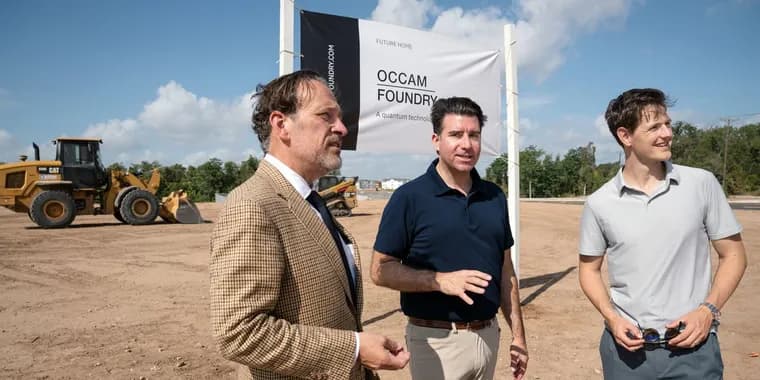
The partners explain their motives in the article, which was written by Lucas Laursen, technology policy editor at IEEE Spectrum. Matt Cimaglia, an investor in consortium partners Occam Foundry and Florida Quantum Center, says the arrangement tells applicants they do not need to reinvent the wheel, so they are not spending half of their X-Labs money building or buying basic infrastructure. Joshua M. Greenberg, program director at the Sloan Foundation, says the foundation is very interested in the enabling structures of R&D and has already supported multiple focused research organizations (FROs). These are independent entities with a time-limited purpose in a well-defined area. Because they start with a clean slate, FROs may lack the infrastructure that university or corporate research groups might inherit.
The most concrete offer comes from Ginkgo Bioworks, a bioengineering service firm in Boston. Its CEO and founder, Jason Kelly, says the company is offering X-Lab winners up to $5 million worth of access to its 'cloud lab'. The cloud lab can run complex and flexible laboratory work, and Ginkgo will also offer laboratory space and internal datasets that could be useful for training AI models. Kelly argues X-Labs could 'pull platforms into existence' as the federal Human Genome Project once did. He also says companies are far larger than in the era of Vannevar Bush, who wrote an influential 1945 report that helped shape the modern NSF and federal science funding, and that it is silly to leave them on the sidelines. A July report by Michael Kratsios, director of the Office of Science and Technology Policy, set out the current administration's vision for an update to the Bush report, including the role of X-Labs.
Outside academics are broadly positive but cautious. Arthur Daemmrich, a historian of U.S. technology policy at Arizona State University (ASU), welcomes the administration's willingness to experiment, saying the field had gotten very staid. He also calls the X-Labs approach 'like gig work for science', which may suit some people and problems but not others. His ASU colleague Zachary Pirtle, a former NASA program manager, says the societal contribution of such projects is worth studying, though how to do so is an open question; he asks whether teams need economists or other social scientists.
Nathalie Risso, an electrical engineer at the University of Arizona in Tucson who does applied research on automating mining equipment, is applying under the AI for physical systems topic, aiming to test self-learning AI operation of heavy mining equipment. She says X-Labs lets researchers explore things bigger than a lab can do. The costs of getting it right exceed a typical university grant, and the cost of getting it wrong is more than any industry partner wants to risk. A spokesperson for the Secunda Family Foundation, another consortium partner, says AI and other new technologies are rapidly changing what scientists can attempt, but the infrastructure and institutions supporting research have to evolve with them.
Key facts
- The NSF announced in October that charities, companies and investment funds will act as X-Labs 'consortium partners', offering lab space, software, shared equipment, data and expert guidance without ownership stakes in the projects.
- Initial winners, due to be announced later in November or December, get US $1.5 million for a 9-month planning phase and can then compete for $50 million multiyear grants.
- Ginkgo Bioworks is offering winners up to $5 million worth of access to its cloud lab, plus lab space and internal datasets that could help train AI models.
- Focus areas started with sensing and imaging instruments and photonic chips for quantum systems; September added AI for physical devices, decoding biological sequences, and pushing the physical limits of computing.
- The NSF requires recipients to eventually show autonomy, including full-time leaders who can hire and spend independently of any university or commercial owner.
Why it matters
X-Labs is the NSF's attempt at a different kind of research funding: bigger, riskier awards for independent teams rather than standard university grants. The consortium partners tackle a stated weakness of such teams. Because they start with a clean slate, they may lack the infrastructure a university or corporate group would inherit. Partner support is meant to stop winners spending, in Cimaglia's words, half of their X-Labs money on basic infrastructure. AI and computing run through the program: AI for physical devices and pushing the physical limits of computing are among the five focus areas, and Ginkgo's datasets are pitched as useful for training AI models. The article also links the program to a July report by OSTP director Michael Kratsios, which offered the administration's vision for updating Vannevar Bush's 1945 report.
Who it affects
Applicants and winners are the first group: teams that want to run focused research outside a university or company. Cimaglia says engineers with an entrepreneurial mindset do not have to be part of a university. Academics such as Nathalie Risso, who is applying under the AI for physical systems topic to test self-learning AI operation of heavy mining equipment, are also in view. Partners such as the Sloan Foundation, Ginkgo Bioworks, the Secunda Family Foundation, and investors in Occam Foundry and Florida Quantum Center take part in the effort. Researchers of science policy, such as Daemmrich and Pirtle at ASU, are watching how it works.
How to use it
The article does not describe an application procedure. For prospective applicants it does lay out what the partners offer and what the NSF expects. Support includes lab space, software, shared equipment, access to key data and expert guidance. Ginkgo's offer is up to $5 million worth of cloud-lab access. The NSF requires recipients to eventually show autonomy, with full-time project leaders who can make hiring and spending decisions independently of any university or commercial owner. Greenberg of the Sloan Foundation describes the task as more like founding a new organization than pitching a specific research project. Initial winners are expected to be announced later in November or December.
How solid is it
This is a feature by Lucas Laursen, technology policy editor at IEEE Spectrum, built on the NSF's October announcement and comments from partners and academics. The program facts (the $1.5 million, 9-month planning phase, the $50 million grants, the focus areas) come from the article's own reporting. Most quotes come from parties that have joined or back the program, though two ASU academics add independent views. The article says the partner help 'may' help initial winners reach the targets for the larger grants, which is a possibility, not a result.
Risks and caveats
The program is at an early stage: initial winners have not yet been announced, and the article gives no count of winners or total budget. Only Ginkgo's offer is quantified; the value of other partners' support is not stated, and the article does not list every partner. The $50 million grants depend on 'aggressive targets' that the article does not spell out. Daemmrich says the 'gig work for science' model may work for some people and problems but not others. Pirtle raises the open question of how to measure the societal contribution of such large projects and whether teams need economists or other social scientists. Risso is only applying; the article does not say her application has been selected.
“It’s a way of telling X-Labs applicants you don’t need to reinvent the wheel, so you’re not spending half of your X-Labs money to go build or buy basic infrastructure”
— Matt Cimaglia, an investor in consortium partners Occam Foundry and Florida Quantum Center