Caterpillar applies mining automation lessons to its AI rollout
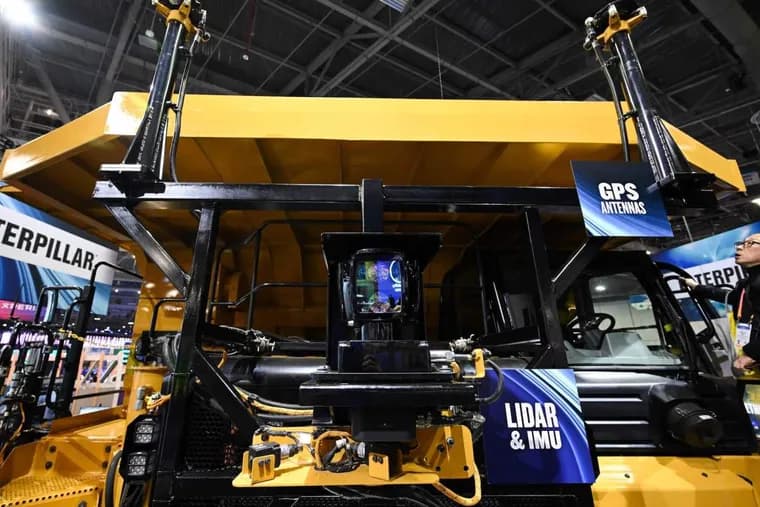
Caterpillar's CTO Jaime Mineart told TechCrunch, during a fireside chat at the Ai4 conference in Las Vegas earlier this month, that the industrial equipment maker is carrying what it learned from automating mining into a broader AI push. Caterpillar's autonomous business began in mining, where labor shortages and hazardous conditions made automation especially useful; it now sells automated haul trucks, drilling equipment, underground loaders, dozers and remote-controlled construction equipment, plus a software command center, fleet management and remote terrain intelligence. Mineart said the company is now applying that experience to more dynamic settings such as jobsites, quarries and construction sites.
One concrete product of that push is the Cat AI Assistant, which lets field technicians standing next to a machine use voice commands to pull up repair procedures, troubleshoot problems and identify parts before starting a repair. Mineart said it is now being used by customers, operators and technicians, and it draws on Caterpillar's proprietary data, generated by about 1.6 million connected assets globally and more than 16 petabytes of structured data. Caterpillar is also using AI for scanning sites and generating digital twins in manufacturing, and, like most companies, across its own enterprise operations and software development: Mineart said the company uses AI agents to modernize legacy code, generate and test new software, and identify defects earlier.
Mineart cautioned that building the technology is only part of the challenge, since deploying an autonomous machine is not the same as transforming a whole site to use AI. Companies also have to rethink how people work alongside the technology and how existing processes change. She said Caterpillar leans on experienced operators to help train its AI systems, drawing on institutional knowledge built over decades, and that as machines grow more autonomous, some operators may shift from controlling a single machine to overseeing several from a remote command center.
That shift is driving a new challenge: training Caterpillar's 118,000 employees. Mineart said the company plans to spend $100 million over the next five years training its workforce in AI, autonomy and robotics. The article suggests that investment is likely aimed at helping Caterpillar capitalize on the broader AI infrastructure boom, which is already lifting its results: quarterly revenue hit an all-time high of $20.5 billion in the second quarter, helped by strong demand for power-generation equipment used in data centers. The company's power-generation division saw sales spike 72% to $3.10 billion, and CEO Joe Creed said that "no one is slowing down" when it comes to demand for cloud computing and generative AI infrastructure.
Key facts
- Caterpillar's CTO Jaime Mineart says the company is applying decades of mining-automation experience to a broader AI push, spanning jobsites, quarries and construction sites.
- The Cat AI Assistant lets field technicians use voice commands to pull up repair procedures and identify parts, drawing on about 1.6 million connected assets and more than 16 petabytes of structured data.
- Caterpillar plans to spend $100 million over five years training its 118,000 employees in AI, autonomy and robotics.
- Caterpillar uses AI agents internally to modernize legacy code, generate and test software, and catch defects earlier.
- Quarterly revenue hit an all-time high of $20.5 billion, with the power-generation division's sales up 72% to $3.10 billion amid data center demand.
Why it matters
Caterpillar's pitch is that it already solved a version of the integration problem most companies now face with AI: getting new technology to actually work inside real-world operations. Its mining-automation business, built over decades around automated haul trucks, drilling and loaders, gives it a template for deploying AI in messier, more dynamic settings like construction sites and quarries. That experience, not just the AI models themselves, is what Mineart frames as the company's edge.
Who it affects
Field technicians and operators are the direct users: the Cat AI Assistant is aimed at people standing next to a machine who need repair procedures or parts identification on the spot. More broadly, Caterpillar's own workforce of 118,000 employees is affected by the retraining push, and some equipment operators may see their roles shift from running a single machine to overseeing several from a remote command center as autonomy increases.
How to use it
The Cat AI Assistant is already in use by Caterpillar's customers, operators and technicians, per Mineart, though the source gives no pricing, licensing terms or rollout date. Internally, Caterpillar also applies AI to scanning sites and building digital twins for manufacturing analysis, and uses AI agents for software development tasks like modernizing legacy code and generating and testing new code.
How solid is it
The account comes directly from Caterpillar's CTO speaking on the record at a public conference, and the revenue and sales figures cited are from the company's own reported quarterly results, giving the claims a solid basis. The source does not specify a date for the fireside chat beyond "earlier this month," nor a fiscal year for the second-quarter results, and it does not break out how much of the $100 million training budget targets AI specifically versus autonomy and robotics broadly.
Risks and caveats
The article does not attribute the power-generation division's 72% sales increase specifically to AI workloads as opposed to general demand for power-generation equipment, so the AI-infrastructure link, while plausible given the context, is the article's framing rather than a stated causal claim. No date is given for when the Cat AI Assistant was first introduced, making it hard to gauge how mature the deployment is.
“Now we're in this super exciting time where we can take all of that learning from mining and bring it into much more dynamic environments, jobsites, quarries, and construction sites”
— Jaime Mineart, Caterpillar's CTO