DHS uses obscure customs law to snoop on journalists, unions
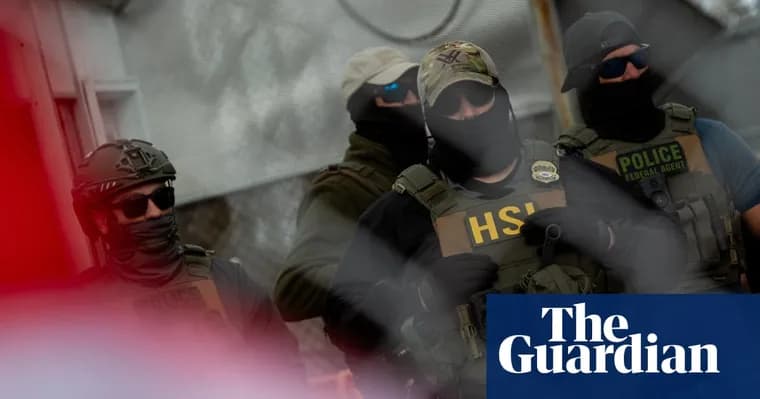
The US Department of Homeland Security has been using an administrative summons under 19 USC 1509, an obscure provision of federal customs law meant to let DHS check whether duties and taxes are being correctly paid on imports, to demand records that have nothing to do with customs. Unlike a search warrant, a 1509 summons needs no judge's approval, only a sign-off from a DHS official, and it can also instruct the company that receives it to keep the request secret. Over recent months DHS has used this authority against journalists, non-profits and unions, obtaining phone records, YouTube account data and financial records without the judicial oversight the Fourth Amendment normally requires.
The clearest example involves Minneapolis journalist Georgia Fort and journalist Don Lemon, who covered a protest at a Minneapolis church in January and were later charged criminally in connection with it; both have pleaded not guilty. In February, federal prosecutors twice asked a judge for search warrants for Fort's and Lemon's YouTube account information. The judge rejected both requests, writing that the government had not established probable cause of a crime and that he wanted Fort and Lemon told about the request so they could challenge it. About a month after that ruling, the government said it was withdrawing the warrant request, only for DHS, less than a month later, to serve Google with a 1509 summons seeking the same YouTube information, a route that required no judge at all. Separately, DHS obtained six months of Fort's phone records from T-Mobile, covering more than 10,000 calls and text messages; Fort was not told until mid-July, when government lawyers handed the records to her own lawyers, who wrote in a filing this week that they were "stunned" the government had been able to do this after a judge had already raised concerns about obtaining her records. Google refused to comply with the summons for any of Fort's accounts, telling DHS it had not shown how the request related to a customs investigation; T-Mobile complied, and in a statement did not explain why.
DHS also sought YouTube account information, which can include a user's IP address and login times, for the left-leaning outlet Democracy Now, conservative podcaster Megyn Kelly, the Milwaukee Journal-Sentinel and independent journalist Brendan Gutenschwager, citing videos that included livestreams of the protest along with unrelated material, such as an interview with protest leader Nekima Levy Armstrong and one with Jonathan Parnell, the church's pastor. In a separate case, in which 15 activists face criminal conspiracy charges, DHS used the same 1509 authority to obtain financial records for the Sunrise Movement, the Service Employees International Union and the Communications Workers of America, plus Venmo records for the non-profit Voices for Racial Justice; none of the four organizations is itself charged with a crime, and DHS offered no explanation for why it needed their records.
Legal experts describe the maneuver as far outside what the statute allows. Chris Duncan, a former DHS lawyer, said 1509 authority is meant only for customs investigations and has "absolutely nothing to do with a domestic situation at a church, a social media post, even an immigration matter." John Roth, DHS inspector general from 2014 to 2017, called it "outrageous conduct on so many levels" and said "this is not a customs case; it is not a customs violation." ACLU lawyer Nathan Freed Wessler said DHS has a long history of stretching the summons beyond its scope to pursue people whose protected speech it dislikes, and that without knowing how many 1509 summonses exist, "there's no way for courts or lawmakers or the public to put checks on executive branch abuses"; a New York Times report in February had already found DHS serving hundreds of administrative subpoenas on social media companies for user information. The Trump administration argues, in court filings, that although the statute references "duties, fees, and taxes," its plain language does not limit DHS's investigative power to those subjects. Duncan rejects that reading: "It's not a free-for-all that was thrown in there. Congress does not operate that way." In the church case specifically, government lawyers argued the summons was justified because protesters might have assaulted or interfered with a local ICE official who was a pastor at the church, even though that official does not appear to have been present and no DHS personnel were at the protest.
Companies are not obligated to comply with a 1509 summons: they can ignore it and force DHS to go to court to enforce it, or file a motion to quash it, and the reporting found no case in which the government has actually gone to court to enforce a 1509 summons outside a normal customs matter. Individual users have less leverage. EFF lawyer F Mario Trujillo said hiring a lawyer to fight one summons would cost "tens of thousands of dollars," compared with the $500 to $1,000 an hour that companies pay their own counsel, and Freedom of the Press Foundation adviser Caitlin Vogus and Civil Liberties Defense Center director Lauren Regan both said the notice-and-contest process many companies offer effectively shifts that burden onto users who often cannot afford to fight back. The tactic has been challenged before: in 2017, Twitter sued DHS over a 1509 summons that sought to unmask the @alt_uscis account, a Twitter account critical of the department, and DHS ultimately withdrew it.
Key facts
- DHS is invoking 19 USC 1509, a customs-import statute that needs only a DHS official's sign-off rather than a judge's warrant, to demand records on journalists, unions and non-profits.
- After a judge twice rejected search warrants for journalists Georgia Fort's and Don Lemon's YouTube account data, DHS sought the same data from Google using a 1509 summons instead, though Google refused to comply, and separately got six months of Fort's phone records from T-Mobile, covering more than 10,000 calls and texts, without notifying her until mid-July.
- In a separate case tied to 15 activists facing criminal conspiracy charges, DHS used 1509 summonses to obtain financial records for the Sunrise Movement, the Service Employees International Union and the Communications Workers of America, plus Venmo records for Voices for Racial Justice; none of the four organizations is charged with a crime.
- Former DHS lawyer Chris Duncan and former DHS inspector general John Roth both say the maneuver exceeds what the statute allows, and a February New York Times report found DHS had already served hundreds of administrative subpoenas on social media companies.
- EFF's F Mario Trujillo says fighting a 1509 summons in court would cost a user "tens of thousands of dollars"; in 2017, Twitter pushed DHS to withdraw a similar summons that targeted the @alt_uscis account.
Why it matters
DHS is using a statute written for customs enforcement to sidestep the Fourth Amendment's judicial-oversight requirement, obtaining records on journalists, unions and non-profits without ever going before a judge, in Fort's case even after a judge had already turned the government down on the same request. Because a 1509 summons can also order the recipient to keep it secret, and companies are not required to notify the person whose records are sought, the people targeted often do not find out until long afterward, if at all, leaving courts, Congress and the public with no way to see how often the tactic is used. A February New York Times report had already found DHS serving hundreds of administrative subpoenas on social media companies for user information, which suggests the Minneapolis case is one example of a broader pattern rather than an isolated incident.
Who it affects
Named directly: Minneapolis journalist Georgia Fort and journalist Don Lemon, whose YouTube account data DHS pursued and whose phone records (Fort's) DHS obtained from T-Mobile; the outlets and journalists Democracy Now, Megyn Kelly's show, the Milwaukee Journal-Sentinel and Brendan Gutenschwager, whose YouTube account information DHS also sought; and, in the separate 15-activist case, the Sunrise Movement, the Service Employees International Union, the Communications Workers of America and Voices for Racial Justice, whose financial or Venmo records were obtained even though none of the four is charged with anything. It also puts the companies served, Google, T-Mobile and PayPal (Venmo's parent), in the position of deciding whether to fight a summons a judge never reviewed, and more broadly touches anyone whose YouTube or social media activity around protests or ICE criticism might draw DHS's attention.
How to use it
A company served with a 1509 summons is not legally required to comply: it can ignore the request and force DHS to go to court to enforce it, or file its own motion to quash the summons, and the reporting found no instance of the government actually doing so outside a normal customs case. An individual has fewer options. Some companies notify a user and let them contest a summons before complying, but mounting a legal challenge is expensive: EFF lawyer F Mario Trujillo puts the cost at "tens of thousands of dollars," far more than most individuals or small non-profits can absorb, against companies that can pay their own lawyers $500 to $1,000 an hour. And because a 1509 summons can instruct its recipient to keep it secret, the first a targeted person may learn of it is after the records have already changed hands.
How solid is it
The reporting comes from The Guardian and is built on court filings, including Fort's lawyers' filing this week and the government's own December filing defending its reading of the statute, plus on-record statements from a former DHS lawyer (Duncan), a former DHS inspector general (Roth) and named privacy lawyers at the Freedom of the Press Foundation, the ACLU and EFF, along with direct statements from T-Mobile and Google. Both the Department of Justice and DHS declined to comment on the use of the summons, so the government's position beyond its existing court filings is not represented here. The overall scale is inherently hard to pin down: the article itself says it is "difficult to determine" how often DHS uses 1509 summonses or how often they succeed, since most stay hidden unless a company or user challenges them, and it does not confirm that the February New York Times figure of "hundreds" of administrative subpoenas specifically referred to 1509 summonses rather than administrative subpoenas in general.
Risks and caveats
The account gives no calendar year for the January protest, the February warrant fight or the mid-July disclosure to Fort's lawyers, so those events are dated only relative to the article's own publication rather than to a fixed year. It does not say whether Democracy Now, Megyn Kelly's show, the Milwaukee Journal-Sentinel or Gutenschwager complied with the summonses seeking their YouTube data, only that Google refused in Fort's case and T-Mobile complied. It also never confirms that the "local ICE official who was a pastor" cited by government lawyers as the rationale for the church summons is the same person as Jonathan Parnell, the church pastor named elsewhere in the story, so that link should not be assumed, and it does not identify the "Don Lemon" named here as any particular public figure beyond "the journalist." Finally, the material available for this retelling cuts off mid-sentence on the resolution of Twitter's 2017 lawsuit, so nothing beyond DHS eventually withdrawing that summons is confirmed.
“It's outrageous conduct on so many levels. It's hard to know where to begin.”
— John Roth, DHS inspector general from 2014 to 2017