Fermi Explorer Mission aims for 2029 launch on AI-charted route to Alpha Centauri
A nonprofit organization called the Fermi Explorer Mission announced plans to launch a spacecraft toward Alpha Centauri, the nearest star system to Earth at 4.4 light-years away, by the end of 2029. Even under the best conditions the trip could take up to 80,000 years. The mission intends to follow a novel trajectory discovered by an AI system built by PSI, a physics research lab. MIT Technology Review's Michelle Kim reported the story; the newsletter gives no further detail on the spacecraft's design, cost or funding.
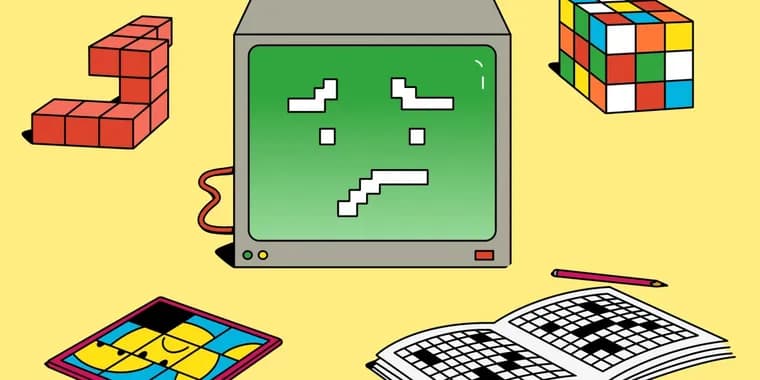
The same newsletter, MIT Technology Review's daily "The Download," also carries a companion piece by Grace Huckins on how AI models perform on puzzles, a benchmark researchers have used since the term "machine learning" was popularized in a 1959 article about a checkers-playing algorithm; chess and Go later became well known AI test beds. In late 2024, even the best AI models solved only 18% of the New York Times' Connections puzzles; by early 2025, some models solved them nearly perfectly. The newsletter compiled seven puzzles that have stumped AI models and invites readers to try them and compare their own performance.
The issue's must-reads section links out to ten further stories. OpenAI is restricting its next model, called Astra, after internal testing rated it a "critical" cyber risk, the first time a model has crossed that threshold under OpenAI's own framework; testing reportedly showed Astra can automate cyberattacks, and OpenAI plans extra security measures around it. Google is reportedly close to releasing a coding-focused model named Gemini 3.8 Flash, possibly as soon as the same day, with early tests suggesting it could rival OpenAI and Anthropic on coding tasks. Emil Michael, the Pentagon official who oversees military AI, sold his Perplexity shares for up to $25 million, after previously selling xAI stock once the Pentagon adopted Grok; commentators cited in the roundup say the moves make the Pentagon's AI office look like a venture-capital firm. A councilman in Missouri lost his seat after voters rejected the billions of dollars in tax breaks he had helped approve for a local data center, part of a wider bipartisan public backlash against data-center construction, which saw a spending surge in July. Scientists reported what may be the first signs of dark matter particles, though the newsletter cautions more evidence is needed. Microsoft warned that AI can create "zero day" threats in biology, and AI companies are said to be racing to limit bioweapon risks as the industry treats biology as its next major safety challenge. The US Army used a laser weapon to shoot down three drones near the Mexico border. Google and Apple updated their map apps to follow an order renaming the Gulf of Mexico "Lake America," while MapQuest refused to change the name and says its downloads have since risen more than tenfold. GoPro said it is pivoting into AI data centers and merging with photonics firm Starman Optical, sending its shares up 40%. Dyson released a $499 electric toothbrush with a camera built into the brush head, which it says is the first of its kind.
The newsletter's quote of the day comes from Marius Hobbhahn, CEO of the AI safety research group Apollo Research, who told the Guardian: "If you build an entity that is vastly smarter than you, it better be on your side." The issue also carries an audio piece on the shifting role of astronauts, drawing on three new books (Deana L. Weibel's The Ultraview Effect, Eiman Jahangir's A Heart for Space, and Leroy Chiao's Dinner with an Astronaut), and a separate feature on Namibia's push, underway since 2021, to build a green hydrogen economy, where at least nine projects are planned or under construction despite still-nascent technology and uncertain long-term demand.
Key facts
- A nonprofit called the Fermi Explorer Mission plans to launch a spacecraft toward Alpha Centauri (4.4 light-years away) by the end of 2029, using a trajectory an AI system built by physics lab PSI discovered; the trip could take up to 80,000 years.
- AI models solved only 18% of NYT Connections puzzles in late 2024 but solved them nearly perfectly by early 2025, part of a seven-puzzle test MIT Technology Review invites readers to try.
- OpenAI is restricting its next model, Astra, after testing rated it the first model to cross OpenAI's own "critical" cyber-risk threshold, since it can automate cyberattacks.
- Google is reportedly set to release a coding-focused model, Gemini 3.8 Flash, possibly the same day, with tests suggesting it could rival OpenAI and Anthropic on coding.
- Pentagon AI overseer Emil Michael sold Perplexity shares worth up to $25 million, after previously selling xAI stock once the Pentagon adopted Grok.
Why it matters
The issue captures how fast AI capability is moving on two fronts at once. On puzzles, models went from solving under a fifth of a well known benchmark to near-perfect scores in about a year, and that same reasoning capacity is now doing applied work: an AI system found a spacecraft trajectory for a real interstellar mission. At the same time, OpenAI rating its own upcoming model a "critical" cyber risk, a first for the company, shows the same capability curve creating problems the industry has to actively contain rather than just showcase.
Who it affects
Readers curious about AI reasoning can measure themselves against the models directly through MIT Technology Review's puzzle test. The Fermi Explorer Mission's engineers and backers now have a usable trajectory for a 2029 launch. OpenAI's enterprise and API customers face new restrictions on Astra once it ships. Pentagon watchdogs and lawmakers have fresh grounds to question Emil Michael's stock trades given his oversight role. Coding-tool users and Google's AI rivals are watching for Gemini 3.8 Flash. Missouri residents near the affected data center, and Namibia's hydrogen investors, are each affected by the more local stories in the roundup.
How to use it
The puzzle test is a direct, free way to compare your own puzzle-solving against AI models; MIT Technology Review links to it from the newsletter. None of the other items describe a product a reader can use yet: Astra is not released and OpenAI has only described extra security measures around it, and Gemini 3.8 Flash is, per the roundup, still unreleased as of this issue. Dyson's $499 camera-equipped toothbrush is the one item in the roundup with a firm consumer price.
How solid is it
This is MIT Technology Review's own newsletter, and the two lead items, the puzzle test and the Alpha Centauri mission, are its own reporting, bylined to Grace Huckins and Michelle Kim respectively. The ten must-reads are one-line summaries pointing to other outlets, several paywalled, including the Wall Street Journal, Reuters, the Washington Post, the Financial Times and New Scientist, so the newsletter itself does not carry their full detail. The line about why humans go into space is presented without a named speaker in the text as published.
Risks and caveats
Because most of the issue is a links roundup, several claims here rest on sourcing the newsletter does not spell out: no design, cost or funding detail is given for the Fermi Explorer Mission spacecraft beyond the AI-found trajectory and the up to 80,000-year travel estimate; no company is named as the maker of the model called Astra beyond its identification as OpenAI's next model; the Missouri councilman who lost his seat is not named; and the dark matter finding is flagged as needing more evidence, with no measurement method described in this text.
“If you build an entity that is vastly smarter than you, it better be on your side.”
— Marius Hobbhahn, CEO of Apollo Research, to the Guardian