How Mark Twain lost a fortune on a doomed typesetting machine
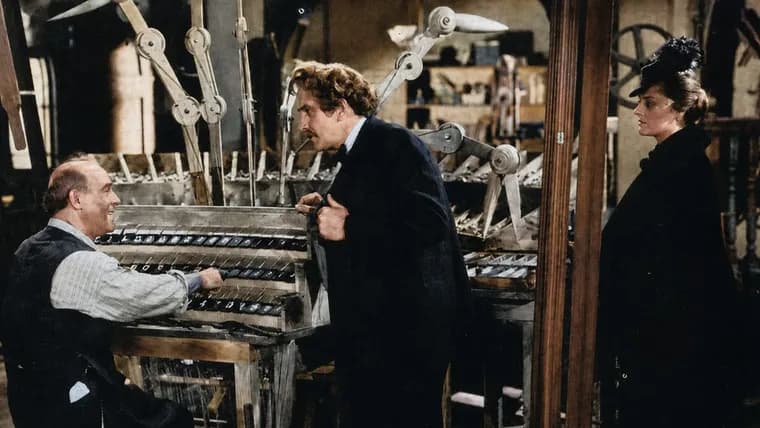
The essay, published on Res Obscura, revisits a decade of Mark Twain's life that his biographers describe as ruinous: his backing of inventor James W. Paige's mechanical typesetter, the Paige Compositor. Twain met Paige in 1880 and was quickly won over, calling the machine an "inspired bugger" that would let anyone set type and predicting the world would need about a hundred thousand of them. In an 1889 letter to his brother Orion, Twain called the machine "a cunning devil, knowing more than any man that ever lived" and said it would make telephones, locomotives and even Babbage's calculators look like toys. Twain ultimately put the equivalent of roughly ten million of today's dollars into the project, drawing on both his book earnings and his wife's inherited fortune, and lost all of it. The problem was complexity: Paige's device grew to more than 18,000 distinct parts, and patent examiners needed a full 30 days just to read the initial application, which was known inside the US Patent Office as "The Whale." When examiners eventually asked to see a working machine, none existed. The Paige Compositor tried to mechanically replicate every motion a human typesetter made. Its rival, the Linotype, took a different approach: it cast whole lines of type at once rather than imitating the compositor's individual movements. The Linotype started out slower but was far easier to mass produce and repair, and it won the market. Twain went bankrupt; Paige, according to the essay, died a complete unknown. Today only one Paige machine survives; a second was eventually donated to a scrap metal drive during World War II. The author draws three lessons from the episode: that designs friendly to ordinary users and repairable failure modes win out over theoretically superior but fragile ones; that society adopts transformative inventions more slowly than their champions expect, partly because insiders like Twain lose touch with the perspective of the workers being automated and the capital owners in no hurry to replace working equipment; and that transformative technologies tend to succeed by redesigning the task itself rather than by mechanically imitating existing human labor, as the Linotype did and the Paige Compositor did not. The essay closes by drawing an explicit parallel to the present: it likens Twain's arrangement with Paige, in which Twain never did the hands-on work and only received flattering progress reports by letter, to "vibe coding avant la lettre," and says Paige's mixture of "sycophantic industriousness and gaslighting" will be familiar to any user of Claude Code.
Key facts
- Mark Twain invested the equivalent of roughly ten million of today's dollars in James W. Paige's typesetting machine, the Paige Compositor, using his book earnings and his wife's inherited fortune, and lost it all.
- The machine grew to over 18,000 distinct parts, and patent examiners took a full 30 days to read the initial patent application, known internally as "The Whale."
- The simpler, cheaper Linotype beat the Paige Compositor by casting whole lines of type at once instead of imitating a human compositor's individual movements.
- Only one Paige machine survives today; a second was donated to a WWII scrap metal drive.
- The essay likens Twain's hands-off management of Paige, via letters and flattering progress reports, to "vibe coding" and compares Paige's behavior to "gaslighting" familiar to Claude Code users.
Why it matters
The Paige Compositor is a 19th-century case study in a pattern that recurs with every wave of automation hype, including the current one around AI: a technically ambitious machine that tries to replicate human labor motion-for-motion can lose to a cruder rival that redesigns the task instead. The essay uses Twain's decade-long obsession as a concrete, well-documented example of how a genuinely transformative idea can still fail commercially, and it explicitly frames the story as a lens for judging automation claims today.
Who it affects
Anyone evaluating a new automation technology, whether as an investor, an adopter, or a builder deciding between imitating existing workflows and redesigning them. The essay's closing comparison to "vibe coding" and Claude Code extends the lesson to people currently delegating technical work to AI tools based on progress reports rather than direct inspection.
How to use it
The essay draws three explicit, transferable lessons: designs that are easy to repair and whose failure modes are predictable win real-world trust over theoretically superior but fragile ones (the Linotype over the Paige Compositor); adoption of transformative inventions is consistently slower than proponents expect, partly because insiders lose sight of the perspective of workers being automated and of capital owners with no urgency to replace working equipment; and technologies succeed by redesigning what the task is, not by mechanically reproducing how humans already do it.
How solid is it
The account draws on Ron Chernow's biography of Twain and on Twain's own letters and quoted remarks, plus recollections attributed to Twain's biographers and housemaid. Specific figures, such as the 18,000 parts and the 30-day patent review, are stated as facts in the piece; the ten-million-dollar figure is explicitly given as a present-day equivalent, not the original sum Twain lost, and the source does not state that original figure.
Risks and caveats
The parallel to modern AI tools, including the comparison of Paige's conduct to "gaslighting" and the framing of Twain's management style as "vibe coding," is the author's own interpretive framing rather than a claim from Twain's era; readers should treat it as commentary layered on top of the historical account, not as part of the documented history itself. The essay does not give the exact dates of Twain's bankruptcy or Paige's death, nor a cause of death for Paige.
“I never saw such an inspired bugger of a machine. Anybody can set type with it... I reckon it will take about a hundred thousand machines to supply the world, and I judge the world has got to buy them.”
— Mark Twain