Ideo's Savannah Kunovsky on when AI makes products worse
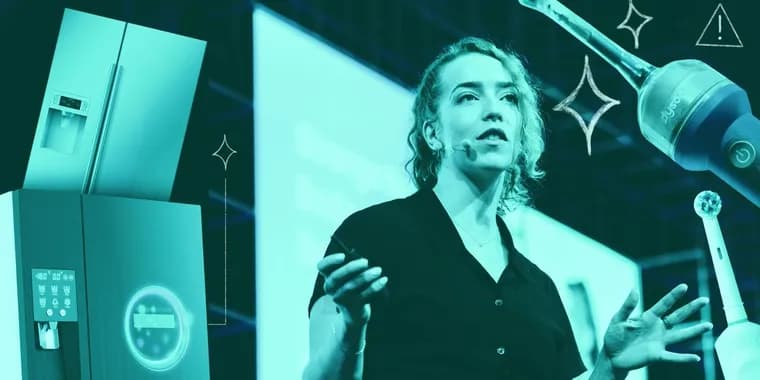
IEEE Spectrum ran a Q&A in which journalist Stephen Cousins asks Savannah Kunovsky, who leads a team of industrial product designers at the San Francisco design consultancy Ideo, where adding AI to physical products helps and where it hurts. The framing is that the tech industry has rushed to put AI into every device, from smart-vision toothbrushes to mood-reading household robots, and some designers now ask where genuine innovation ends and a solution looking for a problem begins.
Kunovsky says the pressure is real but only partly explains the trend. Teams come to Ideo feeling they must show they are doing something with AI, sometimes because a CEO has promised the board an "AI story" before the next earnings call, or because a competitor has launched an AI version of its product. Ideo's first move is always to step back and ask who the product is for and what they are trying to do. Her test for a gimmick is the one used for any product experience: does it help someone do what they are trying to do? She adds that many companies jump straight to large language models, when there is a wider AI toolbox that includes computer vision, sensor fusion and on-device models. Because AI asks people to change their behaviour, it needs to be simple; she points to Apple's first mouse in the early 1980s, which Ideo's predecessor firm gave only one button because people were learning an unfamiliar system.
She names the clearest failures as products where AI replaced something that already worked. She respects Humane's AI Pin (a screenless, wearable smartphone alternative that uses an AI assistant instead of apps) as a provocation, but says the technology was not ready: it asked people to give up an interface they knew well for one that was slower and less reliable. Other examples include a voice assistant that mishears a command and turns off the wrong light, and a customer service bot that loops when you want a person. In cars, climate and volume controls moved onto touchscreens and voice menus, which takes eyes off the road, and Euro NCAP, Europe's car safety rating program, now rewards physical controls for that reason. She also notes that people love some products because they are analog, such as a film camera, a good kitchen knife or a notebook, and that offering several routes to the same goal (voice, app, wall switch) is fine as long as it does not add complexity for its own sake.
Her main anecdote: a client wanted a cooktop with no knobs, where you tell an AI what you are cooking and it manages the heat. In testing, the pan started smoking and the user reached for a knob that was not there. They said "turn it down" twice and pulled the pan off the burner before the AI responded. The team kept the knobs. Her rule: anything you need to do instantly, by feel, or under stress is usually best kept physical, such as a volume knob, a light switch, a stove burner or an emergency stop, because a mechanical control is faster and more trustworthy than a system that must interpret what you mean.
On good integration, she says understanding what people need comes first, then technical feasibility, then what makes sense for the business. AI may be the core of the experience (a voice interface) or work in the background, and either way the measure is whether it helps someone do what they set out to. She warns against giving everything a chat window just because LLMs work in text; physical products can communicate through light, sound, vibration, movement and the feel of a knob or button. The clearest positive examples are in accessibility: hearing aids that pick out a voice in a noisy restaurant, Be My Eyes, which lets blind or low-vision people point a phone at the world and hear a description, and live translation in earbuds. Proactive systems should anticipate needs without being intrusive, like a good restaurant server, and how loudly a product speaks up should match the stakes. She says a wave of personal agents such as Instinct, Dots and Muse is starting to appear, working in the background and returning with findings.
On generative AI, she says the product definition changes: you cannot specify every output, so you define the space the product should operate in. AI evaluations and constitutions (written principles that guide model training) have become a new form of product definition for LLMs. Evaluations describe good performance across thousands of situations, and a constitution sets out values and boundaries. Together with the model's software, configuration and runtime infrastructure, they shape the container the product lives in, which she calls core design work rather than an end-stage engineering step. Because nondeterministic responses strain consumer trust, teams must decide up front where the product should be consistent and where it can explore, make clear which mode it is in, and show what it is doing when unsure.
On human override, she says it is essential because no AI system will be right every time. If people can step in easily, a mistake is a small moment; if not, it becomes a reason to stop trusting the product. Override can be as simple as undoing an action, editing a suggestion or turning a feature off. In Ideo's work on Ethiqly, an AI-powered writing tool that helps students organise their ideas instead of writing the essay for them, teachers approve every piece of feedback before a student sees it. Manual pathways should be obvious, fast and available in the moment, not buried in a settings menu.
Key facts
- Ideo's Savannah Kunovsky says teams often arrive under pressure to show an AI story, for example a CEO promising the board one before an earnings call, and Ideo first asks who the product is for and what they are trying to do.
- In a test of a client's knobless AI cooktop, the user reached for a missing knob when a pan started smoking and said "turn it down" twice before the AI responded; the team kept the knobs.
- Her rule: anything needed instantly, by feel or under stress is usually best kept physical; she cites Euro NCAP now rewarding physical controls in cars.
- She calls Humane's AI Pin a respectable provocation but says the technology was not ready, since it replaced a familiar interface with a slower, less reliable one.
- Human override is essential because no AI system will be right every time; her example is Ethiqly, where teachers approve every piece of feedback before a student sees it.
Why it matters
Many companies are adding AI to physical products on the assumption that if you can, you should. This interview gives a working designer's test for when that is a mistake: AI that replaces something that already worked, or that sits between a person and an urgent action. It also argues that the choice is wider than a chat window, since computer vision, sensor fusion and on-device models are all options, and that with generative AI the product definition itself changes. Teams define the space the product operates in, using evaluations and constitutions, instead of specifying every output.
Who it affects
Product and industrial designers, hardware makers and the executives who ask for an AI feature. Kunovsky says some teams come to Ideo because a CEO has promised the board an AI story or a competitor has launched an AI version. It also touches users of cars, smart homes and appliances, where the placement of controls affects safety and trust, and teams building accessibility products, which she names as the clearest examples of good AI integration.
How to use it
The interview reads as a checklist. Start with who the product is for and what they are trying to do, then technical feasibility, then business sense. Ask whether the feature helps someone do what they set out to do. Pick the right AI capability for the task rather than defaulting to an LLM. Keep instant, by-feel or high-stress actions physical, such as a volume knob, a light switch, a stove burner or an emergency stop. Offer more than one route to the same goal where it does not add complexity. For generative features, decide up front where the product stays consistent and where it can explore, and show the user which mode it is in. Build override that is obvious, fast and available in the moment: undo, edit a suggestion, or turn a feature off.
How solid is it
This is a Q&A published by IEEE Spectrum, written by Stephen Cousins, a journalist, content consultant and copywriter. The answers come from Savannah Kunovsky, who leads a team of industrial product designers at Ideo. The anecdotes are firsthand accounts from her work, such as the cooktop test and the Ethiqly project. The article cites no study or independent evidence for her views, which are those of one design consultant.
Risks and caveats
The cooktop client is not named and no product is identified, so the anecdote cannot be checked. The article gives no results or metrics for Ethiqly or for the personal agents Instinct, Dots and Muse. It does not say why the Humane AI Pin failed commercially; Kunovsky says only that the technology was not ready and the trade-off was hard. No date is given for when Euro NCAP began rewarding physical controls. The opening lines about toothbrushes and household robots are the author's general framing, backed by no survey or market figures.
“Anything you need to do instantly, by feel, or under stress is usually best kept physical”
— Savannah Kunovsky, Ideo, in IEEE Spectrum