Some OLED MacBook Pro owners report dizziness, with 240Hz PWM in focus
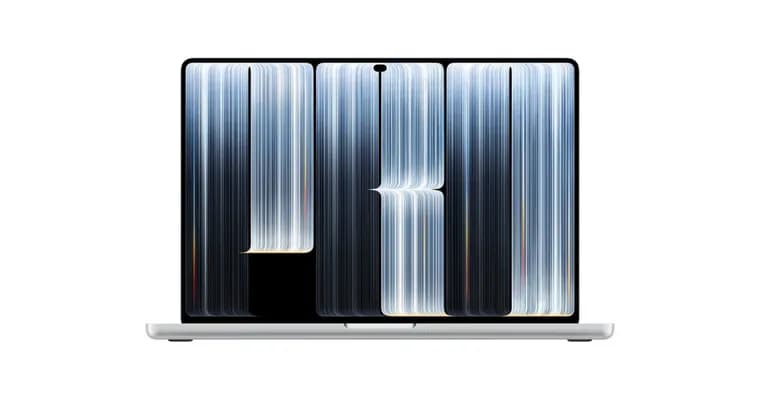
An opinion piece on macanorak.com looks at a growing discussion in the Mac community about Apple's new MacBook Pro with a tandem OLED screen, which Apple calls the "PROLED XDR Display". The panel joins the Mini-LED display that has served the range since 2021 and that Apple still sells. The article credits the OLED screen with individually lit pixels, effectively infinite contrast, deep blacks, higher peak HDR brightness and a new display engine. It is also the first Apple notebook display with touch input. Early reaction to the screen was overwhelmingly positive.
Then reports of discomfort began to appear. A MacRumors forum thread titled "RIP MacBook Pro PROLED for PWM Sensitive Eyes - apple cmon!" collected people describing similar experiences, and Reddit threads show owners with discomfort shortly after starting to use their machines. Some report headaches. Others describe eye fatigue, dizziness, nausea or an inability to concentrate on the screen for long periods. Some have already returned the laptop. Mike Wuerthele of AppleInsider published an article on 10 November, titled "If you're getting dizzy using PROLED MacBook Pro, you are not alone", examining the reports.
The discussion centres on Pulse Width Modulation (PWM), a way of controlling brightness by rapidly switching the light output. At high enough frequencies most people cannot consciously see it, but the author says some people are particularly sensitive and can get eye strain, headaches and other discomfort. Notebookcheck, which ran laboratory tests on the 14-inch MacBook Pro with PROLED XDR Display, measured PWM at 240Hz. That is its worst-case reading, with flicker detected at brightness settings of 99% and below. The same lab measured 14,880Hz on the M4 Pro MacBook Pro with Mini-LED display. So the brightness fluctuation repeats 240 times a second on the OLED model against almost 15,000 on the Mini-LED one; the author puts the OLED frequency at roughly 62 times lower.
The author adds several caveats. Frequency is not the only factor: how far brightness swings in each cycle and the display's dimming system also matter, and there is no simple formula for predicting who will have problems. PWM is not exclusive to OLED, since LCDs including Mini-LED can use it. The new MacBook Pro appears to combine PWM and DC dimming; Notebookcheck notes DC dimming is present across brightness levels, yet the panel still shows 240Hz flicker. Screen discomfort has many causes, and for some users it may have nothing to do with PWM. The author also states plainly that these are individual experiences, not evidence that the laptop causes problems for everyone.
The piece stresses people who say they had no trouble with OLED before. The author argues PWM sensitivity is a spectrum, not a binary, and that two OLED panels with different modulation, amplitude and dimming can behave differently. As an example it reproduces a post, shared with permission, from the PWM_Sensitive subreddit. The poster owns a 16-inch PROLED model, had used various OLED screens for years, and says they get lightheaded as soon as they look at the screen, then feel dizzy for an hour or two after getting up; looking at the screen for more than a minute brings the dizziness back. They call it the first time in 20 years as an Apple customer that they have returned anything, coming from an M1 Pro 16-inch, and say they will wait for the M7 variant and hope Apple finds a mitigation.
The closing sections are opinion. The author notes that Apple's displays have always involved trade-offs, citing blooming and slow pixel response on the Mini-LED panel. They say nobody knows why Apple ended up with this dimming behaviour or what trade-offs were involved, but think it is reasonable to ask whether display comfort got enough consideration. They also argue that people with poorly understood or uncommon health problems often struggle to be heard, and that Apple, given its accessibility work, should take even a small affected minority seriously.
Key facts
- Owners of Apple's new tandem-OLED MacBook Pro (PROLED XDR Display) report headaches, eye fatigue, dizziness and nausea on MacRumors forums and Reddit; some have returned the laptop.
- Notebookcheck measured PWM at 240Hz on the 14-inch OLED model, its worst-case reading, with flicker at brightness settings of 99% and below.
- The same lab measured 14,880Hz on the M4 Pro MacBook Pro with Mini-LED, so the OLED figure is roughly 62 times lower.
- The author stresses these are individual experiences, that PWM is not a universal explanation, and that frequency alone does not predict comfort.
- The new panel appears to combine PWM with DC dimming, yet still flickers at 240Hz per Notebookcheck.
Why it matters
The OLED screen is the headline feature of Apple's flagship professional laptop, and the Mini-LED model it joins has served the range since 2021. If a display that is better on image quality is harder for some people to look at, the upgrade is not an upgrade for them. The 240Hz measurement against 14,880Hz on the Mini-LED model gives the complaints a concrete technical reference point, although the author does not claim it proves the cause.
Who it affects
Mainly people sensitive to PWM, and the author's concern is professionals who spend whole days at a MacBook screen: photographers, designers, developers, writers and video editors. The article singles out those upgrading from an M4 or M5 Pro MacBook Pro with Mini-LED. It also notes that people who tolerated other OLED devices, such as an OLED iPhone Pro, have reported problems with this one.
How to use it
The source offers no fix or software setting. The Reddit poster's response was to return the laptop within a week and hope a future model, which they call the M7 variant, mitigates the issue. The Mini-LED MacBook Pro remains on sale, per the article. No price is given in the text beyond the author's description of the new machines as carrying a savagely high price tag.
How solid is it
Thin on hard evidence. The complaints come from forum threads and Reddit posts, summarised by an opinion writer; no count or share of affected owners is given. The one technical data point, 240Hz versus 14,880Hz, comes from Notebookcheck's lab testing of the 14-inch model. No medical or scientific evidence is cited linking that frequency to the symptoms, and the author warns against treating PWM as a universal explanation. The reproduced Reddit post is one anonymous user's account.
Risks and caveats
The author says outright that these are individual experiences and that many owners are likely happy with the screen. Frequency is only one factor; modulation depth and the dimming system matter too, and no amplitude figure is given for this panel. The cause of Apple's dimming behaviour and the trade-offs behind it are unknown. The text contains no response from Apple. The source text is also cut off before the article ends.
“I am returning the MacBook tomorrow morning after less than a week of using it.”
— Anonymous poster on the PWM_Sensitive subreddit, owner of a 16-inch PROLED MacBook Pro