IEEE Spectrum white paper lays out single-phase liquid cooling for AI chips
IEEE Spectrum and Wiley have published a white paper, sponsored by CoolIT Systems, that explains how single-phase direct liquid cooling manages the heat produced by modern AI and high-performance computing hardware. The paper states that modern AI accelerators can dissipate well over 1,000 watts each, and that a single server rack can release more than 100 kilowatts of heat, levels it describes as far beyond what air cooling can practically remove.
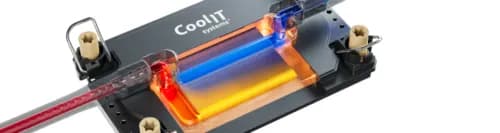
Single-phase direct liquid cooling addresses this by circulating water or a water-glycol coolant through coldplates mounted directly on the highest-heat components. The coolant absorbs the heat and carries it away in a closed loop to a coolant distribution unit. Because liquid stores far more heat than air and removes it much faster, the paper argues that this approach supports higher chip and rack densities within a smaller footprint than air cooling allows.
The paper also compares single-phase direct liquid cooling with two-phase and immersion cooling, and covers how rising processor power and rack density are expected to shape data center thermal design going forward. It is offered as a free, downloadable PDF through IEEE Spectrum's Knowledge Hub, reached via the page's 'LOOK INSIDE' link.
Key facts
- Modern AI accelerators can dissipate well over 1,000 watts each, and a single server rack can release more than 100 kilowatts of heat, according to the white paper.
- The paper says these heat levels are far beyond what air cooling can practically remove.
- Single-phase direct liquid cooling circulates water or a water-glycol coolant through coldplates mounted directly on high-heat components, carrying the heat away in a closed loop to a coolant distribution unit.
- The paper compares single-phase direct liquid cooling with two-phase and immersion cooling approaches.
- It is presented by IEEE Spectrum and Wiley and sponsored by CoolIT Systems, offered as a free downloadable PDF.
Why it matters
AI accelerator power draw and rack density have moved past what air cooling can remove: the paper states individual chips can dissipate well over 1,000 watts and a single rack can release more than 100 kilowatts of heat, which it calls far beyond air cooling's practical limit. Heat that is not carried away throttles processors and shortens hardware life, so the cooling method a data center chooses bears directly on how densely it can pack compute.
Who it affects
The paper is written for people planning and building AI and HPC infrastructure who have to solve for rack-level heat at these power levels: data center architects, facility engineers and the operators who select cooling equipment. It is presented by IEEE Spectrum and Wiley and sponsored by CoolIT Systems.
How to use it
The full paper is offered as a free PDF download from IEEE Spectrum's Knowledge Hub, accessed through the 'LOOK INSIDE' link on the page. The publicly visible text summarizes the cooling mechanism and the two central heat figures; the fuller comparison with two-phase and immersion cooling, and the discussion of future power and density trends, sit inside the downloadable PDF itself.
How solid is it
This is a sponsored white paper, presented by IEEE Spectrum and Wiley and sponsored by CoolIT Systems, not independent reporting. The visible text supports the mechanism it describes and the two heat figures it cites, but it does not name an author, give a publication date, or spell out the quantified comparison against two-phase and immersion cooling that it promises; those specifics were not available outside the gated PDF.
Risks and caveats
Because a liquid-cooling sponsor funded the paper, its case for single-phase direct liquid cooling is best read as that sponsor's framing rather than a neutral evaluation against alternatives. The available text gives no coolant mixing ratio, no specific product or coldplate design, and no quantified performance comparison beyond the two headline heat figures.