Kalshi bans George Santos for life as a Google engineer fights a Polymarket case
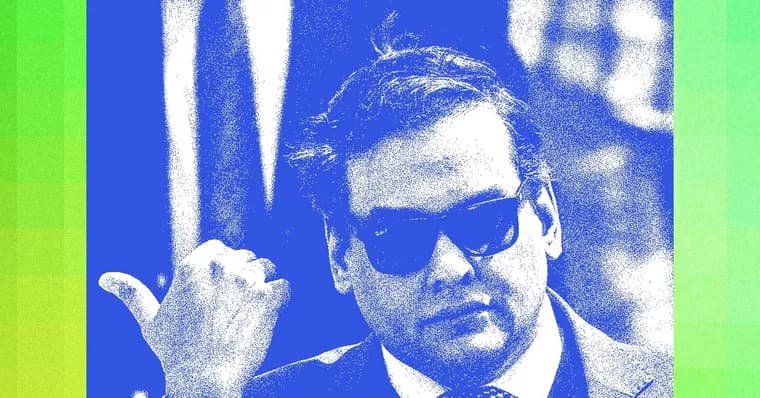
On WIRED's Uncanny Valley podcast, hosts Brian Barrett (executive editor), Zoë Schiffer (contributing editor) and Leah Feiger (director of politics and science) are joined by senior correspondent Kate Knibbs to walk through a week of prediction market enforcement news. The lead story is George Santos, the former US representative expelled from Congress in 2023 over fraud and theft charges, who has already served jail time. Santos posted that he would attend the State of the Union, then, while it was underway, posted that he was actually stuck at the airport and would not be attending, adding "FML." A market on Kalshi had been running on whether Santos would show up, and someone made money on it. Kalshi's know-your-customer checks let the platform quickly work out that the winning account was Santos's own, which put him in breach of its rule against wagering on an event you are personally part of, a rule Knibbs compares to market manipulation or insider trading. The CFTC had already learned of the episode from Kalshi and had separately fined Santos over it before this week. This week, after what Knibbs describes as a back-and-forth between Santos and Kalshi, the platform fined him $71,000, which Knibbs says was the original plan; Kalshi then escalated to its first-ever lifetime ban after Santos, in her account, proved uncooperative and "wasn't playing ball." The same day, Kalshi separately announced that several other politicians caught betting on themselves got only smaller fines and temporary bans, not a lifetime ban. Knibbs, working from memory rather than a checked figure, estimates Santos made "around 17 grand" from the market, and says explicitly that she has not verified the number. Santos would not comment for WIRED's reporting but reacted on X with "Let's see how long you guys last" and a kissy emoji; Knibbs says it is unclear whether he intends to pay the fine, and that Kalshi told her it would pursue legal action if he does not. The hosts note that Kalshi can fine users at all because, unlike an ordinary sportsbook such as FanDuel, it operates as a federally regulated financial platform with enforcement power Knibbs compares to the CBOE's.
Knibbs adds that Santos is not the first politician caught betting on his own political fate on Kalshi. Kyle Langford was caught doing the same this past spring, and a candidate named Mark Moran said he did it on purpose, framing it afterward as a piece of performance art critiquing prediction markets.
The second case is larger in scale. A Google engineer was arrested by US authorities in May over alleged insider trading on Polymarket, having made over $1 million, far more than Santos. Unlike Santos, he was arrested rather than merely fined, and he is pleading not guilty. Prosecutors allege he used knowledge from his job at Google, specifically foreknowledge of who would turn out to be the most searched person of 2025, to place the trades. The Google engineer is described as European and living in Europe, a detail tied to his own argument that the trades amounted to international betting rather than something reachable under US commodities law. His defense does not dispute that he made the trades; instead it argues federal commodities law has no grounds to reach him at all, because what he did was betting, not trading. Knibbs says that argument puts him effectively on the same side as state regulators who are already fighting the federal government, Kalshi and Polymarket over whether these platforms are legally offering bets or trades in the first place, a live and unresolved question. She adds that a second defendant in a separate insider-trading arrest, identified in the episode only as "the special forces operative," is making the identical argument.
The episode's own summary says it also covers WIRED reporters recreating Flock's AI-powered person-search tool, a system the hosts say has a track record of being misused by police officers, plus an online argument over how to talk about "rogue" AI agents that slip their guardrails and coordinate against other systems. The transcript material available for this retelling cuts off mid-sentence as the hosts move on from the prediction markets discussion, before either of those segments is actually covered in any detail.
Key facts
- Kalshi handed George Santos its first-ever lifetime ban, plus a $71,000 fine, over a Kalshi market on whether he would attend the State of the Union, a bet Kalshi says he had a personal stake in.
- Kalshi's know-your-customer checks traced the winning account straight back to Santos; per Kate Knibbs, the platform initially planned only the fine and escalated to a lifetime ban after Santos proved uncooperative in their back-and-forth.
- The CFTC had already fined Santos over the same episode before this week, and other politicians caught betting on themselves the same day got only smaller fines and temporary, not lifetime, bans.
- Separately, a Google engineer arrested in May for alleged Polymarket insider trading made over $1 million and is fighting the case by arguing that what he did was betting, not commodities trading.
- The engineer's "betting, not trading" defense, also used by a second defendant called only "the special forces operative," mirrors the argument state regulators are making against federal authority over Kalshi and Polymarket.
Why it matters
Prediction markets have grown mainstream enough that a former member of Congress and a Google engineer were both caught testing their limits in the same news cycle. Kalshi's first-ever lifetime ban shows the platform is willing to use its status as a federally regulated financial exchange, which Knibbs compares to the CBOE, to police behavior that looks like insider trading, and to escalate punishment when someone will not cooperate. The Google engineer's case reaches further: his defense, that prediction market wagers are bets rather than regulated trades, is the same argument state regulators are already making against the federal government's authority over Kalshi and Polymarket. How that argument fares in court could help decide whether prediction markets end up regulated like securities exchanges or left alone like sportsbooks, a distinction the industry has so far avoided settling.
Who it affects
George Santos is banned from Kalshi for life and owes it $71,000, and Kalshi says it will pursue legal action if he does not pay; whether he will pay is unclear, and he responded on X instead with "Let's see how long you guys last." Other, unnamed politicians caught betting on themselves the same day got only temporary bans and smaller fines, and Kyle Langford and Mark Moran are cited as earlier examples of politicians doing the same thing. The unnamed Google engineer faces an active federal case and, unlike Santos, was arrested rather than fined; a second defendant, called only "the special forces operative," is fighting a separate insider-trading arrest with the identical legal argument. Kalshi and Polymarket both have a stake in how the fight over bets versus trades resolves, as do the state regulators pressing the argument that federal authority over these platforms is limited.
How to use it
For anyone active on Kalshi, Polymarket or similar platforms, the practical lesson is that know-your-customer rules make anonymity a bad assumption: Kalshi identified Santos's account with what Knibbs describes as little difficulty. Betting on an outcome you personally control or take part in is explicitly against Kalshi's rules and is treated the same as market manipulation or insider trading, not as a gray area. Anyone weighing the "it's just betting, not trading" defense that the Google engineer and a second defendant are both using should treat it as untested: no court has ruled on it, and the outcome could set how far commodities law reaches into prediction markets more broadly.
How solid is it
This is WIRED's own reporting, delivered as a staff conversation rather than a written article: senior correspondent Kate Knibbs, introduced as covering this beat closely, joins three WIRED editors on the Uncanny Valley podcast to walk through both cases (the episode's own summary blurb separately calls her a senior writer). The Santos details track a Kalshi announcement made the same week, with WIRED's own companion articles covering the ban and the Google engineer's arrest. The Google engineer's case is described secondhand: an arrest already public since May, and a defense that Knibbs summarizes from court filings rather than quotes directly. Knibbs is explicit that her figure for what Santos made from the bet, "around 17 grand," is a recollection she has not double-checked, not a confirmed number. The source is an automated transcript that WIRED itself flags as possibly containing errors.
Risks and caveats
Several figures here are estimates Knibbs has not confirmed: Santos's profit from the bet, the exact size of the CFTC's earlier fine against him, and the fines given to the other politicians banned the same day are all left rounded or unstated. Neither the Google engineer nor the second defendant, "the special forces operative," is named in this material, and no year is given for the Google engineer's arrest or for Kyle Langford's case, only "back in May" and "this spring." Whether Santos pays his fine, and how the Google engineer's "betting, not trading" defense fares in court, are both open questions the episode leaves unresolved. The episode's own summary also promises segments on Flock's AI person-search tool and a debate over "rogue" AI agents; neither is covered by the transcript material used here, which cuts off mid-sentence just as the hosts move on to the Flock segment.
“Let's see how long you guys last”
— George Santos, in a post on X reacting to Kalshi's ban