LymeAlert arrives in August as first at-home Lyme tick test
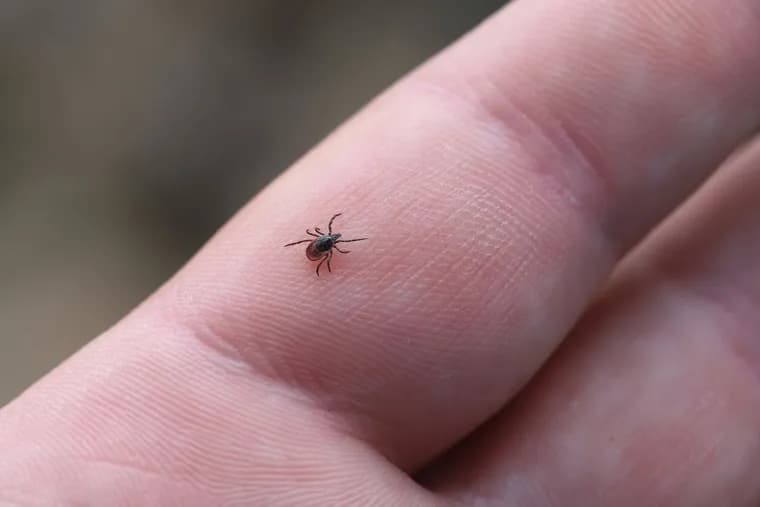
This August, LymeAlert will go on sale as what Smithsonian Magazine describes as the first at-home screening tool to determine whether the tick that bit you carries Lyme disease. It will sell for about $50 and is designed to detect Borrelia burgdorferi, the bacterium that causes Lyme disease, in a tick. It was created by Erin Dawicki, a pediatric physician associate in Boston, together with co-founders Michelle Ewy and Brenda Ong.
Dawicki traces the idea to a health care entrepreneurship course she took in 2024 as a fellow in MIT Sloan's MBA program. Students in the course picked one of three innovation tracks, Lyme disease, pharmaceuticals or Parkinson's disease, to develop into a pitch, then formed teams around the strongest concepts. 'I joined the class late and was assigned Lyme disease,' Dawicki says. 'Initially, my plan was to just check the box on the course, but the morning the pitches were due, an idea popped into my head.' The trigger was a pattern she saw constantly in her own practice: patients calling to report they had found a tick on their child, worried but unable to afford an office visit, even though the tick in question might not be disease-carrying at all. 'So, I thought, wouldn't it be cool if they could just test the tick at home, and then they know immediately if it's Lyme-infected?' she says.
Dawicki says the gap LymeAlert targets is real and current. Because early treatment matters so much for Lyme disease, her own approach today is to run a blood test while also prescribing antibiotics before an official diagnosis exists, 'because the risk of Lyme is so high,' a habit she says feeds antibiotic resistance. She has watched the toll rise in her own New England practice, where she has seen a steady increase in children arriving with 'huge swollen joints and zero trauma,' a sign of Lyme arthritis that can appear one to a few months after an untreated bite. Lyme disease is easiest to treat in its early, acute stage, typically marked by a bull's-eye rash plus fever, chills, headache, fatigue, muscle and joint aches, swollen lymph nodes and neck stiffness; the standard treatment is a 10- to 14-day course of antibiotics. Some patients develop post-treatment Lyme disease syndrome, formerly called chronic Lyme disease, months after finishing antibiotics, with persistent fatigue, musculoskeletal pain or cognitive difficulties; the CDC says time, not more antibiotics, is what resolves it. The CDC also recommends a single 200-milligram dose of doxycycline within 72 hours of a bite, but only when the tick had been attached for at least 36 hours and only in areas where Lyme reports are already high, not as a rule for every bite.
The article frames LymeAlert against a growing public health problem. More than 31 million Americans, nearly one in ten, experience a tick bite every year, according to research the piece cites without naming a specific study. Ticks can transmit disease in as little as 36 to 48 hours, and an estimated 476,000 patients are treated for Lyme disease each year in the U.S., concentrated in the Northeast, Mid-Atlantic and Upper Midwest, where the main carrier, the blacklegged tick, is common. This spring, the CDC reported a spike in tick-borne-illness emergency room visits, with Lyme disease the most common diagnosis.
Two outside experts interviewed for the piece, Brian Stevenson, a microbiologist at the University of Kentucky's College of Medicine, and Erika Machtinger, an entomologist at Pennsylvania State University, describe why tick populations and their range keep growing. 'Thirty years ago, there were only two reports ever of the Ixodes ticks that can transmit Lyme disease, and those were both on one coyote in Kentucky,' Stevenson says; today, he adds, the tick's range is expanding steadily, extending the potential for Lyme disease along with it. The piece attributes that expansion to the loss of the hard winter freezes that once kept tick populations in check, plus growing populations of the ticks' preferred hosts, white-tailed deer and white-footed mice. Machtinger points to deforestation, reforestation and urban sprawl fragmenting habitat, plus the elimination of natural deer predators such as wolves and mountain lions, calling the combination a 'perfect storm.' Of an estimated 899 tick species worldwide, about 90 live in the continental U.S., but only four cause most U.S. infections: the blacklegged tick (Ixodes scapularis), carrying Lyme disease, anaplasmosis, babesiosis, Powassan virus and Borrelia miyamotoi disease across the Northeast, Mid-Atlantic, Upper Midwest and Southeast; the western blacklegged tick (Ixodes pacificus), carrying Lyme disease and anaplasmosis on the Pacific Coast; the lone star tick (Amblyomma americanum), originally a Southeastern species now spreading into the Midwest, Mid-Atlantic and Northeast, carrying ehrlichiosis, Heartland virus, STARI and alpha-gal syndrome; and the American dog tick (Dermacentor variabilis), carrying Rocky Mountain spotted fever and tularemia across the eastern U.S. and parts of the West. The CDC has recorded case numbers doubling, or increasing by more, in recent decades for anaplasmosis and ehrlichiosis, babesiosis, Lyme disease, Powassan virus disease and spotted fever rickettsioses. Machtinger cautions that actual tick population trends are harder to pin down than case counts: 'We don't have any numbers on tick populations,' she says, only inconsistent regional estimates that vary by time of day, week and season.
Stevenson, who is currently leading two studies aimed at fighting Lyme disease by turning the bacterium's own internal systems against itself, explains that a tick is not infected from birth: larvae hatch uninfected, and only acquire Borrelia burgdorferi if they feed on an already-infected host before molting into nymphs, which can then transmit the bacteria onward. 'That's why not every tick is going to be infectious,' he says. He adds that an unattached tick, one that is not actively feeding, poses no health risk regardless of whether it carries the bacteria, and that an embedded tick with a real chance of infection warrants a doctor's visit and prophylactic antibiotics. Tick research itself lags behind comparable work on other disease vectors, according to Machtinger. Most tick ecology and disease research only began in the 1980s, when Lyme disease was first discovered by medical entomologist Wilhelm Burgdorfer, whereas mosquito vector research dates back to 1897. Burgdorfer went on to identify spirochete bacteria as the disease's causative agent in 1981, seven years after Lyme disease was first identified in Connecticut. There is also no equivalent of mosquito-style control districts for ticks, because tick populations track their hosts rather than open water; Machtinger argues that more funding, from private industry, foundations or government, is needed for prevention measures such as brush removal and regular mowing, and that in the meantime tick management is left mostly to individual households and the consumer or pest-control products they buy.
On the product itself, Dawicki says LymeAlert's underlying method 'can take heat-killed Borrelia and detect it down to really, really small quantities of the bacteria that's present.' The captured text of the article cuts off mid-sentence just after that explanation, so further technical detail, along with where or how the kit will be sold, including whether a prescription is required, and any regulatory clearance behind it, is not covered in the source.
Key facts
- LymeAlert, described as the first at-home test to tell whether a tick carries the Lyme disease pathogen Borrelia burgdorferi, goes on sale in August for about $50; it was created by pediatric physician associate Erin Dawicki with co-founders Michelle Ewy and Brenda Ong.
- Dawicki traces the idea to a 2024 MIT Sloan health care entrepreneurship course, where she was assigned the Lyme disease track late and had the idea for LymeAlert the morning her team's pitch was due.
- More than 31 million Americans, nearly one in ten, get a tick bite every year, and an estimated 476,000 people are treated for Lyme disease annually in the U.S., concentrated in the Northeast, Mid-Atlantic and Upper Midwest.
- Of an estimated 899 tick species worldwide, only four, the blacklegged tick, western blacklegged tick, lone star tick and American dog tick, cause most U.S. infections; researchers attribute the spread to warmer winters and growing deer and mouse populations.
- Dawicki says LymeAlert's method can detect heat-killed Borrelia 'down to really, really small quantities,' but the article names no regulatory clearance, independent testing or peer review behind that claim.
Why it matters
LymeAlert answers a specific, common bind: someone finds a tick, cannot tell whether it was infected, and either skips care they may need or seeks care, and antibiotics, they may not. Dawicki says her own practice today is to run a blood test while also prescribing antibiotics before an official Lyme diagnosis exists, because 'the risk of Lyme is so high' that she has to 'blanket prescribe,' a habit she says feeds the broader antibiotic-resistance problem in the U.S. The tool targets the window when speed matters most: Lyme disease is easiest to treat during its early, acute stage, and the ticks that carry it can transmit disease in as little as 36 to 48 hours. It also arrives against a growing backdrop: an estimated 476,000 Americans are treated for Lyme disease each year, the CDC reported a spring spike in tick-related ER visits, and the two outside experts quoted in the piece describe tick ranges expanding for ecological reasons that show no sign of reversing.
Who it affects
The most direct audience is families in the regions where Lyme disease is concentrated, the Northeast, Mid-Atlantic and Upper Midwest, plus the Pacific states served by the related western blacklegged tick. Dawicki says she is not alone in seeing the toll: in her New England practice she has watched a steady rise in children arriving with 'huge swollen joints and zero trauma,' a sign of Lyme arthritis, which can appear one to a few months after a bite goes untreated. Primary care and pediatric clinicians who face the same choice Dawicki describes, testing blood, prescribing antibiotics on suspicion alone, or sending a family home without answers, are a second audience, since a reading on the tick itself changes that calculus before any blood test is even relevant. The wider reporting also points to a growing population at risk, as the lone star tick and other species expand into the Midwest, Mid-Atlantic and Northeast, areas that historically saw fewer tick-borne infections.
How to use it
LymeAlert is built to test the tick itself, not the person, so a parent or bite victim can find out at home whether the specific tick that bit them carried the pathogen, the outcome Dawicki describes as knowing 'immediately' whether a bite was Lyme-infected, rather than waiting on symptoms or a blood draw. It goes on sale this August for about $50 and is designed to detect Borrelia burgdorferi, the bacterium that causes Lyme disease; Dawicki says the underlying method can take 'heat-killed Borrelia' and detect it 'down to really, really small quantities of the bacteria that's present.' The source's account of how the test works cuts off mid-sentence right after that explanation, and it does not say where or how the kit will be sold, whether a prescription is required, or name any regulatory clearance, such as FDA approval, for the product. For context on when a positive reading might matter clinically, the CDC does not recommend treating every bite the same way: it suggests a single 200-milligram dose of doxycycline within 72 hours only when a tick has been attached for at least 36 hours, and only in areas where Lyme disease reports are already high, not as a blanket rule.
How solid is it
The story comes from Smithsonian Magazine, a general-interest science and culture publication, in a piece built around an interview with Dawicki herself alongside two outside academics: Brian Stevenson, a microbiologist at the University of Kentucky's College of Medicine, and Erika Machtinger, an entomologist at Pennsylvania State University. Both add independent context on tick biology and the spread of tick-borne disease, but neither is quoted assessing LymeAlert's accuracy specifically. The only performance claim for the product itself, that it can detect the bacterium 'down to really, really small quantities,' comes from Dawicki, its own co-founder, and the article does not describe independent testing, peer review or regulatory clearance behind that claim. The wider statistics in the piece vary in how well they are sourced: the CDC is named directly for the spring ER-visit spike, the 476,000-patient Lyme estimate carries no attribution at all, and the widely cited figure that more than 31 million Americans, nearly one in ten, get a tick bite each year is attributed only to unnamed 'research.' On Hacker News the story drew a strong 252 points and 87 comments, which reflects reader interest rather than any additional verification of the product's claims.
Risks and caveats
Nothing in the source describes independent testing, peer review or regulatory clearance for LymeAlert, so its accuracy currently rests on its own co-founder's description of the method. The test also has a narrow scope: it is designed to catch Borrelia burgdorferi specifically, so a negative result would not rule out the article's other named tick-borne illnesses, such as anaplasmosis, babesiosis, Rocky Mountain spotted fever and alpha-gal syndrome (ticks can transmit dozens of diseases in total, per the piece). A positive reading on the tick is also not the same as a confirmed human infection. Stevenson notes that an unattached tick poses no health risk regardless of its infection status, and that whether a tick is infectious at all depends on what it fed on during an earlier life stage: not every tick carries the bacteria, even within a species known to transmit it. Finally, the captured source text has gaps of its own: it cuts off mid-sentence just after Dawicki starts to explain how the test works, and it never says what year 'this August' falls in, where the kit will be sold, or whether a prescription will be required.
“Wouldn't it be cool if they could just test the tick at home, and then they know immediately if it's Lyme-infected?”
— Erin Dawicki, LymeAlert co-founder