Meta ditches the camera on its newest Ray-Ban smart glasses
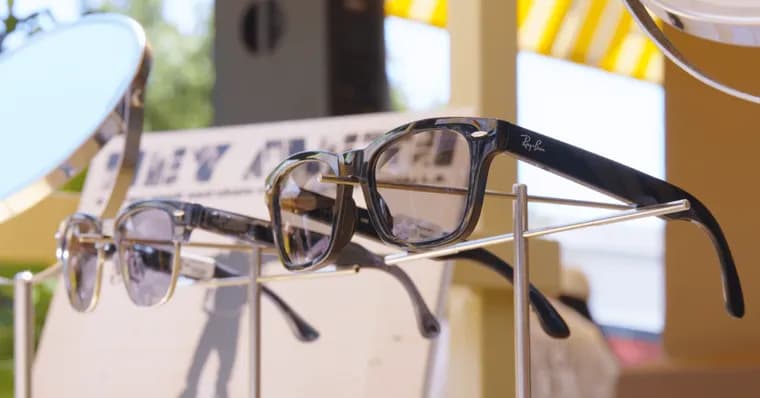
At Meta Connect 2026, Meta introduced the Ray-Ban Meta Audio Glasses, a camera-less version of its smart glasses built around Meta AI, according to Alex Himel, Meta's vice president of wearables. The launch lands amid a public backlash against wearable surveillance tech, glasses, smartwatches and AI pendants dismissed by critics as 'pervert glasses.' Himel frames the timing as coincidental, saying the company concluded two years ago that audio was the biggest use case for AI in a pair of glasses, and that dropping the camera let Meta 'rearchitect' the hardware and take electronics out of the front frame for more design flexibility.
The Audio Glasses start at 43 grams, lighter than the roughly 50g Ray-Ban Meta Gen 2 and the 69g Meta Ray-Ban Display, and start at $349. They come in two styles, Clubmaster and Burbank, with 23 color and lens combinations and the same wider prescription range as the Ray-Ban Meta Optics lineup. Without a camera drawing power, battery life is an estimated 12 hours on a single charge, and the glasses can only run Meta AI, take calls, and play podcasts or music. Himel says the glasses 'don't record': they listen only for a wake word, are not transmitting anything until they hear it, and only then start processing what is said, comparing it to how a device like Alexa works.
Alongside the audio-only model, Meta refreshed the camera-equipped Ray-Ban Meta Gen 3, which starts at $449, up from $379 for the second generation. It adds a sixth microphone (versus five on the previous generation) for clearer calls, adjustable temple arms, Dolby Atmos spatial audio capture, and a battery life of nine hours, an hour longer than Gen 2. It comes in 27 color and lens combinations plus three seasonal options, and adds two new styles: an aviator with transition lenses and a geometric cat-eye style called Zena.
Meta's cheaper entry-level Meta Glasses line, launched a few months earlier, also grew: two new styles, Capri and Nova, plus celebrity collaborations, an ivory Kylie Jenner pair at $399 and a Blackpink Lisa pair (with pink lenses and a pet-themed charm) also starting at $399, while non-celebrity versions start at $249. Himel says the Kylie Jenner collaboration drew a younger, more female audience to a product line that otherwise skews male, and that the goal of the celebrity tie-ins and added styles is to reach more women. Meta expects to have over 100 versions of its glasses by the end of the year.
Meta's Muse personal AI agent is also being rolled into the glasses lineup; Himel says Muse 'is gonna be on every device that we make.' In a demo, a Muse agent was asked to help pick snacks for the best protein-to-calorie ratio but failed to add an item to a cart. Meta also demoed a new FDA-cleared hearing assistance feature, which boosts conversational tones in loud environments; it costs an extra $149 as a one-time fee (not a subscription) and is FSA/HSA eligible, though the article does not specify whether it works on the audio-only glasses.
On privacy, Meta is bringing the 'private processing' pipeline already used on WhatsApp to its wearables, a server-based system where user data is inaccessible to Meta or third parties when on-device processing isn't powerful enough. It is also rolling out an option to opt out of having visual data used for AI training, though audio-only queries are still used for training regardless. Himel acknowledges that private processing is mainly about protecting the wearer's own data, not the data of people recorded around them, meaning the update does not address the core criticism that the glasses can be used to covertly record others in public.
Key facts
- Meta launched the camera-less Ray-Ban Meta Audio Glasses at $349, weighing 43 grams and running about 12 hours per charge, with 23 color and lens combinations across two styles.
- The camera-equipped Ray-Ban Meta Gen 3 now starts at $449 (up from $379), with a sixth microphone, nine-hour battery, Dolby Atmos audio and 27 color and lens combinations plus three seasonal options.
- Entry-level Meta Glasses gained new Capri and Nova styles and celebrity collaborations with Kylie Jenner and Blackpink's Lisa, both starting at $399, versus $249 for non-celebrity versions.
- Meta's Muse AI agent is being added across the glasses lineup, and the company expects to have over 100 versions of its glasses by the end of the year.
- New privacy features bring WhatsApp's 'private processing' pipeline to wearables and let users opt out of visual data being used for AI training, though audio queries are still used and Meta's VP says the change mainly protects the wearer, not bystanders.
Why it matters
The launch comes as public backlash against wearable surveillance tech, smart glasses, smartwatches and AI pendants, is building outside Meta's campus. A camera-less pair of Ray-Bans gives Meta a product it can point to as less likely to make bystanders uneasy, even as the company keeps expanding its camera-equipped lines and pushes its Muse AI agent onto every device it makes.
Who it affects
Buyers choosing between Meta's expanding glasses lineup: privacy-conscious shoppers who want AI features without a camera, existing Ray-Ban Meta owners deciding whether to upgrade to Gen 3, and people considering the cheaper entry-level Meta Glasses, including buyers drawn in through the Kylie Jenner and Blackpink Lisa collaborations.
How to use it
The Ray-Ban Meta Audio Glasses start at $349 and run Meta AI, phone calls, and music or podcasts, nothing more, since they have no camera. The Ray-Ban Meta Gen 3 camera glasses start at $449. Entry-level Meta Glasses start at $249, or $399 for the Kylie Jenner and Blackpink Lisa versions. An FDA-cleared hearing assistance feature, demoed separately, adds $149 as a one-time fee rather than a subscription and is FSA/HSA eligible.
How solid is it
This account comes from a Verge reporter's hands-on visit to Meta Connect 2026, including direct, on-the-record quotes from Alex Himel, Meta's vice president of wearables, and firsthand impressions of trying the glasses and demos. It is a first-party report rather than a leak or rumor, though pricing and specs come from Meta itself.
Risks and caveats
Meta's own VP acknowledges that the new private processing option mainly protects the wearer's data, not the data of people recorded by others' glasses, so the update doesn't address the central complaint about covert recording in public. Audio-only queries continue to be used for AI training even after the opt-out for visual data. The Muse AI agent still shows early-stage kinks, and the reporter notes it could become 'a treasure trove of data for Meta.'
“The only thing they do, which is the same thing as an Alexa device in your house or some other devices, they're just listening for a specific wake word. They're not sending anything. If they hear [the wake word], then they start listening to what you're saying. When you're done talking, then it's processing, and that's visible to the AI. It gets processed, and that's kind of it.”
— Alex Himel, Meta's vice president of wearables