Microsoft Research: offloading robot AI inference beats onboard GPUs
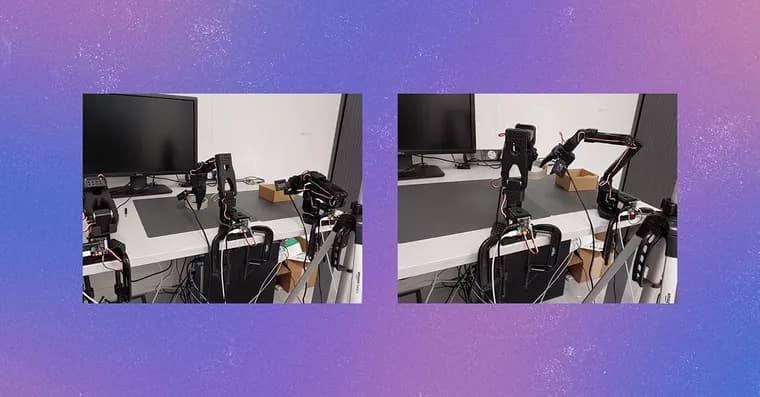
Microsoft Research says it ran what it calls the first systematic study of physical AI robotics inference workloads, testing a mobile manipulation task (find rubbish in a kitchen and put it in the trash) that requires semantic mapping and planning, navigation, and manipulation. The prevailing approach in robotics wires a GPU directly onto the robot so task execution stays onboard, even when higher-level planning happens in the cloud. Microsoft's researchers challenge that default, arguing that as physical AI models grow larger and more sophisticated, onboard GPUs constrain performance, battery life, cost, weight and scalability.
In their tests, some smaller GPUs could not even fit the mobile manipulation stack in memory. Among GPUs with enough memory but less capacity than an A100, mapping and planning inference slowed by up to 383% compared to an A100, which the researchers say limits a robot's ability to operate in dynamic spaces. Navigation showed a 30% drop in timely obstacle detection on lighter GPUs. Vision-language-action (VLA) models did not slow down as dramatically, but the slowdown was still enough to cut their accuracy by 50%. The source does not name the specific lighter GPU models used in these comparisons, pointing instead to a separate technical report for hardware details.
The team also measured battery impact: replacing an onboard GPU with a lightweight Raspberry Pi 5 board and offloading all inference data to a remote GPU extended battery life; conversely, larger onboard GPUs such as Jetson Thor drained robot batteries by up to 160%, or a few hours, even on larger robots. Microsoft argues the tradeoff is complex, involving performance, network latency, bandwidth and available GPU resources, but that the benefits of offloading should grow more pronounced as physical AI models keep growing.
Alongside the study, Microsoft is adding an offloaded-inference capability to its Physical AI Toolchain, an open-source framework that integrates Microsoft Azure cloud services with NVIDIA's physical AI stack for robotics data curation, augmentation and evaluation across perception, mobility, imitation learning and reinforcement learning pipelines. The new toolset uses Kubernetes to containerize and orchestrate robotics AI workloads across the robot's own compute, edge GPUs and the cloud, using declarative specifications and smart distribution policies, and it integrates with robotic simulators, LeRobot and ROS2. The release ships with example offload projects for the SO-101 and UR10e robots, and includes video demonstrations offloading Microsoft's Rho model, aimed at dual-arm robots, to a Jetson Thor GPU controlling a Mobile Aloha robot.
Key facts
- Microsoft Research ran its first systematic study of physical AI robotics inference workloads across semantic mapping/planning, navigation and manipulation
- On GPUs smaller than an A100 but with sufficient memory, mapping and planning slowed by up to 383%; navigation's timely obstacle detection dropped 30%; VLA model accuracy fell 50%
- Larger onboard GPUs such as Jetson Thor drained robot batteries by up to 160% (a few hours) compared to offloading with a lightweight Raspberry Pi 5 board onboard
- Microsoft added an offloaded-inference capability to its Physical AI Toolchain, using Kubernetes to containerize and distribute robotics workloads across robot, edge and cloud GPUs
- The release includes example offload projects for SO-101 and UR10e robots and integrates with LeRobot and ROS2
Why it matters
The default assumption in robotics has been to wire a GPU directly onto the robot so it can execute tasks locally. Microsoft Research's study argues that assumption increasingly costs performance, battery life and scalability as physical AI models grow larger, and that offloading inference to edge or cloud GPUs is a better systems design as models keep growing.
Who it affects
Developers and companies building mobile manipulation robots for manufacturing, home and warehouse use, particularly those already using Microsoft Azure and NVIDIA's physical AI stack through the Physical AI Toolchain.
How to use it
The offloaded-inference capability is part of Microsoft's open-source Physical AI Toolchain, which integrates Azure cloud services with NVIDIA's physical AI stack. It ships with example offload projects for the SO-101 and UR10e robots, uses Kubernetes for containerization and distribution across robot, edge and cloud compute, and integrates with robotic simulators, LeRobot and ROS2; Microsoft points developers to the source code and invites feedback on real-world deployments.
How solid is it
This is Microsoft's own research blog post describing its own study and its own product release, without independent verification. The post references a separate technical report for hardware details but does not name the specific lighter GPU models tested, nor does it give dates for the study or the release, or any pricing or network latency figures for the offloading tradeoff it describes.
Risks and caveats
Microsoft itself notes offloading involves a complex tradeoff between performance, network latency, bandwidth and available GPU resources rather than being a universal win, and some smaller GPUs could not even run the mobile manipulation stack at all, meaning results may not generalize evenly across hardware or network conditions.
“running physical AI inference exclusively on onboard GPUs can limit robot performance, battery life, and scalability”
— Microsoft Research blog post