Musicians turn detective to call out AI music made with Suno
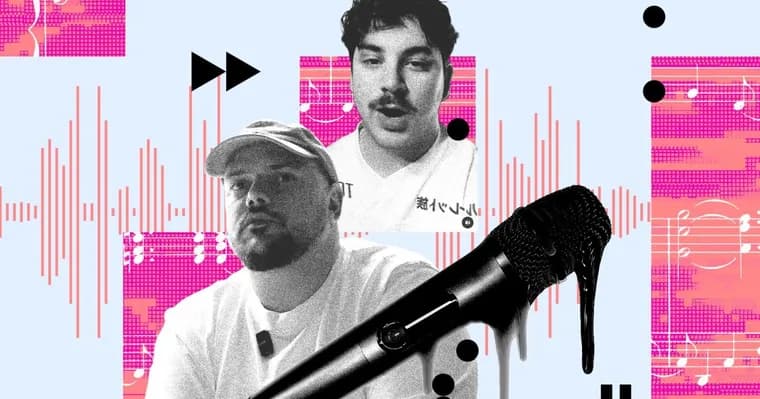
Generative tools have gotten good enough that AI-made tracks are spreading through electronic dance music, with melodies and vocals drawn algorithmically from real artists' work, and some of the people releasing them have denied using AI until public scrutiny forced them to admit it. Max "H4RRIS" Harris, a 26-year-old EDM producer from Maine, has started posting videos that call out artists he suspects of passing off AI-generated tracks as human-made. He calls AI-generated music "a kind of decoy art form" and says the people making it "don't really have anything meaningful to say with their creations." In his words: "I don't consider AI-generated material to be art, and I don't think this technology is really advancing art in any meaningful way. It's a technological advancement that's giving people a way to steal real art and pass it off as their own."
Harris contrasts that with his own workflow: production built around Ableton Live, a Novation Launchkey 49 MIDI controller, Ableton Push 3, Launchpad X, analog synthesizers, Serum, Diva and the sampler Kontakt, and hundreds of individual creative decisions behind each finished song. He says two tells usually give an AI track away to his ear: a sharp hissing that runs through the track, which he attributes to models starting generation from a block of white noise, and vocals or instrumental elements that stutter in exact unison, because the models still struggle to fully separate a song's different parts. On that basis he has pointed to MANSA's "Midnight on My Mind" and Danny and Ian Asher's "Take Me (To The Moon)" as songs he believes were AI-made, the second partly because fans noticed similarities to another person's AI-generated track. None of the three artists have publicly commented on whether they use generative tools, and the claims are not proven: there is no definitive evidence for either song, and Harris himself could be wrong.
Suspicion sometimes runs on visuals rather than sound. The evangelical Christian AI persona Lionsaddle has appeared in videos where the character's fingers glitch in and out of existence, and videos from Christian house musician Midnite Manna carry an overly glossy look typical of AI-generated visuals.
Harris's campaign followed posts on Threads by Nihil Young, a 39-year-old Italian producer who has previously done mixing and mastering work for Sony Music, Warner and Universal. Young blames the AI platform Suno by name, saying people upload copyrighted tracks by major artists and have Suno remix them into supposedly "new" songs: "These songs are the sound of Suno, which to me means that the people behind the songs are just straight up uploading original, copyrighted tracks of artists like Madonna and asking the platform to remix them." He points to Josh Fawaz's "Like a Prayer" cover, which now carries AI credits after an online backlash, as an example of the pattern. Young also says Suno's Simple Mode lets someone generate a full song just by picking a genre and clicking a button, and suspects many people posting AI tracks are not even writing their own prompts. Suno had not responded to a request for comment by the time of publication.
Speaking out has come at a cost for Young. He says his Threads posts brought multiple hacking attempts and a wave of harassment from AI defenders, and that he suspects someone bought fake followers to inflate his Spotify numbers and cast doubt on his legitimacy. Raising a young daughter and having just released a new album, he decided to pause his callouts, though he still thinks the issue matters. Separately, he says AI's rise has already hit his income directly: "Music production is where most of my income comes from, and almost as soon as AI began rolling out, I started losing many of my clients." He extends the same worry to "singers, graphics artists, and people working in other creative fields."
AI-made music is charting and drawing real money regardless. In 2024, producer Metro Boomin released the diss beat "BBL Drizzy," sampling comedian King Willonius, with vocals, melodies and instrumentals generated by AI startup Udio; after Metro Boomin posted it to SoundCloud and invited others to rap over it, Drake did so himself on Sexyy Red's "U My Everything," which peaked at 44 on the Billboard Hot 100. Vinih Pray's Suno-made song "A Million Colors" separately peaked at 44 on TikTok's Viral 50 chart last summer, and AI acts Breaking Rust and Cain Walker have charted on Billboard's Country Digital Song sales chart. Hallwood Media, a label founded by former Geffen Records president Neil Jacobson, signed the AI avatar Xania Monet to a $3 million recording deal. Kapwing estimates that the top 10 most followed and streamed AI music creators on Spotify and YouTube collectively made over $6 million in 2025, and Deezer has said AI songs now account for over 50% of new uploads on its platform.
Nobody has a reliable way to confirm whether a given track is AI-made short of the creator admitting it, and even the popularity numbers can be inflated with paid streams, the piece notes. Streaming platforms are starting to label AI tracks more clearly, but many listeners still say they cannot hear the difference. Young thinks the tell becomes obvious on a good pair of headphones, but says most people now "consume music like fast food," listening through phone speakers or as background noise without paying close attention to what made it.
Key facts
- Max "H4RRIS" Harris, a 26-year-old EDM producer, posts videos accusing suspected artists of passing off AI-generated tracks, made with tools like Suno, as human work, citing tells such as a sharp hissing sound and vocals or instruments that stutter in exact sync.
- Harris names MANSA's "Midnight on My Mind" and Danny and Ian Asher's "Take Me (To The Moon)" as suspected AI tracks; the article states there is no definitive evidence for either, and none of the artists have commented.
- Nihil Young, a 39-year-old Italian producer whose Threads posts inspired Harris, says people upload copyrighted tracks by artists like Madonna to Suno to generate "new" songs, and that Suno's Simple Mode needs only a genre pick and a click; Suno did not respond to a request for comment.
- Young says his Threads posts brought hacking attempts and harassment from AI defenders, and separately that he has already lost music-production clients as AI tools have spread.
- AI-made music is charting and paying out: Hallwood Media signed AI avatar Xania Monet to a $3 million deal, Kapwing estimates the top 10 AI music creators on Spotify and YouTube made over $6 million combined in 2025, and Deezer says AI songs are now over 50% of its new uploads.
Why it matters
AI music generation has gotten sophisticated enough that professional producers, not just casual listeners, are struggling to tell human-made and AI-made tracks apart by ear. That is why detection increasingly runs on specific technical tells, such as a hissing artifact or stems that stutter in sync, rather than on intuition alone. The uncertainty is corroding trust inside a scene that prizes technical craft, and it doubles as a copyright dispute: Nihil Young's central claim is that people feed other artists' copyrighted songs into Suno to generate "new" tracks, which would make the practice a rights issue on top of an authenticity one. The stakes are not hypothetical: AI-made songs are already charting on the Billboard Hot 100 and TikTok's Viral 50, and one AI avatar has landed a $3 million label deal.
Who it affects
Directly, working musicians whose livelihood depends on being seen as making real music: Nihil Young says he began losing production clients as AI tools spread, and extends the same worry to "singers, graphics artists, and people working in other creative fields." Artists Harris names as suspects, MANSA and Danny and Ian Asher, face public accusations that can stick even without proof: the article states plainly there is no definitive evidence for either case, and that Harris could be wrong. Josh Fawaz shows a related but different pattern: after online backlash, his "Like a Prayer" cover now carries AI credits it did not have before. Musicians who speak out become targets in their own right: Young says his Threads posts brought hacking attempts, harassment and a suspected fake-follower campaign, which pushed him to pause his callouts. Suno itself is named throughout as the platform enabling the wave, though it did not respond to a request for comment. Further out, labels and platforms are already treating AI performers as a going business: Hallwood Media signed the AI avatar Xania Monet to a $3 million deal, and Kapwing puts the combined 2025 earnings of the top 10 biggest AI music creators at over $6 million.
How to use it
Harris's detection method rests on two audio tells: a sharp hissing that runs through a track, which he attributes to models starting generation from a block of white noise, and vocals or instrumental elements that stutter in exact unison because the models still struggle to separate a song's different parts. Visual tells can give away an AI persona too: the character behind Lionsaddle has fingers that glitch in and out of existence on screen, and videos from Midnite Manna carry an overly glossy look typical of AI-generated visuals. On the production side, Young says Suno's Simple Mode needs nothing more than picking a genre and clicking a button, which is why he suspects many posters are not even writing their own prompts. None of this amounts to proof by itself, and streaming platforms are only beginning to label AI tracks explicitly, so a listener who wants certainty is still waiting on a platform label or an artist's own admission.
How solid is it
This is a single-outlet feature built on interviews with two self-described accusers, Harris and Young, rather than independent verification of any specific track. The piece flags its own limits: there is no definitive evidence that MANSA's or Danny and Ian Asher's songs were AI-made, none of the three artists have commented, and, in the writer's words, "Harris could very well be wrong." Suno did not respond to a request for comment before publication, so its side of the Simple Mode and copyright claims is missing. Young's account of being hacked and targeted with fake followers is his own telling, not independently confirmed. The Kapwing figure (over $6 million for the top 10 AI creators in 2025) and the Deezer figure (AI songs over 50% of new uploads) are both companies' own reporting or estimates rather than independently audited numbers, and the article itself notes that streaming figures can generally "be manipulated with paid streams."
Risks and caveats
The sharpest risk sits inside the callout culture itself: accusing a named artist of secretly using AI, as Harris does with MANSA and Danny and Ian Asher, can damage a career even though the article has no definitive evidence and the accuser admits he could be wrong. Speaking out carries its own risk, illustrated by Young's account of hacking attempts, harassment and a suspected fake-follower campaign, which led him to pause his callouts. The copyright claim, that people feed copyrighted catalogs into Suno to generate "new" songs, is Young's characterization of a broader pattern, not a confirmed case tied to a specific named artist. And the detection tells Harris describes (the hissing, the stems that stutter in sync) are his own ear-based method rather than a validated test, which leaves room for an accused track to simply be the work of an unconventional human producer.
“These songs are the sound of Suno, which to me means that the people behind the songs are just straight up uploading original, copyrighted tracks of artists like Madonna and asking the platform to remix them”
— Nihil Young, Italian music producer