Musk says Tesla and SpaceX are weighing a merger, no terms agreed
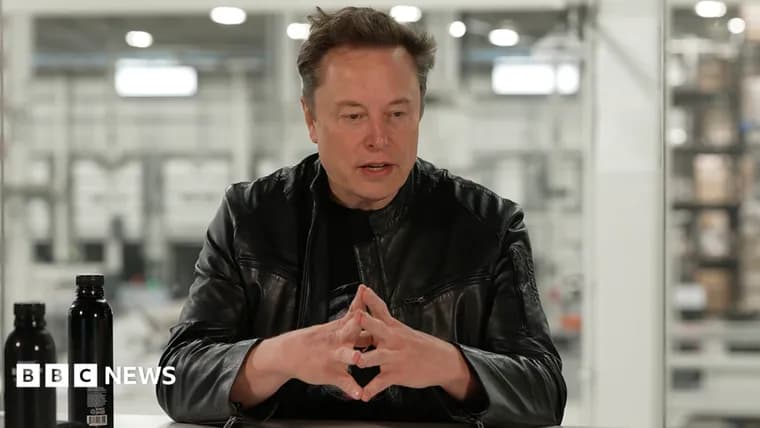
Elon Musk has said he is actively considering merging Tesla and SpaceX, his two biggest companies. He made the comments on Tuesday during a call with financial analysts about SpaceX's latest results. Asked in effect whether it would be a good idea, he said: "Do I think it would be a good idea? Yes."
Musk stressed that a deal cannot be assumed. He said special committees within both companies have been formed to examine the move, and that they "have not reached agreement on terms of any transaction and there's no guarantee that they will." Still, he said, "I do think there is a lot of merit to merging and a lot to be gained." He said a full merger would make sense for the work each company is doing around chips, artificial intelligence and software. Musk himself is not on either committee; he called himself a "conflicted party" as chief executive of both companies, and compared even discussing the idea to "tap dancing through a minefield".
The scale is large. The BBC puts Tesla at roughly $1.5 trillion (£1.1 trillion) and SpaceX at $2 trillion, so a combination would be one of the largest mergers in history. Shareholders would decide. At least 50% of Tesla's shareholders would need to approve, which Musk called "quite a high hurdle to achieve". The BBC notes shareholders have backed Musk before: last year a majority of Tesla investors approved a compensation package for him valued at around $1tn.
The call also gave a picture of SpaceX's business. It builds rockets and Starlink internet satellites, and supplies a secured satellite network to governments, including the US, through Starshield. Starlink's total revenue rose to $5.2bn in the three months to 30 September, from $3bn a year earlier. That is dwarfed by SpaceX's push into selling cloud compute capacity to other tech companies, such as Anthropic and Google, which brought in $7.5bn over the same three months, up from $813m. Over the first nine months of the year, SpaceX revenue rose to $27bn from $13.7bn, but the company as a whole is not profitable: it lost $1.1bn over that period, though it reported a $4.4bn profit for the most recent three months.
Starshield is currently under scrutiny over claims that Ukraine's access to the network has been limited, leaving it vulnerable to deadly Russian strikes. President Donald Trump has denied that he or Musk ordered the slowdown. Musk himself suggested the US government might have been behind the restrictions.
Markets reacted. After Musk's comments, SpaceX's share price rose 8% in after-hours trading and Tesla shares rose 2%. Tesla reports its own quarterly results on Wednesday.
The BBC frames the idea as part of a pattern. Before SpaceX went public (its market debut was in June), it acquired xAI and X, formerly Twitter, both of which Musk owned. SpaceX, with its growing focus on AI infrastructure, quickly outstripped Tesla in market value after listing. Tesla, known as an electric car company, has lately been shifting resources toward robotics. The recent launch of Terafab, a joint Tesla and SpaceX effort to manufacture computer chips, was described as another sign that Musk sees his companies as potentially more effective together.
Key facts
- Musk said on Tuesday's SpaceX results call that he is actively considering merging Tesla and SpaceX; special committees at both companies are examining it, and he is on neither.
- No terms have been agreed and Musk said there is no guarantee they will be; at least 50% of Tesla's shareholders would need to approve, which he called "quite a high hurdle to achieve".
- The BBC puts Tesla at roughly $1.5 trillion and SpaceX at $2 trillion, which would make a combination one of the largest mergers in history.
- SpaceX's cloud compute business earned $7.5bn in the three months to 30 September (up from $813m), more than Starlink's $5.2bn; nine-month revenue was $27bn, with a $1.1bn loss over that period and a $4.4bn profit in the latest quarter.
- SpaceX shares rose 8% after hours and Tesla shares rose 2% following the comments.
Why it matters
A Tesla and SpaceX combination would join a roughly $1.5 trillion carmaker and robotics bet with a $2 trillion space, satellite and AI infrastructure company, according to the BBC's valuation figures. Musk framed the logic around chips, AI and software. The pieces are already moving together: SpaceX acquired xAI and X before listing, and Terafab is a joint chip manufacturing effort between the two companies. The numbers show how far SpaceX has shifted toward compute: its cloud capacity business brought in $7.5bn in the quarter to 30 September, against $5.2bn for Starlink.
Who it affects
Tesla shareholders first, since at least 50% of them would need to approve a combination. SpaceX investors are affected too, though the source does not say whether SpaceX shareholders must vote. The cloud compute customers the BBC names, Anthropic and Google, buy capacity from the SpaceX business that would be part of any merged company. Governments that use Starshield, including the US, are also tied to SpaceX, and that unit is under scrutiny over claims about limited access for Ukraine.
How to use it
There is nothing to adopt or buy here; this is a corporate development to watch. The concrete next markers in the source are Tesla's own quarterly results on Wednesday and whether the two special committees reach agreement on terms. The source gives no proposed terms, exchange ratio, structure or timetable.
How solid is it
The core claim comes from Musk's own remarks on a call with analysts, reported by the BBC with direct quotes, so the existence of the review is well supported. What is not settled is the deal itself: Musk said the committees have not agreed terms. The valuations are the BBC's figures, with Tesla described as "roughly" $1.5 trillion. The source does not name the committee members and reports no reaction from boards, regulators or analysts. The Ukraine claims are given in the source as claims, without saying who made them.
Risks and caveats
No agreement exists and Musk said there is no guarantee of one. The shareholder bar is high, by his own description, though Tesla investors approved a compensation package for him valued at around $1tn last year. Musk is the chief executive of both companies and called himself a "conflicted party", which is why he is not on either committee. SpaceX as a whole is not profitable over the first nine months of the year, with a $1.1bn loss despite revenue rising to $27bn. Starshield's scrutiny over Ukraine's access, which Trump has denied ordering, is an open issue attached to SpaceX. The share moves (SpaceX up 8% after hours, Tesla up 2%) reflect reaction to a possibility, not a deal.
“The special committees have not reached agreement on terms of any transaction and there's no guarantee that they will. But I do think there is a lot of merit to merging and a lot to be gained.”
— Elon Musk, chief executive of Tesla and SpaceX, on a call with analysts