Neuralink says FDA approved LINK, its ALS brain implant trial
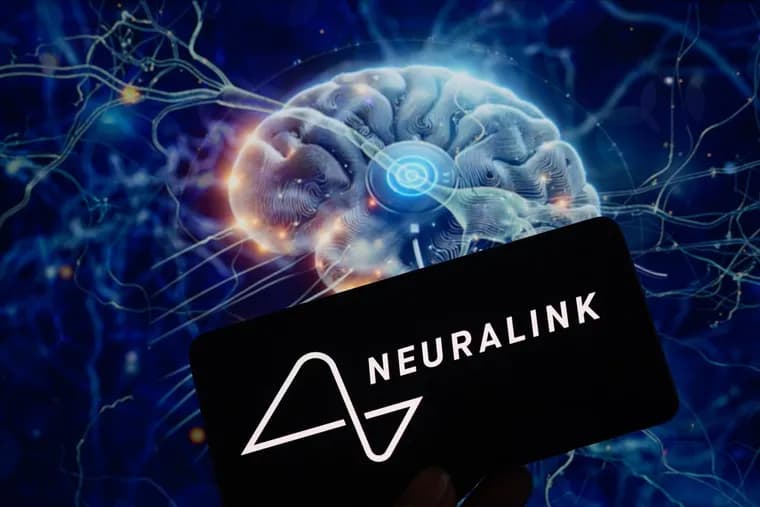
Neuralink, Elon Musk's brain-computer interface company, says it has received FDA approval for a study of how its hardware works for patients with paralysis from amyotrophic lateral sclerosis (ALS). The trial is called LINK. In a post dated November 25, 2026, the company called it "the first pivotal trial for an implantable brain-computer interface in the US", said it builds on work with more than 30 Neuralink participants to date, and said people with ALS may be eligible.
In a statement on Wednesday, Neuralink said the study will test whether participants can use its technology to control digital devices through thought, with a focus on functional outcomes that improve independence in daily life.
Gizmodo describes the implant as something like a little coin that rests in a hole in the patient's skull. Beneath it, a bundle of hairlike sensing threads extends into the person's neurons and picks up signals that would correspond to hand movements. The implant passes those signals to a computer, which lets the patient control it.
Neuralink says about 30 participants have received implants so far. The first dealt with major technical issues but expressed no regrets. The second was able to play Counter-Strike 2, and testimony from other early participants has also been promising. The company's research has also involved highly controversial animal tests.
Neuralink faces significant competition, notably from Paradromics, a similar US company. In China, where the rules around brain-computer interfaces are relatively permissive, commercialization appears to be moving faster. Other approaches are being explored too: a device from Synchron is implanted through the jugular vein, avoiding surgical penetration of the skull and brain, although Synchron's early trials were recently paused because of performance issues.
Patients who want to apply for the ALS trial can sign up through Neuralink's patient portal.
Key facts
- Neuralink says the FDA has approved LINK, a study of its implant in patients with paralysis from ALS.
- The company calls LINK the first pivotal trial for an implantable brain-computer interface in the US.
- The study will evaluate whether participants can control digital devices through thought, with a focus on outcomes that improve independence in daily life.
- Neuralink says about 30 participants have received implants so far; the first had major technical issues but expressed no regrets.
- Competitors include Paradromics and Synchron, whose early trials were recently paused over performance issues.
Why it matters
Neuralink presents LINK as a first for the US: a pivotal trial of an implantable brain-computer interface. The company says it builds on work with more than 30 participants. The stated focus is practical, on whether people can control digital devices by thought in ways that make them more independent day to day.
The field is crowded. Paradromics is a notable US rival, and commercialization appears to be moving faster in China, where regulation is relatively permissive.
Who it affects
The most direct audience is people with paralysis from ALS, who are the focus of the study. Neuralink says those with ALS may be eligible.
The approval also matters to others building ways for the brain to control devices. They include Paradromics, companies operating in China, and Synchron, which reaches its target through the jugular vein and does not require surgery that penetrates the skull and brain.
How to use it
Patients who hope to join can sign up through Neuralink's patient portal, and the company's announcement post links to more information. The number of participants to be enrolled, the start date, duration, sites and detailed enrollment criteria are not given in the report. Eligibility is described only as a possibility for people with ALS.
How solid is it
The approval rests on Neuralink's own announcement, made in a post and a statement that Gizmodo reports. No statement from the FDA is cited. The "first pivotal trial" description is also the company's.
What was announced is approval for a trial. The report does not say the device is approved for sale or commercial use, or that it treats, slows or cures ALS. It gives no specific endpoints or success measures beyond the company's description of the study. It also does not say that the roughly 30 earlier participants all had ALS.
Risks and caveats
The implant involves a hole in the skull and threads that extend into neurons. Early experience has been mixed in at least one respect: the first recipient dealt with major technical issues, though that person expressed no regrets, and the report does not describe what went wrong. Other early accounts, including the second participant playing Counter-Strike 2, have been encouraging.
Neuralink's research has also involved highly controversial animal tests, which the report mentions without further detail.
“will evaluate the ability of participants to use Neuralink technology to control digital devices through thought, with a focus on functional outcomes that improve independence in daily life.”
— Neuralink, in a company statement describing the study