Roland enters generative AI music with Melody Flip
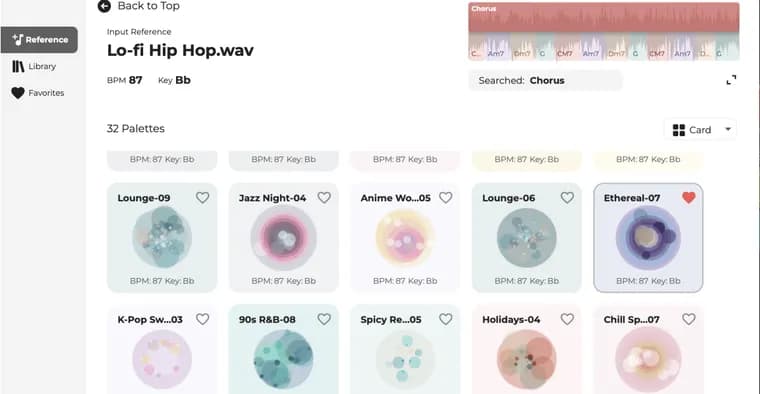
Roland has launched Melody Flip, a plug-in for digital audio workstations that marks the company's first move into generative AI music. The tool offers around 250 themed "Palettes," collections of musical ideas sorted by genre. Users can generate a melody, chord progression, bassline, or drum pattern from scratch, or feed the plug-in a reference track and have it build off that track's melodic ideas.
Melody Flip works differently from vocal song generators such as Suno or Udio. It does not produce finished tracks with vocals and full arrangements; instead it outputs simple loops intended as raw material for a musician to develop further, and control over the output is fairly limited. There is no option to type a detailed text prompt describing a specific style, voice, or instrumentation. Instead, users choose a genre, note density, BPM, and musical key and take what the tool generates. The genre list is fine-grained, spanning familiar categories like "80s disco" and "90s R&B" as well as niche ones like "Kawaii Future Bass" and "Anime World."
The sound presets reinforce that the loops are not meant to be used as-is: they are mostly generic MIDI tones reminiscent of 1990s video games. The apparent intended workflow is to export the MIDI data from Melody Flip into a DAW and manipulate it there, pairing it with other, more capable synth plugins.
The release follows a period in which Roland alienated customers with its Roland Cloud subscription service, before recovering ground with well-received hardware such as the P-6 Creative Sampler, the SH-4d, the Gaia 2 synth, and, last year, the analog-heritage TR-1000. Given how the wider music community has generally reacted to generative AI, Melody Flip is unlikely to earn Roland similar goodwill.
Key facts
- Melody Flip is a DAW plug-in offering around 250 genre-sorted "Palettes" of musical ideas.
- Unlike Suno or Udio, it does not produce finished songs with vocals; it generates simple melody, chord, bass, or drum loops meant as a creative starting point.
- There is no detailed text-prompt option; users instead pick a genre, note density, BPM, and musical key.
- Genre choices range from mainstream categories like "80s disco" and "90s R&B" to niche ones like "Kawaii Future Bass" and "Anime World."
- The tool follows Roland's recent run of well-received releases, including the P-6 Creative Sampler, SH-4d, Gaia 2, and TR-1000, after its Roland Cloud subscription service had alienated customers.
Why it matters
Roland is a legacy hardware instrument maker, and Melody Flip is its first step into generative AI music, a space so far defined by Suno and Udio's full-song generators. Rather than compete head-on on finished tracks, Roland is positioning its tool as raw creative material for producers to build on inside their existing workflow. That is a different bet on where AI fits into music-making: as an idea generator plugged into a DAW, not a replacement for the DAW itself.
Who it affects
Music producers who use digital audio workstations and Roland-compatible plug-ins are the direct audience. The release also matters to Roland's existing customer base, which had grown wary of the company after its Roland Cloud subscription missteps, and to the broader music community, which has generally responded skeptically to generative AI tools in creative work.
How to use it
Melody Flip runs as a plug-in inside a DAW. A user either starts from scratch, selecting a genre, note density, BPM, and musical key, or supplies a reference track for the tool to build melodic ideas from. The output is raw MIDI data for melody, chord progression, bassline, or drums, using mostly generic MIDI-style sounds. The intended workflow is to export that MIDI into the DAW and pair it with other, more polished synth plugins rather than use the built-in sounds directly.
How solid is it
The account comes from a hands-on product description in The Verge, detailing Melody Flip's actual feature set, controls, and sound presets rather than relaying a press statement or rumor. It does not include a release date, price, or a named Roland spokesperson.
Risks and caveats
Melody Flip's creative control is deliberately narrow: there is no way to type a specific stylistic prompt, and the built-in sounds are not meant for final use. The Verge notes that given how the music community has generally received generative AI, the tool is unlikely to win Roland much goodwill despite its more modest, sketch-not-song approach.