Scott Wiener, Pelosi's successor, wants federal AI rules with real teeth
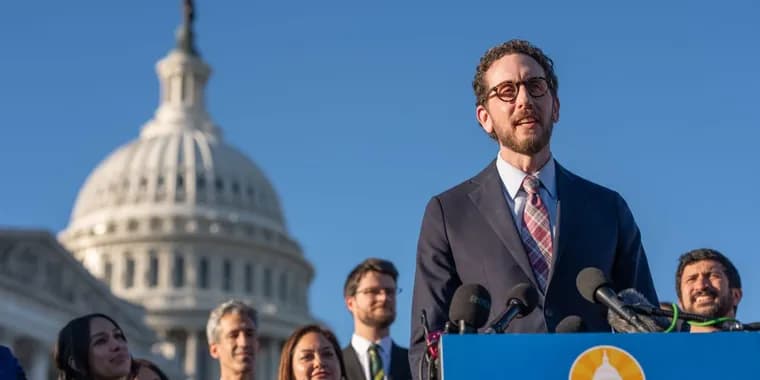
Scott Wiener, the California state senator who wrote SB 1047 and SB 53, has won a tight congressional race for former Speaker Nancy Pelosi's open San Francisco seat. MIT Technology Review spoke with him on Friday, only a few hours after he was declared the winner, in a 20-minute conversation. He is expected to have a say in federal AI policy.
Wiener was already focused on AI risk. The day before, the AI nonprofit METR had released a report that had been widely interpreted as evidence that Anthropic had achieved recursive self-improvement: AI meaningfully contributing to its own advancement, with progress potentially spinning out of control. Wiener called it "very concerning" and cited it as evidence that time to regulate AI is running out. He had hoped Congress would act decisively before the end of this year, and said that does not appear to be happening. He used the phrase "recursive self-improvement" about half a dozen times in the conversation, and said: "We need to slow this down. Because it's moving very quickly, and we could sleepwalk into a disaster."
His record on the subject is concrete. SB 1047, which he authored in 2024, was set to become the first real piece of frontier AI legislation in the country, but California governor Gavin Newsom vetoed it. Wiener then sponsored SB 53, a lighter-touch bill that Newsom signed. Both bills have inspired proposed federal legislation.
His campaign received over $3 million from Public First Action, a nonprofit in favor of AI regulation that receives substantial funding from Anthropic. Opponents criticized him for being too close to the AI industry. Wiener says that couldn't be further from the truth. In a written message after the interview he said Public First backed him because he was the first lawmaker in the country to introduce AI regulation and the first to pass it and get it implemented, and called the attacks "shockingly cynical".
On policy, Wiener said he would be eager to serve on a select committee on AI if Congress forms one; Democrats have discussed such a committee since September. He backs a strong, empowered, nimble federal regulator and noted that Representative Ro Khanna, a fellow Democrat from California, has proposed legislation to create one. He also highlighted whistleblower protections, testing and auditing requirements, and a kill switch requirement, and wants Congress to use its oversight powers to hold the AI labs to account. As a longtime state legislator, he opposes broad federal preemption of state AI laws, which some of the proposed federal legislation would require. His argument: states are laboratories, and you want them to stay nimble in ways Congress sometimes is not. Above all he wants Congress to pass policies with real teeth, and he talks about catastrophe in the language of AI safety experts: "We're in a moment that is very dangerous in terms of the risk of loss of control over AI."
The article sees allies, such as Senator Bernie Sanders, who has met many influential AI safety figures and spoken repeatedly about AI and existential risk. But it also sees a large gap between Wiener's Bay Area, AGI-pilled perspective and the national mood, which is anchored by opposition to data centers. Voters approved 40 out of 41 anti-data-center ballot measures on Tuesday. Wiener does not read that as a boost for AI-risk regulation: he sees the movement as far more tied to local concerns, such as impacts near people's homes, higher electric bills and water use, than to bigger questions about AI risk.
He describes himself as only "cautiously optimistic" about Congress, given its poor record on regulating the tech industry. He also worries about getting legislation past President Donald Trump, who called concerns about catastrophic AI risk a "hoax" in September and has shown a stark unwillingness to collaborate with China, which Wiener sees as essential to preventing the worst consequences of AI. Still, he finds a fraught hope in Trump's unpredictability. "I hope that it doesn't take a disaster to spur the president into acting," he said, and if it does, he hopes the disaster is as small as possible.
Key facts
- Scott Wiener, author of California's SB 1047 (2024, vetoed by Newsom) and SB 53 (signed), won a tight race for Nancy Pelosi's open San Francisco House seat.
- He says Congress should pass AI policy with real teeth: a federal regulator, whistleblower protections, testing and auditing requirements, and a kill switch requirement.
- He opposes broad federal preemption of state AI laws, which some of the proposed federal legislation would require.
- His campaign received over $3 million from Public First Action, a pro-regulation nonprofit that receives substantial funding from Anthropic; opponents said this made him too close to industry, which he rejects.
- He is only "cautiously optimistic" about Congress, has concerns about getting legislation past Trump, and sees the data center revolt (40 of 41 ballot measures approved Tuesday) as driven by local concerns rather than AI risk.
Why it matters
Wiener authored SB 1047, which was set to become the first real piece of frontier AI legislation in the country, and then sponsored SB 53; both bills have inspired proposed federal legislation. He is now headed to Congress, where he could play a key role in setting federal AI policy. His stated priorities (a federal regulator, testing and auditing, a kill switch requirement, oversight of the labs) give an early view of what one AI-safety-minded member plans to push.
Who it affects
AI labs, including Anthropic, which is linked to the campaign funding through Public First Action. State lawmakers, whose AI laws would be at risk if federal legislation with broad preemption passes. Other members of Congress working on AI bills, such as Representative Ro Khanna and Senator Bernie Sanders. Wiener's San Francisco constituents, and voters in places where data center projects are contested.
How to use it
This is a political profile, not a tool. The things to watch are the ones the article names: whether Congress forms a select committee on AI and whether Wiener sits on it, whether Khanna's proposal for a federal AI regulator advances, and whether any federal bill carrying broad preemption of state AI laws moves forward.
How solid is it
The piece is an interview-based article from MIT Technology Review. The author spoke with Wiener for 20 minutes on Friday, and one quote comes from a written message sent afterward. Wiener's positions are his own statements. The claim that the METR report was widely interpreted as evidence of recursive self-improvement at Anthropic is the author's description of how others read it; the article does not describe what the report contains. The Anthropic funding of Public First Action is stated in the author's voice, not by Wiener. The margin of victory is described only as tight.
Risks and caveats
Wiener himself says he is only cautiously optimistic about Congress, given its poor track record on regulating tech, and he worries about getting legislation past Trump, who called catastrophic AI risk concerns a "hoax" in September. The article notes a large gap between his AGI-focused view and a national mood anchored by opposition to data centers, and Wiener says the data center revolt is mostly about local issues, not AI risk. The Public First Action money drew criticism from opponents, whom the article does not name, and Wiener disputes it. A select committee has been discussed by Democrats but the article does not say one exists.
“We need to slow this down”
— Scott Wiener, to MIT Technology Review