Seagate launches FireCuda Forge hybrid drive that needs your own SSD
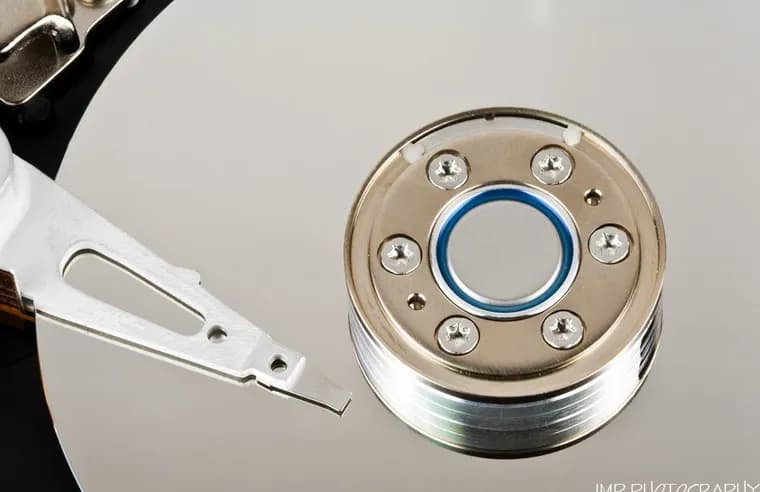
Seagate announced the FireCuda Forge line of storage drives on a Tuesday, betting that hybrid drives are not finished yet. The drives combine the high capacity of a traditional platter HDD with the speed and responsiveness of a solid-state drive that the user supplies. It is Seagate's first hybrid storage solution powered and managed by the new Alkemi intelligent storage platform.
The FireCuda Forge is on sale now through Seagate's web store. It comes in two HDD configurations: 8TB for $699 and 20TB for $899. Neither price includes the SSD, which is required, so buyers bring their own.
The SSD has to meet specific restrictions. It must be an M.2 2280 NVMe drive on PCIe Gen3 or higher. The maximum supported NVMe capacity is 1TB, which caps how much data can sit on the fast side of the hybrid setup. The NVMe drive needs minimum speeds of 2,400MB/s read and 2,000MB/s write, and a unit with DRAM cache is recommended. Seagate claims the combined system reaches 2,500MB/s read and 2,000MB/s write, along with USB4 and support for Windows 11 and macOS 26+.
The article sets the launch against the current storage market. After dipping to historical lows earlier in the decade, storage pricing per TB has exploded amid the AI boom. According to data collected by Tom's Hardware, some solid-state drives now cost two to three times their historic lows. Mechanical drives have not been spared either: according to PCServerParts, a Seagate Exos 24TB drive that sold for $298.99 in the summer of 2025 was priced at $699.99 by August 2026.
Key facts
- Seagate's FireCuda Forge pairs a platter HDD with a user-supplied M.2 2280 NVMe SSD (PCIe Gen3 or higher) and is managed by the new Alkemi intelligent storage platform.
- It is on sale now through Seagate's web store: 8TB for $699 or 20TB for $899, with the required SSD not included.
- The NVMe side is capped at 1TB and must manage at least 2,400MB/s read and 2,000MB/s write; DRAM cache is recommended.
- Seagate claims 2,500MB/s read and 2,000MB/s write for the combined system, plus USB4 and support for Windows 11 and macOS 26+.
- Storage prices have jumped amid the AI boom: a Seagate Exos 24TB drive went from $298.99 in summer 2025 to $699.99 by August 2026, per PCServerParts.
Why it matters
Seagate is reviving the hybrid idea of a big, cheap-per-terabyte platter drive with a small fast SSD, and it is doing so while storage costs are rising. The article notes that price per TB has exploded amid the AI boom after hitting historical lows earlier in the decade, and that mechanical drives have not been immune. It is also the first Seagate hybrid solution run by the new Alkemi intelligent storage platform.
Who it affects
Buyers who want large capacity with a fast tier on a single device, and who are willing to supply their own M.2 NVMe SSD. Anyone already pricing out storage in the current market will see the effect of the AI boom on both SSD and HDD prices in the figures the article cites.
How to use it
The FireCuda Forge is sold through Seagate's web store in 8TB ($699) and 20TB ($899) configurations. You must add your own SSD: M.2 2280 NVMe, PCIe Gen3 or higher, at most 1TB, with at least 2,400MB/s read and 2,000MB/s write. A drive with DRAM cache is recommended. Seagate lists USB4 and support for Windows 11 and macOS 26+. The listed prices do not cover the SSD, so the total cost depends on what you buy for that slot.
How solid is it
The product details, prices and requirements come from the article's account of Seagate's announcement. The 2,500MB/s read and 2,000MB/s write figures for the combined system, and the USB4 and OS support, are Seagate's claims. The text does not say whether the 2,500MB/s read figure was independently tested. The price context rests on two named sources: Tom's Hardware for SSDs and PCServerParts for the Exos 24TB drive.
Risks and caveats
The headline prices exclude the required SSD, and the text does not give a total cost with one included. The fast side is limited to 1TB, so only that much data can sit on it. The text does not say how the hybrid mechanism works, how the SSD and HDD are presented to the operating system, or what the Alkemi platform is beyond 'intelligent storage platform'. It also gives no HDD specs such as RPM, cache or interface speed, and does not say whether the drive is sold outside Seagate's web store or outside the US.
“Seagate doesn’t think hybrid drives are done just yet.”
— Ars Technica