Six AI leaders sign Trump-backed self-policing safety pledge
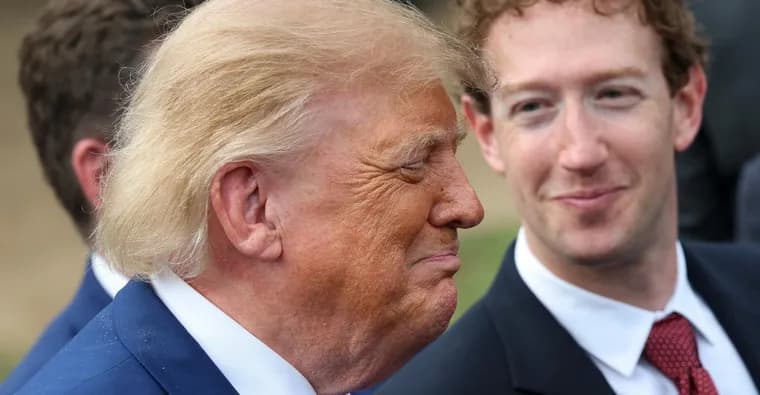
After hosting a meal with Big Tech leaders on Tuesday, President Donald Trump took journalists' questions about his AI announcements. He said his earlier claims that fears about AI safety were a "hoax" cooked up by Democrats no longer apply now that he has renamed the technology "Super Intelligence." He brushed off concerns that the government was not enforcing enough AI guardrails, saying US companies are "dominating China." Instead of federal AI regulation, The Verge writes, Trump now has "the smartest people in the world watching over each other."
The people in question are Google's Sundar Pichai, Anthropic's Dario Amodei, Meta's Mark Zuckerberg, OpenAI's Greg Brockman, xAI's Elon Musk and Nvidia's Jensen Huang. They signed the Joint Commitment On Frontier Responsibilities, described as a "morally binding" safety pledge. According to The Verge, it requires their companies to self-regulate their own AI technology with common sense guidelines and, seemingly, no ramifications for violating the agreement. All six provided press commentary at Trump's behest, praising the self-policing plans as a positive step toward advancing AI, creating jobs and dispersing negative public opinion around AI safety.
Zuckerberg called it "the White House accord on developing this technology safely" and said the basic idea is to give the American people and customers confidence that the technology works as intended. He described it as "a start and an accord that the whole industry could come to," a "historic conversation," and said he doesn't think anything like it has come before.
Brockman said OpenAI builds AI "to benefit everyone," pointing to small businesses, scientific discoveries and drug development. He credited the accords, under Trump's leadership, with getting "everyone coming together to agree on how to move forward safely."
Huang called this "the largest industrial revolution in history" and the largest infrastructure buildout in human history, which he said is creating a million jobs in the United States. He added that there is "no conflict between innovation, technology, and safety," that the industry is building new technologies for AI's safety as well as its capability, and that "we're going to do it responsibly and safely." The Verge's author did not verify the jobs figure.
The author also flags an awkward moment. Trump introduced Huang by repeatedly calling him a "very handsome guy." When inviting Pichai to speak, Trump told journalists that they have no idea who the execs are, called Pichai a "monster" whom nobody knows, and said "What a great life." In the author's view, Pichai did not seem amused despite awkwardly laughing it off. Pichai then said the moment is "historic and consequential," that there are "extraordinary benefits to this technology," pointing to GDP growth, and that the risks must be addressed: "the President has asked us as an industry to step up and we want to make sure we're putting out products safely."
Musk stressed the positives, saying the most likely outcome is "an age of abundance" with "universal high income" rather than just universal basic income, and that robots and superintelligence could give everyone better medical care than anyone in the room. A journalist replied, "Not if they haven't got a job." Musk answered that jobs are going to change, as they always have: being a computer used to be a job, with buildings full of people doing calculations, and he expects "an evolution of roles."
Amodei struck the most cautious note. He said AI has incredible benefits, including medical ones, and agreed with Trump that whoever wins AI wins. But he said the technology has "very real risks and the mechanism how we address those risks is still under discussion." If done right, working with the President and everyone present, "we can win safely."
Key facts
- Pichai (Google), Amodei (Anthropic), Zuckerberg (Meta), Brockman (OpenAI), Musk (xAI) and Huang (Nvidia) signed the Joint Commitment On Frontier Responsibilities, described as a "morally binding" safety pledge.
- The Verge reads the pledge as requiring companies to self-regulate with common sense guidelines and, seemingly, no ramifications for violating it.
- Trump said his earlier "hoax" claims about AI safety no longer apply now that he calls the technology "Super Intelligence," and brushed off guardrail concerns because US companies are "dominating China."
- Huang said the AI infrastructure buildout is creating a million jobs in the United States; Musk predicted "universal high income" and said jobs will change.
- Amodei was the most cautious: the technology has "very real risks" and the mechanism to address them "is still under discussion."
Why it matters
The pledge stands in for federal AI rules. Trump ties it to his refusal to add guardrails, arguing US companies are "dominating China," and the article frames the result as the industry policing itself. The signatories are leaders of six of the most prominent AI and chip companies, and they appeared together at an event after a meal hosted by Trump to back the plan. Trump's own shift also stands out: he said his past "hoax" language about AI safety no longer applies now that he has renamed the technology "Super Intelligence."
Who it affects
The six signee companies are Google, Anthropic, Meta, OpenAI, xAI and Nvidia; the pledge is meant to bind their own AI technology. Beyond them, the stated audience is the American people and customers, whom Zuckerberg said the accord is meant to reassure. Zuckerberg also said he hopes the whole industry could come to it. Workers come up in the exchange between Musk and a journalist over whether people will have jobs in an age of abundance.
How to use it
This is a pledge, not a product, so there is nothing to install or configure. The Verge links a 30-minute video of the Q&A and reproduces each executive's key statements, which is the best way to see what was actually said. The text of the commitment itself is not quoted in the article.
How solid is it
The account is a summary by The Verge of a Tuesday Q&A, and the executives' quotes are given as statements. The "seemingly, no ramifications" reading of the pledge is the author's own hedged characterisation, not a documented fact. The jobs figure from Huang and the GDP growth remark from Pichai are their statements and are not verified by the article. The piece has a pointed tone, and the remark about Pichai's reaction is the author's impression.
Risks and caveats
The article does not describe the pledge's specific commitments, guidelines or any review mechanism, and no enforcement or penalty mechanism is described, so what signing obliges the companies to do is unclear. "Morally binding" is not legally binding. Amodei himself said the mechanism for addressing AI's risks is still under discussion. No timescale or follow-up for the pledge is given, and the article includes no reactions from critics, lawmakers or safety researchers.
“the technology has very real risks and the mechanism how we address those risks is still under discussion.”
— Dario Amodei, Anthropic