Terence Tao expects AI to bring 'Big Math', faults big tech's proofs
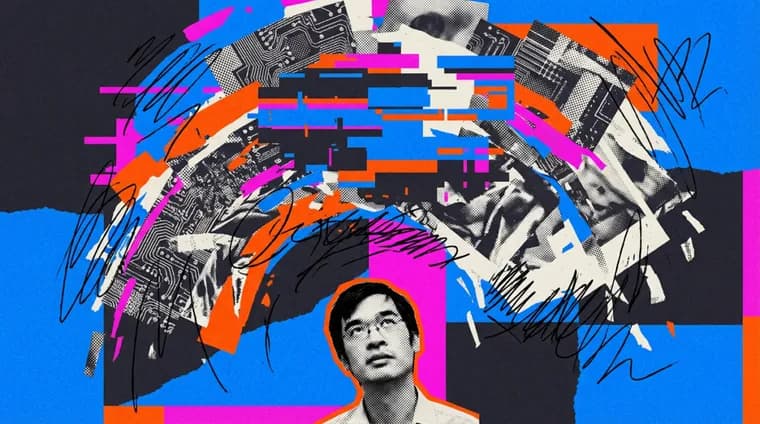
Renowned mathematician Terence Tao expects AI to overhaul how mathematics is organized. Speaking on the Hard Fork podcast, he called the model "Big Math", a parallel to the decades-old "Big Science" model. He had described a similar "industrialization of mathematics" in 2024.
In Tao's account, mathematicians will work together in ever larger groups. Because AI speeds up entry into complex topics, even postdocs and PhD students will lead ambitious projects. As The Decoder reports it, human and AI teams could systematically map thousands of problems instead of solving them one by one.
Tao is nonetheless sharply critical of the AI results now coming from major tech companies. The models solve open problems and make technical contributions, he says, but they produce answers without understanding and cannot explain their proofs. In his view, such proofs are "toxic waste" to the companies themselves: an unwanted byproduct of training better models, which the firms must dump after minimal cleanup. In October, Tao and other mathematicians called for a boycott of OpenAI.
He is just as critical of the AI-generated papers flooding academic journals. They sometimes solve open problems, he says, but often fail to open new research directions, cite sloppily, explain poorly and are not enjoyable to read.
Tao's hope is that AI will eventually deliver the "first awful solution" to a problem, and that humans will then structure it properly and put it into clear context.
Key facts
- On the Hard Fork podcast, Terence Tao said he expects AI to reorganize mathematics into what he calls "Big Math", paralleling "Big Science".
- He foresees ever larger collaborations, with even postdocs and PhD students leading ambitious projects because AI speeds up entry into complex topics.
- Models from major tech companies solve open problems but cannot explain their proofs, he says; in his view those proofs are "toxic waste" to the firms.
- AI-generated journal papers sometimes solve open problems but often cite sloppily, explain poorly and open no new research directions, according to Tao.
- Tao and other mathematicians called for an OpenAI boycott in October.
Why it matters
Tao's argument has two sides. He expects AI to change how mathematical work is organized, with larger groups and a systematic sweep across many problems. He also draws a line between getting an answer and understanding it: a model can settle an open question and still be unable to explain its proof.
The organizational idea builds on his earlier thinking. He described a similar "industrialization of mathematics" in 2024.
Who it affects
Mathematicians come first, since Tao expects them to collaborate at a much larger scale. Postdocs and PhD students could take on a bigger role, leading ambitious projects. Academic journals are dealing with the AI-generated papers he criticizes, and their readers get the weak explanations and sloppy citations he describes. Major tech companies are the target of his complaint about proofs, and OpenAI faced the boycott call from Tao and other mathematicians in October.
How to use it
The remarks point to a division of labor that Tao hopes for: AI supplies the "first awful solution", then people structure it and put it into clear context. His complaints about AI-written papers also work as a checklist for judging such work. Does it open a new research direction? Are the citations careful? Is the explanation clear, and is the paper enjoyable to read? For team leads, his forecast suggests that junior researchers may be able to enter complex topics faster with AI.
How solid is it
These are the views and forecasts of a well-known mathematician, voiced on a podcast and relayed by The Decoder in a short article. They are not a study or a measured result. The source does not name which major tech companies or which models Tao criticizes; OpenAI comes up only in connection with the boycott. No specific problems or proofs solved by AI are named, and no responses from OpenAI or other tech companies are reported.
Risks and caveats
"Big Math" is an expectation, and no timeline is given for it or for the "first awful solution" Tao hopes to see. The mapping of thousands of problems is described as something human and AI teams could do, not something already achieved.
The "toxic waste" label should be read with care. It describes how Tao believes the companies treat these proofs, as a byproduct to be dumped after minimal cleanup. The source does not say the proofs are wrong or invalid.