Tesla Semi reaches volume production after a nine-year wait
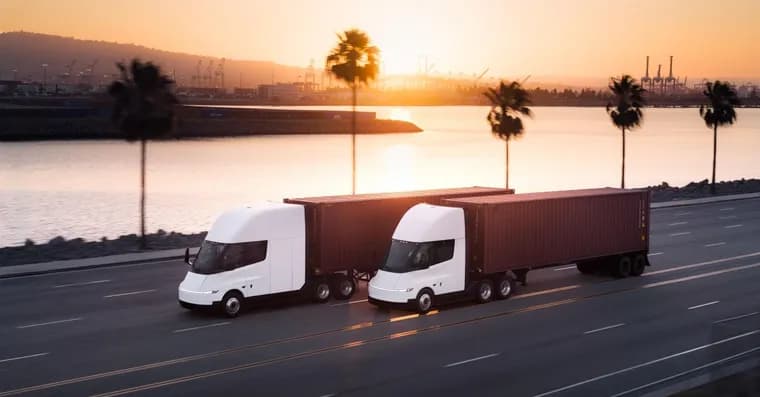
Tesla held an event on Thursday evening at its new Semi factory next to Gigafactory Nevada to mark the truck's move into volume production, which began in April 2026, and to announce first deliveries to customers this week. The Semi was first shown as a concept in 2017, was originally supposed to enter production in 2019, and was delayed for years by the covid pandemic and a global parts shortage; Tesla built only a handful of trucks by hand on a pilot line for PepsiCo in 2022. Tesla says the new factory can build 50,000 trucks a year, or 1,000 per week. The company revealed the final production design in February 2026 with two trims: a Standard Range truck rated at 325 miles at a full 82,000-lb gross combination weight, and a Long Range version rated at 500 miles. Tesla's director of Semi Truck Engineering, Dan Priestley, said the 500-mile figure comes from fully loaded trucks rather than tests that let the payload diminish, and Tesla vice president of Engineering Lars Moravy said a Semi carrying a lighter load of around 60,000 pounds could potentially reach about 600 miles. Over the last three years Tesla says it shaved nearly 1,000 lbs off the truck's weight, switched from bought-in 2170 battery cells to its in-house 4680 cells, redesigned the drive axle to be about 80 kilograms lighter with a single common motor and gearbox oil that Moravy says should last more than 250,000 miles, and replaced hydraulic steering with redundant electric power steering that gives the truck nearly the turning radius of a Model Y. The truck also shares its indirect thermal system, including pumps, compressors and heat exchangers, with the Cybercab. Tesla says the fully loaded truck now consumes about 1,700 Wh/mile, down from an original target of 2,000 Wh/mile, letting it use a smaller, cheaper battery while keeping the same range; the Semi's pack is 822 kWh. Tesla did not update its official pricing, which has stood at $150,000 for the 300-mile version and $180,000 for the 500-mile version since 2017, but Electrek has reported Tesla quoting customers $290,000 for the 500-mile version, a figure this event did not confirm or deny. Elon Musk did not attend in person, since he was in Washington, DC, for a state dinner with President Trump and Chinese President Xi, but sent a prerecorded message calling the Semi "the funnest truck to drive" and predicting it would be "a revolutionary truck." Tesla announced a customer roster including PepsiCo, US Foods, DHL, WattEV, ABF, Einride, IMC Logistics and OK Produce. Einride announced a 500-truck order in August, IMC Logistics said this week it would buy 50 Semis for California drayage, and on Monday a coalition of major cargo-owning shippers selected Tesla to supply 2,500 trucks for zero-emission freight shipping in California. Tesla did not disclose total order numbers, though Musk said the "waiting list is significant" and urged people to place orders. Charging remains a hurdle: Tesla's Megacharger system delivers up to 1.2 megawatts per stall, and the company says it will have more than 30 Semi charging stations with over 200 megawatt-capable posts by the end of the year; at the event, engineers showed a charge from 3 to 60 percent in about 30 minutes. Tesla also touted a claimed fleet uptime above 98 percent, versus an industry average of 90 to 95 percent for diesel class 8 trucks, and argued the Semi is cheaper to run than diesel given lower energy costs and fewer parts to maintain, a case bolstered by US diesel prices that have climbed past $6.50 a gallon, nearly double what they cost a year ago.
Key facts
- Tesla says Semi volume production began in April 2026 at a new factory next to Gigafactory Nevada capable of 50,000 trucks a year, nearly a decade after the truck's 2017 concept debut.
- Two trims: Standard Range (325 miles at 82,000-lb gross combination weight) and Long Range (500 miles); Tesla did not update its 2017 list prices, though Electrek has reported customers being quoted $290,000 for the long-range version.
- New orders include Einride (500 trucks, announced in August), IMC Logistics (50 trucks for California drayage), and a coalition of shippers selecting Tesla for 2,500 zero-emission trucks in California; Tesla did not disclose total order-book numbers.
- Engineering changes include in-house 4680 battery cells, an 822 kWh pack, energy use cut to about 1,700 Wh/mile from an original 2,000 Wh/mile target, and a drive axle about 80 kilograms lighter.
- Tesla's Megacharger delivers up to 1.2 megawatts per stall, with more than 30 Semi charging stations promised by year end; the company claims over 98 percent fleet uptime versus a 90 to 95 percent industry average for diesel trucks.
Why it matters
The Tesla Semi has been a symbol of delayed promises since 2017, missing an original 2019 production target and slipping through the pandemic and parts shortages. Reaching real volume production, with a dedicated 50,000-truck-a-year factory and first customer deliveries actually going out, is the first sign that Tesla can move the electric heavy-truck concept from pilot units to a real fleet business, at a moment when record US diesel prices give electric trucking a stronger cost argument than it has had before.
Who it affects
Freight and logistics operators are the direct customers: PepsiCo, US Foods, DHL, WattEV, ABF, Einride, IMC Logistics and OK Produce were named at the event, with Einride's 500-truck order, IMC Logistics' 50-truck California drayage order, and a 2,500-truck deal with a coalition of major shippers for zero-emission freight in California. It also affects Tesla investors watching whether the company can finally convert years of Semi promises into deliveries, and rival truck makers competing for the same fleet customers.
How to use it
Buyers choose between a Standard Range trim (325 miles at full 82,000-lb gross weight) and a Long Range trim (500 miles, potentially about 600 miles with a lighter roughly 60,000-lb load). Tesla has not published an updated official price, though customers have reportedly been quoted around $290,000 for the long-range version, well above the $150,000 to $180,000 Tesla advertised back in 2017. Musk said the waiting list is significant and encouraged prospective buyers to place orders; running the truck also requires access to Tesla's Megacharger network, which delivers up to 1.2 megawatts per stall and is set to reach more than 30 Semi stations by the end of the year.
How solid is it
The account comes from a Tesla-hosted event, with specific engineering and performance figures presented on stage by Tesla's director of Semi Truck Engineering, Dan Priestley, and vice president of Engineering Lars Moravy, alongside independent reporting from Electrek on the unofficial $290,000 price quote. Tesla did not disclose order-book totals or an official updated price, and claims such as the 98 percent fleet uptime and the cost-to-run comparison with diesel are Tesla's own figures rather than independently verified numbers.
Risks and caveats
The Semi's history is one of repeated delay, from a missed 2019 production target through the pandemic and parts shortages to a small hand-built PepsiCo batch in 2022, so further slippage in scaling up deliveries would compound years of damaged credibility with freight operators who have been waiting. Key commercial details remain undisclosed: Tesla gave no official price and no total order numbers, and performance and durability claims, including the projected 250,000-mile life of the shared motor and gearbox oil and the fleet uptime figure, are stated by Tesla executives rather than confirmed by outside data.
“This is really going to be a revolutionary truck, that is capable of carrying the heaviest loads over very long distances. With ease of recharge, Megacharger that's capable of a megawatt of power. This is really going to be a phenomenal truck.”
— Elon Musk, Tesla CEO