Tim O'Reilly: AI labs misread what people actually want
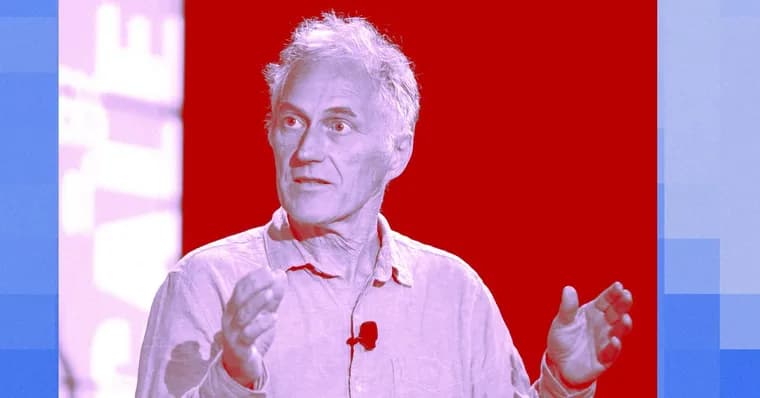
Tim O'Reilly, the publisher, internet pioneer, VC and conference organizer, told Wired's Steven Levy that he judges companies, people and societies by whether they create more value than they capture, and that the big AI labs fail that test. He says the labs have convinced themselves that having the biggest, best model is the key to the future, when in fact frontier systems like Claude are optimized for particular use cases rather than what most people actually want. He compares today's hyperscalers to Microsoft in the 1990s, arguing they are building an architecture of control that lets them lock users in and track them, rather than an architecture of freedom that lets people embed their own tools on top of a model. His fix is a clean separation between the model, the harness and the application, so users can swap providers freely; open-source AI, in his framing, is not just open-weight models but that whole unlocked stack. O'Reilly extends the argument geopolitically: he says the US could win the race to build the most capable frontier models and still lose to China, because China is diffusing lower-level, cheaper models widely through its society while the US concentrates capability at the top. On security, he inverts the usual objection to open weights, saying every cybersecurity incident seen so far has come from frontier models, which he takes as a reason to slow frontier development rather than restrict open-weight releases. He points to projects already moving his way, including an open-source agentic harness called Pi, and to his own nonprofit, the AI Disclosures Project, which is building what he calls an open-memory consortium to let users keep their AI context when they switch models or providers, a direct counter to what he describes as Mark Zuckerberg's plan to lock people into Meta by giving them the AI that knows them best. O'Reilly also widens the critique to venture capital itself, arguing Silicon Valley has become anti-capitalist in practice: since around 2010, when Uber and Lyft used billions in VC subsidies to buy market share, investors rather than the market have been picking winners, and he sees the same pattern now funneling money into a handful of AI companies without any of them holding a durable lock. He expects the real disruption to come from outside venture funding, the way the web itself emerged while Silicon Valley was fixated on who would rule the PC. Asked about his own business, O'Reilly says the book-publishing side of his company has been shrinking for 25 years, from roughly $70 million in revenue at its peak to about $30 million now, and that as AI absorbs published knowledge his company has to find new ways to compensate the experts it depends on. On his own writing practice, he says it is company policy not to use AI to write the introductions to his interviews, but that he leans on AI heavily as a brainstorming partner and to turn long interview transcripts into usable drafts. He frames AI as a medium like paint or a camera, arguing that people will eventually accept AI-assisted writing the way they accepted photography as art, though he and Levy note in passing that they disagree on AI's role in producing original content without spelling out where the disagreement lies.
Key facts
- O'Reilly says big AI labs built an 'architecture of control' rather than one of 'freedom and participation', locking users into a single model instead of letting them separate model, harness and application.
- He argues the US could win the frontier-AI race and still lose to China, because China is diffusing lower-level, cheaper models widely through society while US labs concentrate capability at the top.
- He says every cybersecurity incident seen so far has come from frontier models, an argument he uses for slowing frontier development rather than restricting open-weight releases.
- His nonprofit, the AI Disclosures Project, is building an 'open-memory consortium' so users can switch AI providers without losing context, aimed directly at what he calls Mark Zuckerberg's lock-in strategy at Meta.
- He cites his own company's book-publishing revenue falling from about $70 million at its peak to about $30 million now over 25 years as the backdrop for rethinking how to compensate experts as AI absorbs their work.
Why it matters
O'Reilly is arguing against the industry's dominant strategy at the moment, that bigger frontier models are the whole game. If he is right that most people need embeddable, controllable, lower-level models rather than one maximally capable model, the current spending race toward ever-larger frontier systems is solving the wrong problem for most users, and the real competitive threat comes from open, diffusible tooling rather than from a rival lab's benchmark scores.
Who it affects
The critique is aimed at the big AI labs, OpenAI and Anthropic by name (via a Wired editorial aside) among others, and at Meta specifically over Mark Zuckerberg's personalization-based lock-in strategy. It also concerns anyone building on top of AI models, including O'Reilly's own publishing business, whose experts and authors are the source of knowledge that AI systems are now absorbing.
How to use it
O'Reilly's prescription is architectural: keep the model, the harness and the application separate so users and developers can swap any one of the three without losing the others, use open-weight models rather than single-vendor frontier ones where possible, and back efforts like the open-source agentic harness Pi and the AI Disclosures Project's open-memory consortium, which is meant to let a user carry their AI context across providers instead of being locked into one.
How solid is it
This is a first-person interview conducted by Steven Levy for Wired's Backchannel newsletter, not a study; every claim is O'Reilly's own opinion, stated as such. Wired's own editors push back inline at one point, noting in brackets that 'Anthropic and OpenAI would disagree' with a claim O'Reilly repeats about two of their models being worse writers than smaller ones, and Levy tells O'Reilly plainly that the two of them disagree on AI's role in original writing. The interview carries no independent data on model diffusion, cybersecurity incident sources or Silicon Valley funding patterns beyond O'Reilly's own assertions.
Risks and caveats
Several of O'Reilly's central claims are unfalsifiable as stated: the source does not name the specific 'lower-level models' China is supposedly diffusing widely, does not give a timeline for the open-memory consortium, and does not identify who built the Pi harness he cites as evidence his vision is already happening. His claim that every cybersecurity incident so far has come from frontier rather than open-weight models is asserted without data. The piece is framed by Wired itself as one man's advocacy, not a neutral account of where the AI industry is heading.
“The big labs are reading the future wrong.”
— Tim O'Reilly, in Wired's Backchannel newsletter