US data centers plan more than 100 off-grid gas power plants
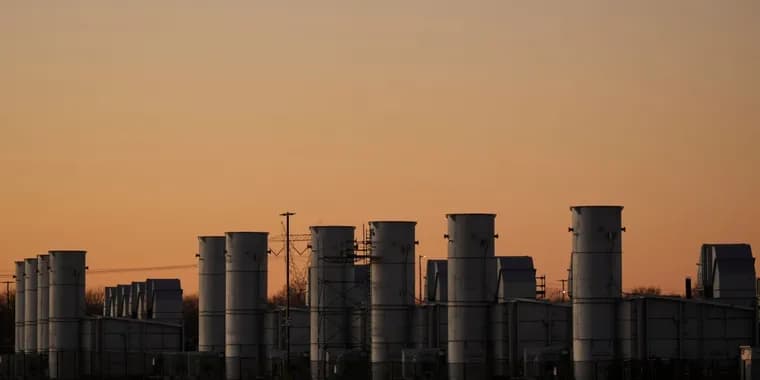
Getting approval to connect a data center to the electric grid is one of the biggest roadblocks to starting one up, and the wait could last as long as a decade. MIT Technology Review reports that some developers are no longer willing to wait. They are building their own off-grid, or behind-the-meter, gas power plants to feed the AI boom.
The article points to xAI's Memphis campus as the early example. It has used dozens of natural gas turbines, some of them without permits, as far back as 2024. At the time it was a rarity and drew scrutiny from regulators, and it remains the subject of ongoing legal battles. Since then the strategy has become far more common.
As of October 2026, according to Cleanview, a market intelligence company, data center developers have announced more than 100 behind-the-meter gas power plants at US facilities. Their combined planned capacity is over 115 gigawatts, more than double the peak power demand of California. The vast majority of the announcements came after the start of 2025. The article cautions that not all of them may be built. Cleanview's data shows 4.9 GW of such projects operating today and 15.8 GW under construction.
The main motive is speed. Building your own plant is generally more expensive than connecting to the grid, but developers will pay a significant premium to get online sooner. Musfika Mishi, an associate at BloombergNEF, an energy consultancy, says speed is the biggest motivator. A grid connection request starts a yearslong study in which planners work out what must be built to deliver power safely, such as new transmission lines or larger transformers, and the developer may have to help pay. A plant is called behind the meter because it sits on the customer's side of the utility meter and supplies the building directly.
Behind the meter does not always mean fully disconnected. Some facilities may build a plant as a temporary measure, connect to the grid later and keep their own plant only as backup. Brendan Pierpont, director of electricity at the think tank Energy Innovation, calls it a very expensive way to bridge a maybe five-to-seven-year gap until a grid connection arrives. Mishi warns that once the money is spent, an operator may keep running the plant, which risks fossil fuel lock-in.
Emissions are the second theme. The US grid still relies on fossil fuels, but nuclear and renewables together supply about 40% of electricity generation, so a grid connection is generally the lower-emissions option in the US. The article notes this is not true everywhere: India expects a data center boom in the next decade, and its grid is largely coal-fired today. Equipment makers are struggling to keep up with demand for turbines, which pushes behind-the-meter developers toward less efficient designs. Large gas plants usually use combined-cycle turbines, which capture heat to make extra electricity. Mishi says very few of the planned off-grid facilities will use them, so these plants will likely emit more greenhouse gases than even other gas resources.
BloombergNEF tracks 181 GW of announced on-site gas projects for data centers worldwide, with 90% of that capacity designated for the US. If every planned US behind-the-meter gas plant goes ahead, a BloombergNEF report says they could emit 345 million metric tons of CO2 equivalent a year by 2035. That is 152 million metric tons more than if the same data centers drew from the US grid, a difference greater than the Netherlands' total annual emissions.
Matthias Fripp, director of global policy research at Energy Innovation, argues that going off-grid does not protect prices for everyone else. More demand for natural gas could push its price up, which could raise rates for the roughly 60% of American households that use gas for heating and cooking, and the effect may also reach electricity prices.
The article closes with mitigation ideas. Mishi says building gas alongside on-site renewables or energy storage could limit how often a gas plant has to fire up, though the economics of several energy sources can be tricky. Fripp says more renewables could help the strained grid; a recent study by his team found that renewables and storage built to meet rising demand could be reliable and cheaper than relying on fossil fuels. His verdict on the rush to off-grid gas is that it is probably a bad way, because it still raises other people's bills and is not good for the environment.
Key facts
- Cleanview counts more than 100 announced behind-the-meter gas plants at US data centers as of October 2026, with over 115 GW of combined planned capacity, more than double California's peak demand.
- Only a small fraction is built: 4.9 GW operating and 15.8 GW under construction, per Cleanview. Most announcements date from the start of 2025 onward.
- Speed is the driver. Grid connection approval can take as long as a decade, and developers will pay a significant premium to skip the wait.
- BloombergNEF says that if all planned US plants go ahead they could emit 345 million metric tons of CO2 equivalent a year by 2035, 152 million metric tons more than grid power would.
- Very few of the planned plants will use more efficient combined-cycle turbines, and Energy Innovation's Matthias Fripp warns that more gas demand could raise household gas bills.
Why it matters
The power supply for AI data centers is being decided now, and the article argues it could shape the grid and its climate impact for decades. The scale is large: more than 100 announced plants and over 115 GW in the US alone, and BloombergNEF tracks 181 GW worldwide, 90% of it designated for the US. The trend started with xAI's Memphis campus in 2024, which was then a rarity, and has since become common.
Who it affects
Data center developers, who trade higher cost for speed. Utilities and grid planners, who are already planning more gas plants on the grid. Turbine makers, who are struggling to keep up with demand. Households: per Fripp, higher gas demand could push up rates for the roughly 60% of American households that use gas for heating and cooking, and may trickle into electricity prices. Communities and regulators near sites like xAI's Memphis campus, which faced scrutiny and remains the subject of ongoing legal battles.
How to use it
This is a market analysis, not a product, so the practical value is in the framing. When you read a data center announcement, ask whether the plant is a bridge until a grid connection arrives or a permanent supply, and whether it uses efficient combined-cycle turbines. The sources also name ways to limit the damage: pairing gas with on-site renewables or energy storage to reduce how often the gas plant fires up (Mishi, who notes the economics can be tricky), and building renewables and storage for new demand, which Fripp's team found could be reliable and cheaper than fossil fuels.
How solid is it
The reporting rests on named third-party data and named experts. The plant counts and the operating and under-construction capacity come from Cleanview, a market intelligence company. The global figure and the emissions projection come from BloombergNEF. Pierpont and Fripp of Energy Innovation, and Mishi of BloombergNEF, supply the analysis. The source does not give Cleanview's methodology or the title and date of the BloombergNEF report, and it names no developer or project other than xAI's Memphis campus.
Risks and caveats
Announced is not built. The article says only a small fraction of the capacity is under construction or operating, about 20.7 GW of the 115 GW combined. The 345 million metric ton figure assumes every planned US plant goes ahead, and the article does not say that will happen. Behind the meter can mean a temporary bridge with the plant kept as backup, but Mishi warns the plants may keep running and lock in fossil fuel use. The article says its emissions comparison favours the grid in the US, but notes this is not the case everywhere, citing coal-heavy India. The article gives no cost figures for off-grid plants versus grid connection, only that they are generally more expensive.
“The biggest motivator for on-site power right now from data centers is speed”
— Musfika Mishi, associate at BloombergNEF