Viture launches Vonder AI glasses that map your memory
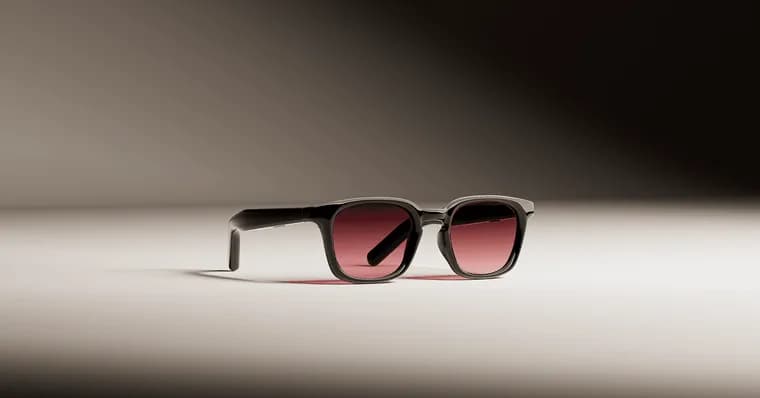
Viture, a San Francisco-based smart-glasses maker previously known for plug-in virtual-display models like the Viture One and Viture Beast, announced a new product called Vonder on Tuesday. Unlike its earlier gaming-focused glasses, which connect via USB-C to project a screen in front of the wearer's eyes, Vonder has no virtual display and no cameras. Instead, its arms carry microphones and speakers for calls, music and map directions, plus a built-in AI assistant that draws on multiple large language models: OpenAI's ChatGPT, Anthropic's Claude, Google's Gemini, or DeepSeek. According to the article's description of the product, Vonder AI picks whichever model is quickest and most economical for a given task's complexity. Most of the time the glasses only collect data when the wearer is speaking, but they also use bone-conduction sensors built into the frames to passively pick up the audio vibrations of the person wearing them throughout the day; a meeting mode switches on the onboard microphones to record the surrounding environment. That audio feeds a personal "memory graph": a web of the wearer's habits, places and conversations, shown in the companion app as a large graphic of connections. Viture cofounder and CEO David Jiang demonstrated the graph built from three months of his own use, showing it could surface coffee shop recommendations based on his caffeine habits, help him think through a hiring decision, and once compiled a dossier on a Wired reporter ahead of a visit. Jiang also described a more personal case: the glasses noticed a pattern in how he shouted at and criticized his 10-year-old son during tennis matches, and messaged him unprompted to stop and be more supportive instead, which he says has since improved their relationship. Jiang acknowledged the graph only captures the wearer's side of any exchange, but argued the gap is smaller than it sounds: about 10 to 15 percent of context missing, not 50 percent, because conversation is turn by turn and a follow-up question reveals what was asked. Vonder costs $299, can be fitted with prescription lenses, comes in multiple frame shapes and colors, and can be ordered with clear, transition or shaded sunglass lenses. It runs for about 16 hours per charge. A blue light on the arm indicates when the glasses are recording audio, positioned less prominently than the equivalent indicator on Meta's Ray-Ban smart glasses. Viture, along with rivals Xreal and Even Realities, is explicitly trying to distinguish itself from Meta, whose Ray-Ban glasses have drawn criticism over privacy-encroaching features. Preorders for Vonder open September 28, with shipping set for November.
Key facts
- Vonder costs $299, drops cameras and the virtual display of Viture's earlier glasses, preorders open September 28 and shipping starts in November.
- The AI assistant routes tasks across ChatGPT, Claude, Gemini or DeepSeek, choosing whichever model is quickest and cheapest for the job.
- Bone-conduction sensors passively capture the wearer's own audio all day to build a personal 'memory graph' of habits, places and topics, shown as a connection web in the app.
- CEO David Jiang says the glasses flagged a pattern of him shouting at his 10-year-old son during tennis and prompted him to change, which he credits with improving their relationship.
- Battery life is about 16 hours, and a blue indicator light marks when audio is being recorded, positioned less prominently than on Meta's Ray-Ban glasses.
Why it matters
Vonder is a bet that the next wearable AI product is not a camera on your face but a passive listener that builds a running model of your life. By dropping cameras and the projected display that defined Viture's earlier gaming glasses, the company is repositioning around ambient memory and coaching rather than entertainment, and doing it by routing between several leading AI models instead of committing to one.
Who it affects
Buyers considering smart glasses as an everyday accessory rather than a gaming peripheral, and the wider field of competitors: Meta with its Ray-Ban line, and other players like Xreal and Even Realities, all of whom are being drawn into a fight over how a face-worn microphone should handle privacy.
How to use it
Vonder costs $299 and can be fitted with prescription lenses in a choice of frame shapes, colors and lens types (clear, transition or shaded). Preorders open September 28, with shipping in November. A meeting mode turns on onboard microphones to record a room; the rest of the time, bone-conduction sensors in the frame pick up only the wearer's own speech.
How solid is it
The account comes from a Wired reporter's own visit and demo with CEO David Jiang before release, including the memory graph pulling up a dossier on the reporter herself. That makes the core features credible as demonstrated, but the product has not shipped, so how the AI assistant and memory graph perform for other users, at scale and over time, is untested.
Risks and caveats
The memory graph captures only the wearer's side of any conversation, and Jiang's own estimate is that 10 to 15 percent of context is missing as a result, not the 50 percent one might assume. The source gives no detail on how the collected audio and memory data are stored or whether they are encrypted or shared with third parties, and it names no subscription cost for the AI service beyond the $299 hardware price.
“We just want to mimic the way your brain works”
— David Jiang, cofounder and CEO of Viture